Bringing automation to clinics

Renald Yeo
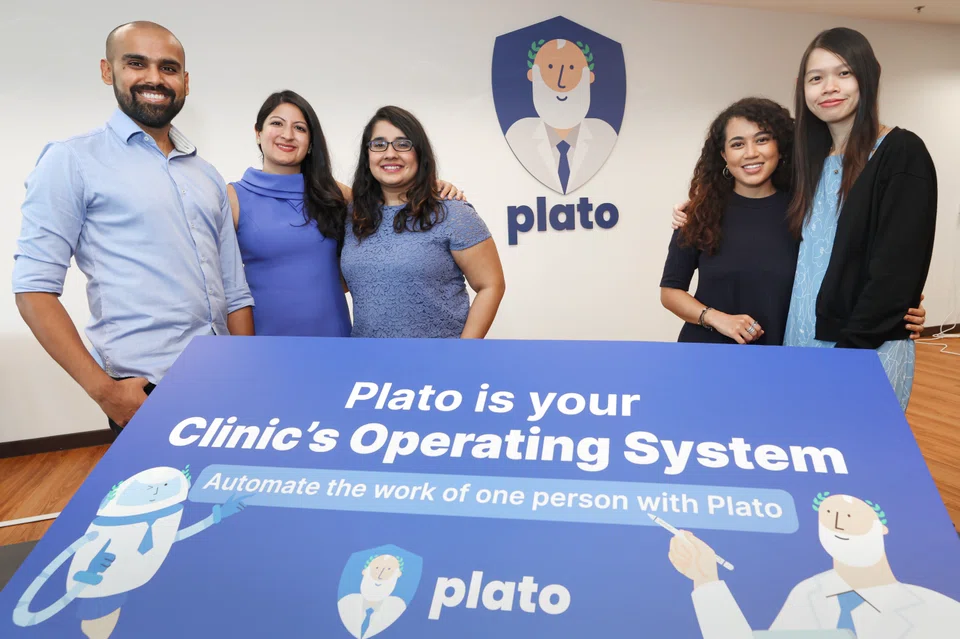
WITH digital appointments and registration, some general practitioner (GP) clinics in Singapore no longer need receptionists, said local software vendor Plato Medical.
“We are the only software where you can run a fully automated front desk, so we have some clinics where doctors don’t run with front-desk staff anymore,” noted co-founder Remi Kanji.
The company’s clinic management system (CMS), Plato, allows the automation of front-desk processes such as appointment scheduling, patient registration and billing.
Patients can book appointments online and self-register when they get to the clinic, using their Singpass profile. An automated queuing system then manages patient traffic within the clinics.
With Plato, doctors can also maintain medical records digitally, and streamline tasks such as generating referral letters and managing inventory.
A boost from Healthier SG
The ability to maintain and sync digital medical records will become even more important when the national Healthier SG initiative is launched in July, said Kanji.
Under Healthier SG, residents above 60 can enrol with a GP of their choice for subsidised preventive care. GP clinics that have opted in must submit patient data to the National Electronic Health Records (NEHR) system.
The NEHR system consolidates medical records from health-care providers such as GP and specialist clinics, along with polyclinics and hospitals. Plato’s CMS has been able to make data submissions to NEHR since May 2022, noted its co-founder Vishesh Mittal.
Clinics must integrate their CMS with the Healthier SG platform so that doctors can enrol patients, record health plans, make referrals and submit data to the government. Plato has done so, and some of its client clinics began their Healthier SG pilot on Monday (May 15).
With the expected influx of patients under Healthier SG, CMS software such as Plato will be key to simplifying processes including claims management, reducing the administrative burden on doctors, added Kanji.
In the duo’s estimation, Plato is the largest CMS vendor in Singapore, with 2,100 doctors across 1,900 clinics subscribed to its service. The CMS is used in GP and specialist clinics, as well as other health-care providers such as dental, allied health and aesthetic clinics.
Plato also has operations in Malaysia, Hong Kong and the Philippines, taking its total regional user base to around 2,500 doctors.
As a software-as-a-service, Plato is offered on a subscription basis. Typically, doctors pay about S$200 per clinic each month. Specialists, who may practise across multiple clinics, are charged differently.
The company has an annual recurring revenue of S$4.7 million as at May 9, Kanji said. Plato Medical started in 2015 with S$50,000 in personal funding from the two founders, and has been profitable ever since.
On an annualised basis, revenue has grown 25 per cent year on year since its establishment. The founders expect to maintain the same growth rate in the next three to five years. The company does not expect to draw upon external financing, unless doing so would enable it to scale to a target that it cannot achieve on its own, Kanji said.
“We’ve been bootstrapped all the way, so we’ve always had to be very disciplined about our finances,” she added.
Such discipline extends to a lean workforce of 10 employees in Singapore, though this is expected to grow to 15 by end-2023.
The company’s ability to maintain operations with a lean workforce is “testament” to the stability of its software, Mittal said. “That’s one of our differentiating factors compared with our competitors, as our manpower requirement is much less, and every incremental customer doesn’t put additional burden on our customer support team.”
As part of its business model, Plato does not impose additional charges for different services – such as its Healthier SG module – and instead relies on a flat pricing model.
Clients also benefit from economies of scale. The PlatoPay payments processing platform, which processed more than S$200 million for the 12 months ended Apr 30, enjoys bulk payment rates from financial institutions. These savings are then passed on to the clinics, said the founders.