


Bringing laminates into the limelight
EDL’s second-generation leadership is bringing its interior design materials to savvier homeowners – and into the region

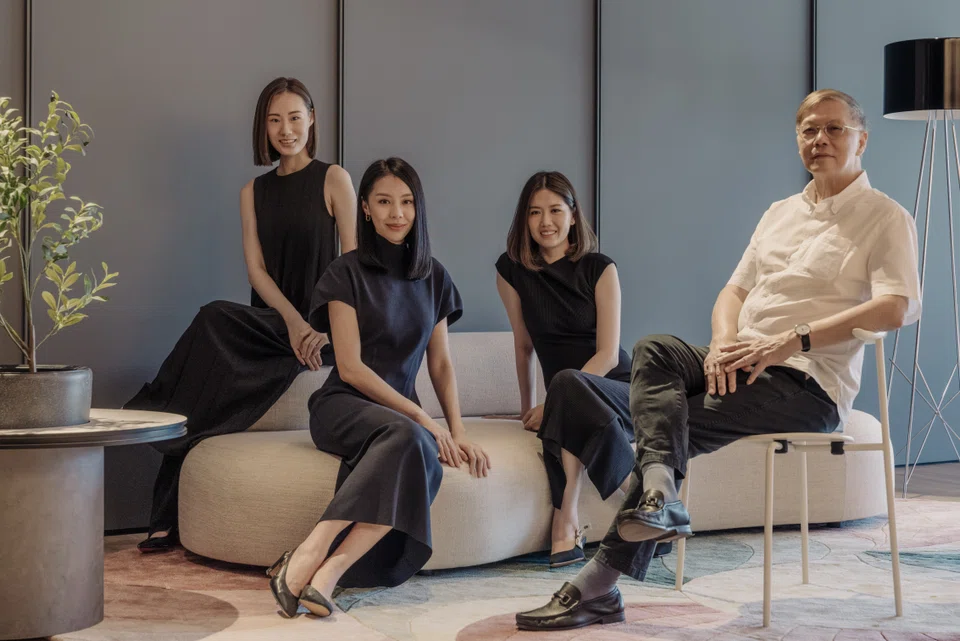
HOME-GROWN interior design materials supplier EDL has been riding the wave of post-pandemic growth, averaging annual topline growth of 14 per cent from FY2020 to FY2024.
One reason is that more homeowners in Singapore are splurging on sprucing up their living quarters, said EDL’s director Daphne Lim.
House-bound during the Covid-19 circuit breaker in 2020, more people began to see the importance of their living environment – which has translated to a higher spend on fittings and furnishings, she said.
“The whole industry transformed after the Covid-19 lockdown ended. More owners now have a bigger renovation budget and are looking for more design-centric products,” she said.
Another driver of growth is a rise in orders from designers and architects in the region, for both residential and commercial projects. In November 2023, EDL set up its third overseas presence via a joint venture in Jakarta, adding to existing offices in Kuala Lumpur and Bangkok.
Alongside younger sisters Eleanor and Desiree, Daphne is part of the second-generation leadership of EDL, which was established by their father Richard Lim in 2002.
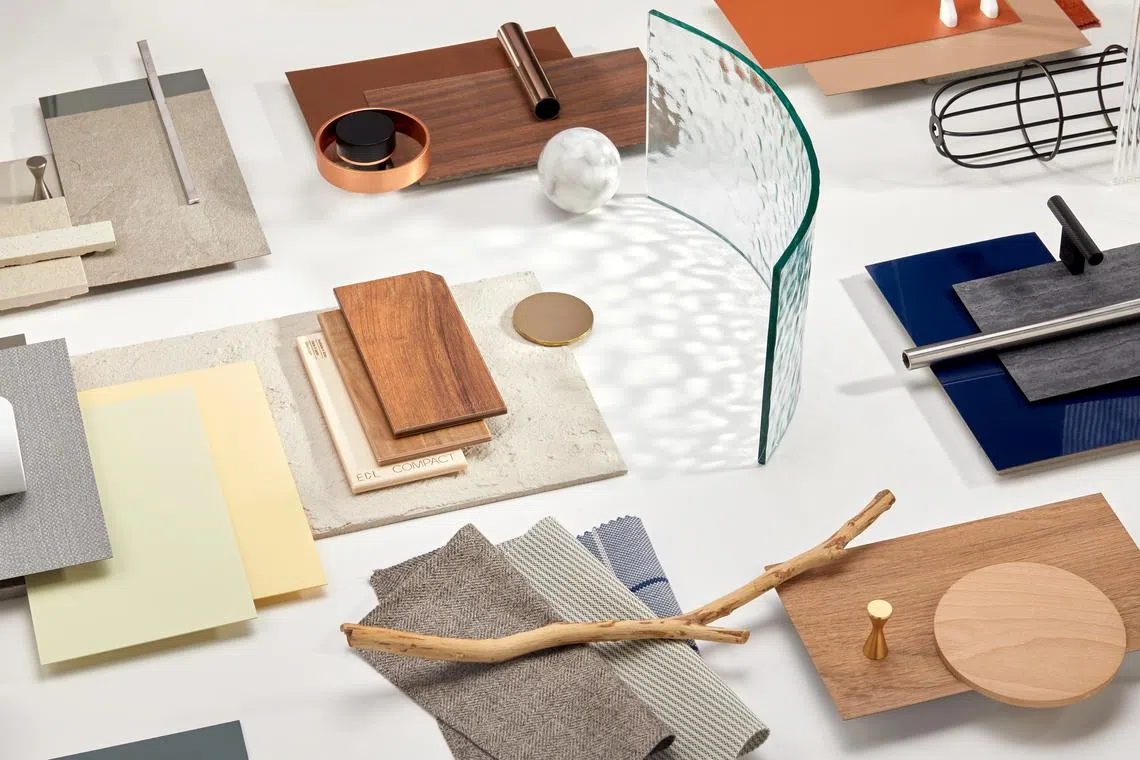
The company supplies high pressure laminates, a surfacing material commonly used in furniture and cabinetry. Contractors buy its materials to serve architects, interior designers and homeowners.
The company has grown to a staff strength of over 200, including 90 in Singapore.
Reaching out to homeowners directly
The family has been in the business of materials since the 1980s, when Richard Lim and his brother ran a company supplying high pressure laminates.
But he eventually left to establish EDL. His daughters joined the business one after the other – eldest daughter Daphne in 2008; second daughter Eleanor in 2013, and youngest daughter Desiree in 2018.
All three are directors of EDL and will take over once Lim – who still serves as group chief executive – retires.
When Eleanor came on board, she saw an opportunity to re-invent the brand’s image and reach out to homeowners directly. Till then, the company had not advertised directly to individual consumers.
Having previously worked for a fast-moving consumer goods company, she saw potential for EDL in the business-to-consumer market.
“At that time, it wasn’t common for homeowners to choose laminates on their own,” said Eleanor. Instead, most consulted interior designers or contractors for recommendations.
But EDL saw an increasing number of savvier homeowners visiting their factory – then located in the industrial estate of Sungei Kadut – to learn more about their products.
To appeal more to this group, the company rebranded. This included redesigning its physical catalogue – its main selling tool, containing sample chips – and logo; creating social media pages; and converting the third floor of its factory into an experiential laminate gallery for walk-in visitors.
Said Eleanor: “Since homeowners were becoming more involved in material selection, we thought, why not give them a conducive place where they can experience our products, rather than going to our factory floor and us having to pull out our sheets for them?”
The market perception of laminates has also evolved, she noted.
Natural materials such as wood and stone have long been the top choice for luxury residential projects and hotels, while laminates were seen as a “lower cost, lower standard” option.
“But today, a lot of five-star hotels are starting to use laminates because they understand that it’s beautiful, durable and very easy to maintain.”
Since 2014, EDL has also collaborated with designers and architects to showcase their materials – sometimes in unconventional ways. For instance, it worked with local architecture firm Formwerkz Architects to create an art installation using 437 laminate pieces for the 2019 Singapore Design Week.
The sisters also worked on a long overdue digital overhaul of EDL.
Previously, the company lacked a robust inventory management system. Orders were recorded on paper and manually handed to warehouse staff.
The sisters upgraded EDL’s enterprise resource planning software to digitalise orders and operations. Orders are now transmitted through handheld devices to warehouse workers, who can then pick out the right goods.
They also put in place a customer relationship management system to help sales staff track daily customer visits and ongoing projects, as well as manage new leads.
Growing vertically and horizontally
EDL also created a revenue stream by moving closer to the customer.
In 2016, EDL brought in compact laminate, a material that had not yet taken off in Singapore but was popular in Europe. Compact laminate is sturdier and thicker than high pressure laminate and is typically used to make countertops.
But the sisters soon realised that contractors in Singapore were unfamiliar with this material and thus reluctant to use it.
That spurred them to launch their own fabrication division, EDL Compact, that year. This meant hiring installers and machine operators to customise and fabricate worktops from compact laminate, then install these at sites.
Today, EDL’s fabrication arm makes up nearly 10 per cent of total revenue.
The company has expanded its product categories to include fibreglass wall panels and high pressure laminates with anti-fingerprint properties. It is also the exclusive distributor for Spanish manufacturer Viefe’s designer accessories such as handles, knobs and wall hooks in Singapore, Thailand, Malaysia and Indonesia.
Further regional expansion is underway, with a fourth office – and gallery – set to open in Penang by March 2025. EDL already has a remote-working team in the Malaysian state, which will move to the office when it is ready.
Overseas markets contribute half of overall revenue, from its operations in Malaysia, Thailand and Indonesia as well as exports to Hong Kong and the Philippines.
EDL expects revenue to rise 10 per cent in FY2025, driven by overseas growth – especially from Thailand, which has a thriving creative industry and strong demand for “design-centric”, quality materials, said Eleanor.
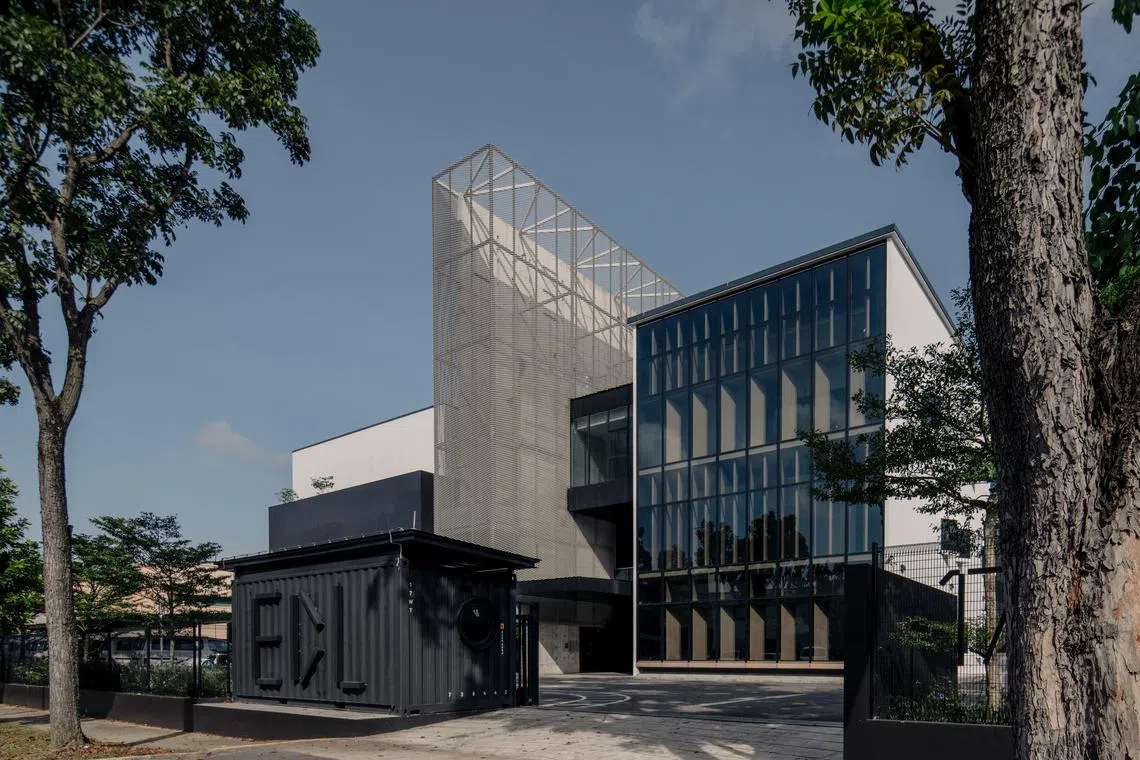
To support its expansion with more warehousing space for exports, EDL moved into a new S$20 million regional headquarters at Woodlands Terrace in May.
Spanning 54,000 square feet over three floors, the new building features a bigger public gallery – accompanied by a website that allows on-site visitors to navigate the place.
“People used to be more passive. But these days with the Internet and social media, they are more curious; they want to know what’s out there and make their own decisions,” said Daphne.
TRENDING NOW
Prima to move out of historic Keppel Road flour mill building in 2028
Temasek-related Azalea, SeaTown, Seviora Capital to merge in 2027
Family offices see more tailored products, leverage ‘collective firepower’ for direct deal access

Singapore room rates soar, but hotels seeing mixed demand from F1 race and events

