


Budget 2026 repositions SMEs for long-term tough environment: DBS
The bank’s group head for corporate and SME banking highlighted AI, internationalisation, workforce transformation and financing as four key areas the government wants SMEs to build capabilities in

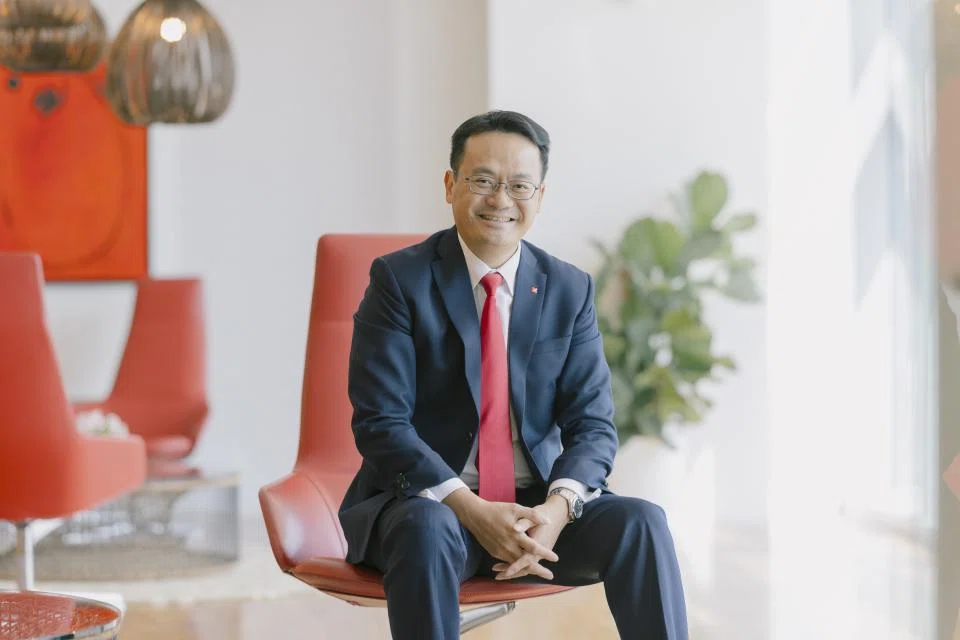
[SINGAPORE] Beyond “short-term adjustments”, Budget 2026 will help small and medium-sized enterprises (SMEs) reposition to stay globally competitive in the long term, said Chen Ze Ling, DBS’ group head for corporate and SME banking.
“The Budget recognises that the key challenges faced by businesses today are structural, not cyclical. We are operating in a global environment shaped by increasing market fragmentation and technology disruption,” he told The Business Times in an interview.
Against this backdrop, Chen described this year’s Budget as “strategic and forward-looking”, and one that clearly aims to support Singapore businesses in undertaking enterprise transformation so they can be future-ready.
The Budget 2026 statement was delivered by Finance Minister Lawrence Wong, who is also the prime minister, in Parliament on Feb 12.
While there are near-term measures such as the corporate income tax rebate to help SMEs alleviate cost pressures, Chen noted that the Budget focuses on four areas where the government wants firms to build longer-term capabilities in: artificial intelligence (AI), internationalisation, workforce transformation and financing.
As he sees it, Budget 2026 lays out a blueprint to enable Singapore businesses to build “fundamental strengths” so as to stay globally competitive in the long run.

“It supports their evolution beyond short-term adjustments, enabling them to pivot towards a more robust, long-term repositioning of their businesses,” he said.
Such repositioning includes empowering SMEs to scale and diversify globally; integrate advanced technology; as well as invest in their workforce for adaptability and growth alongside technological enablers.
Accelerating AI adoption
AI was at the heart of this year’s Budget, which introduced a slew of measures to accelerate its adoption across businesses and workers. This is also in line with Singapore’s economic strategy to position itself as an AI leader with an AI-driven economy.



Chen noted that AI adoption among SMEs has “progressed meaningfully”, citing the latest DBS Business Pulse Check survey which found two in three SMEs already using AI in some capacity. The survey polled 730 companies between December 2025 and January 2026.
But AI usage and the extent of integration across industries have been uneven, he said.
The survey findings revealed that SMEs in information and communications, electronics manufacturing and professional services were most advanced in their AI usage, while those in the wholesale and trade sectors were least likely to have adopted AI solutions.
Respondents also called for support to implement AI into their businesses, with nearly half flagging data privacy and cybersecurity concerns, while others cited limited familiarity and in-house expertise with available tools.
“While the willingness to adopt AI is there, businesses need greater clarity, capability and support to implement it effectively,” said Chen.
Budget 2026’s AI-related initiatives are therefore timely, he added, as they relieve the constraints SMEs face in scaling up AI adoption and integration.
For instance, the establishment of a National AI Council, chaired by PM Wong, signals “the urgency and coordination” needed to help businesses achieve productivity gains and manage implications to the workforce, he said.
Meanwhile, the new Champions of AI Programme will support firms looking to revamp their business through AI, including through enterprise transformation and workforce training.
This is likely to be impactful, said Chen, noting that the immediate step for many SMEs is to contextualise AI tools to data sets, systems and workflows, before monetising improvements into measurable returns.
Businesses may then move beyond managing isolated pilots to integrating AI more deeply across their own processes, he added.
Mitigating internationalisation risks
Trade disruptions have prompted a noticeable shift in SMEs’ mindsets towards internationalisation, Chen observed.
Rather than relying on customers or supplies from a single market, businesses are now thinking “more strategically” about diversifying revenue streams and strengthening supply chain resilience, he said.
This is evident in the DBS Business Pulse Check Survey, where a notably high proportion – eight in 10 respondents – said they plan to expand overseas this year.
For some businesses, this could take the form of establishing operations abroad. Others may choose to remain anchored in Singapore, while selling to new markets or diversifying their supplier networks across geographies.
However, smaller firms continue to face significant risks in expanding overseas, said Chen.
Over half of respondents to DBS’s Business Pulse Check survey identified navigating overseas regulatory requirements as their top challenge, followed by high setup and operating costs.
Chen said Budget 2026 tackles these concerns with the enhanced Market Readiness Assistance grant alongside tax deductions and financing support, which help to offset some upfront costs and mitigating the risk of internationalisation.
Besides financing, SMEs expanding overseas must find trusted partners and gain access to in-market insights, he added.
Transforming Singapore’s workforce
Transforming Singapore’s workforce remained a central theme this year, as per previous Budgets.
Chen outlined the need for continuous skill development and adaptability to keep pace with rapid economic change, evolving job roles and the transformative impact of AI across sectors.
To that end, the planned merger of Workforce Singapore and SkillsFuture Singapore into a new statutory board – a key announcement in Budget 2026 – will enable training pathways to remain “closely aligned” with industry needs as they evolve.
A more integrated jobs-and-skills ecosystem will also benefit SMEs and employees as they do not have to navigate multiple schemes across agencies, he said.
While SkillsFuture courses help individuals, including mature workers, stay competitive, workforce transformation ultimately needs “to be embedded” within the organisation.
Employers should align staff training programmes with the firm’s overall business direction and need for specific skill sets, he added.
Chen noted that the DBS SME Skills Booster Programme was designed to support SMEs in precisely these areas. The programme is part of the larger SkillsFuture Queen Bee initiative, which sees industry leaders – or “queen bees” – such as DBS mentor smaller enterprises.
Under its booster programme, DBS helps firms create a learning and development plan aligned with business priorities such as digitalisation, AI transformation and sustainability.
Building financing pathways
Another Budget 2026 highlight was strengthened funding for enterprises across different stages of growth, from startups to mature companies looking to scale and list.
Chen said that while the availability of early-stage capital has improved, many firms continue to face funding constraints at the growth stage, where capital requirements are larger and come with potentially longer-term payback periods.
“These funding gaps can slow down promising companies at a critical inflection point,” he added.
Addressing this is a S$1 billion enhancement to the Startup SG Equity scheme, which will be expanded to cover growth-stage companies. This catalyses private capital when such firms are ready to scale up, he noted.
Meanwhile, the second S$1.5 billion tranche of the Anchor Fund will help attract high-quality public listings, while the S$1.5 billion top-up to the Equity Market Development Programme deepens liquidity and investor participation in Singapore equities.
Taken together, Chen said these measures create a “funding continuum” stretching from early-stage funding to growth capital to an eventual public listing.
He added: “This gives businesses confidence that they can build, raise capital and anchor their growth in Singapore.
“Over time, a deeper and more vibrant capital ecosystem should benefit the wider SME community through stronger supply chains and partnerships, and the creation of higher-value jobs.”
Still, Chen said the impact of the Budget will depend on how businesses tap its measures in furthering their own development.
On how SMEs can take the first step towards enterprise transformation through the Budget’s measures, he advised them to identify a strategic priority “that creates the greatest economic value” and build momentum from there.
Beyond the availability of support, many SMEs are increasingly fixated on the practical applications of such support and how it can be executed, he noted.
He cited capability-focused concerns such as how to embed technology into their operations; how to enter new markets confidently; and how to equip their workforce for transformation.
Having a “coordinated ecosystem” of support in Singapore is thus critical, as government agencies, industry leaders, associations and financial institutions each contribute different areas of expertise.
“When these efforts are aligned, support becomes more accessible and contextualised for businesses to tap,” he said.
Decoding Asia newsletter: your guide to navigating Asia in a new global order. Sign up here to get Decoding Asia newsletter. Delivered to your inbox. Free.
Copyright SPH Media. All rights reserved.
TRENDING NOW

‘We don’t want to stay as we are’: CEO Patrick Ng builds a more resilient Huationg
URA to review guidelines on floor space to give developers more design flexibility: Chee Hong Tat

He built the Vingroup empire. Now South-east Asia’s richest man is handing some key roles to his sons

32 companies, 6 individuals bag accolades at Singapore Corporate Awards 2026

