Business bustling for CNY but restaurants face manpower woes
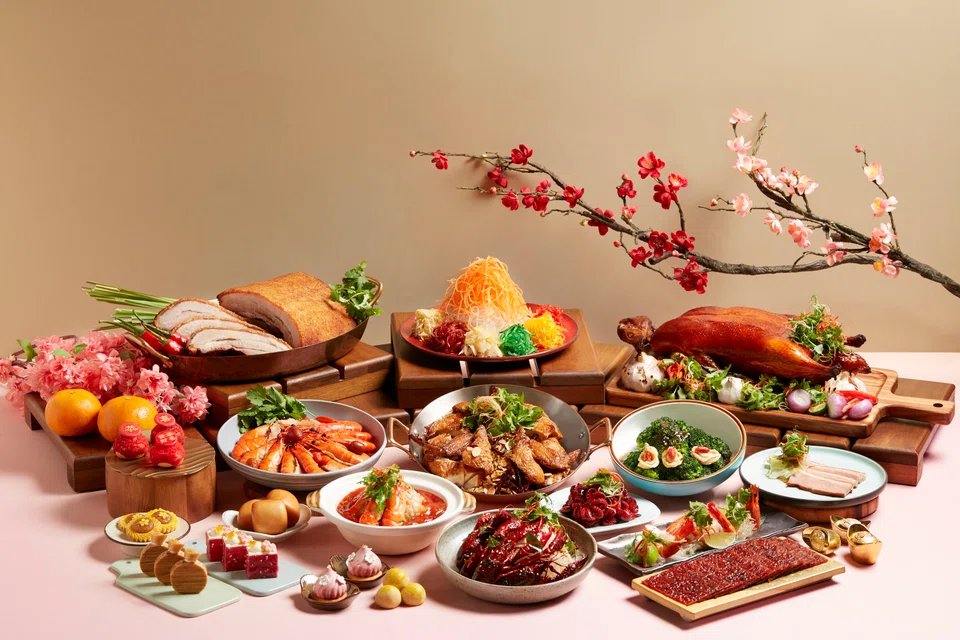
WITH this being Singapore’s first Chinese New Year (CNY) since Covid-19 group size limits were lifted, restaurants are seeing a return of large groups for celebratory meals – and finding it harder to get enough manpower, as workers themselves are in a festive mood.
Demand for dine-in reunion dinners has recovered to or even surpassed pre-Covid levels, restaurants told The Business Times. Some restaurant groups – such as Tung Lok, Peach Garden and Min Jiang – had most if not all of their reunion dinner slots filled by the end of 2022.
This is the first time that all of Peach Garden’s restaurants were fully booked one month before the eve of CNY on Jan 21, general manager Darren Yew said.
To meet the surge in demand, Peach Garden took two new measures: An early reunion promotion for dinners before the eve; and offering festive dishes until the end of February – an extra 23 days after the traditional 15 days of celebration.
“With the lifting of restrictions, we expected there to be a surge in demand for dining in, as families have not been able to gather for a reunion in large groups the last two years,” said Yew.
At Jade in The Fullerton Hotel, reunion dinner slots have been fully booked since the first week of January, with an additional venue opened to meet higher demand, said The Fullerton Hotels and Resorts general manager Gino Tan.
Putien’s Kitchener Road outlet has also seen demand return to pre-Covid levels, with more than 80 per cent of CNY slots booked as at Jan 12, said branding and public relations director Oh Chin Wee.
Large group and corporate bookings are also back in demand. About 70-80 per cent of Peach Garden’s bookings are for groups of 10 or more guests, similar to pre-Covid levels.
Large corporate bookings for CNY have increased by 30 per cent compared to pre-Covid, with companies finally able to host their annual dinner and dance events again, and some more willing to spend compared to pre-Covid, Yew added.
CNY banquet bookings, which corporate guests typically prefer, see an average of 30 tables with 10 diners per table, said Hilton Singapore Orchard’s director of food and beverage Linges Warren.
Dian Xiao Er has also seen group sizes return to pre-Covid levels, with 70 per cent of reservations for groups of six or more, said managing director Samuel Yik. Corporate bookings are 10 per cent higher than in pre-Covid times, he added.
Yi by Jereme Leung, at Raffles Hotel Singapore, has seen a 20 per cent increase in CNY bookings compared to last year. “This increase can also be attributed to corporate events that were not possible last year with most of the bookings made for early February,” said a spokesperson.
But with more customers opting to dine in, some restaurants are seeing slower takeaway sales this year.
Said the Raffles Hotel spokesperson: “Takeaway is expected to drop by at least 20-30 per cent given that home gatherings were in small groups last year resulting in multiple gatherings over Chinese New Year as opposed to one large gathering.”
For White Restaurant, the demand for takeaway reunion dinner sets is about the same as pre-pandemic – but that means a fall of about 30 per cent compared to last year’s festive season, said chairman and owner Victor Tay.
For others, however, takeaway orders remain the same or have even increased. Tung Lok and Peach Garden reported that demand for CNY takeaway sets is comparable to last year.
For Dian Xiao Er, takeaway sales have increased about 10 per cent from last year, Yik said. “There is very strong demand this year – those who were not able to book a reservation chose to order takeaway bundles instead.”
Manpower challenges
As more people celebrate this year, however, restaurants are struggling to find manpower to work over the festive season, exacerbating the industry’s long-running labour crunch.
Many businesses are vying for the same pool of casual workers, a spokesperson from Crystal Jade said, adding that hourly rates have risen significantly – so labour is not only scarce, but also costs more.
Staff wages in Dian Xiao Er have gone up by between 10 per cent to 25 per cent over the past year, Yik said. Hourly rates for new part-time staff now range from S$12 to S$24 per hour, depending on the day of the week and experience level, he added, up from about S$10-S$12 per hour.
Meanwhile, Yew said that salaries for employees in Peach Garden have increased by about 5-10 per cent. Salaries for White Restaurant staff have also increased by about 20 per cent from last year, Tay said.
Tay added that it has become even tougher to find people willing to work during this CNY peak period, with the lack of manpower meaning that he and his family might even have to help out in the restaurant.
“For the past two years, people were willing to work because they couldn’t celebrate in big groups anyway,” he said. “But this year, their mindset is that they are not willing to work no matter how much you pay them.”
Dian Xiao Er’s Yik added that manpower challenges have gotten worse after China re-opened its borders in early January: “Some workers took this opportunity to go back to their hometown to visit sick family members. And if we do not approve their leave, they will tender (their resignations).”
“I believe this is an issue across the industry,” Yik added. “We are still able to cope, but it’s tight.”