


Castlery to open first US store in New York, targets 8 to 12 stores in key global cities by 2029
To mitigate the impact of US tariffs, the furniture brand has diversified its supply chain, while expanding into the UK and Canada

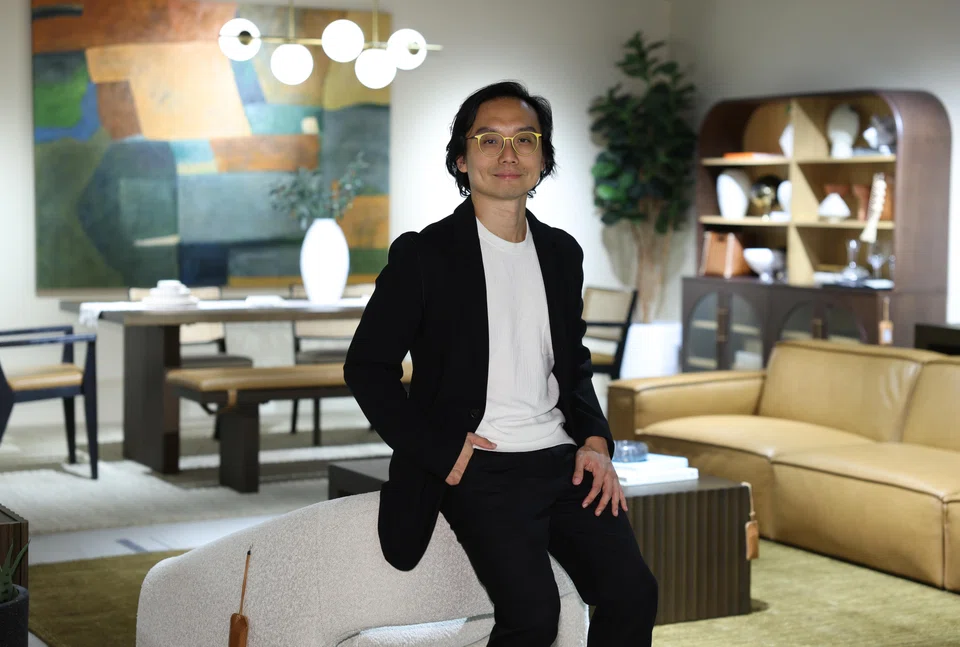
[SINGAPORE] Amid tariff uncertainty, home-grown furniture retailer Castlery is entering its next phase of growth in the US by opening a showroom in New York – after six years of being online-only.
Co-founder Declan Ee described the brick-and-mortar flagship outlet – also its first in the US – as a “natural progression” from its digital retail model.
He said: “The goal was always to create a best-in-class experience for our customers … and the final piece of this experience is completed when we have an offline store.”
The US, Castlery’s largest market, contributes to 65 per cent of the company’s overall sales. Australia is second at 17 per cent, and Singapore at 15 per cent; the last 3 per cent comes from sales in the UK and Canada.
The 3,000 square foot showroom, located in Manhattan’s Chelsea neighbourhood, was set up with a seven-figure investment sum and is on a 10-year lease. Ee’s team spent two years scouting over 200 sites in Manhattan before picking this space.
The showroom features 17 fully furnished room settings and offers an interior styling service, through which customers receive personalised consultations on space planning, furniture selection and interior layout.
Ee, speaking to The Business Times in an interview at Castlery’s Singapore flagship store in Liat Towers, said he expects the store in the Big Apple to break even in 18 to 24 months, though this could happen within a year if sales are strong.
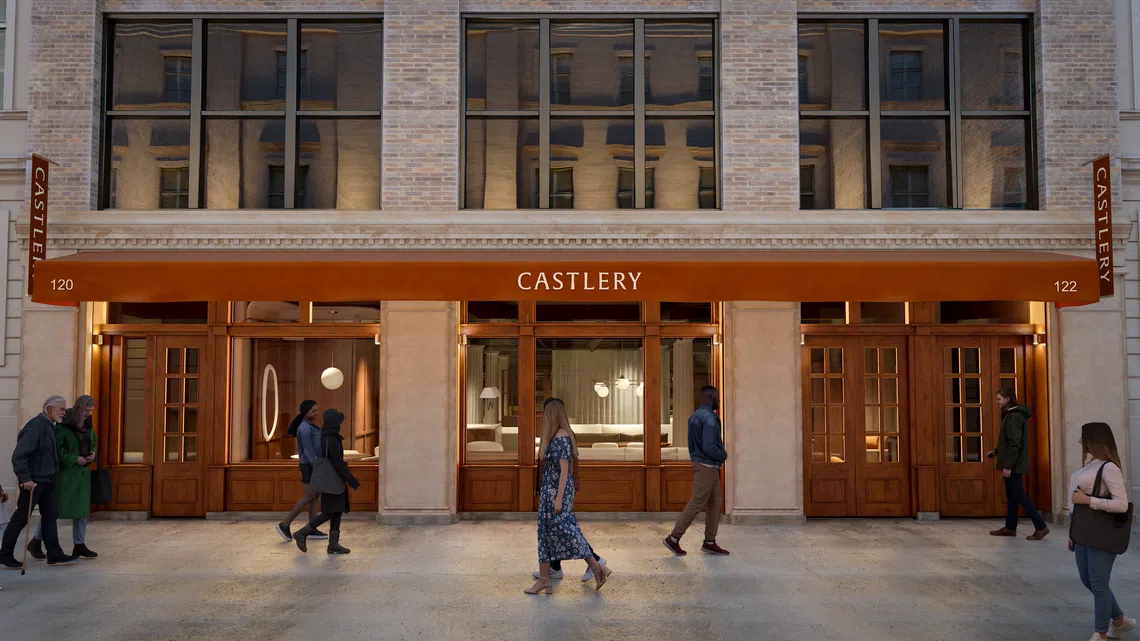
The opening of the New York store brings the brand a step closer to its global ambitions.
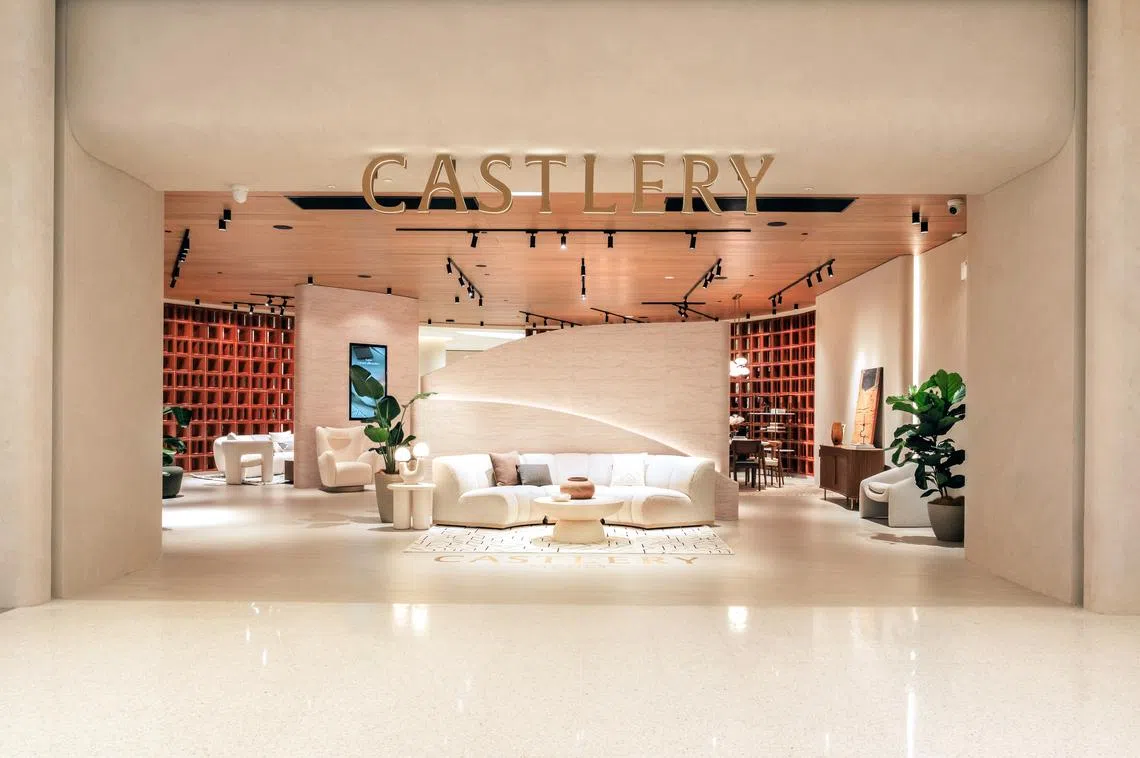
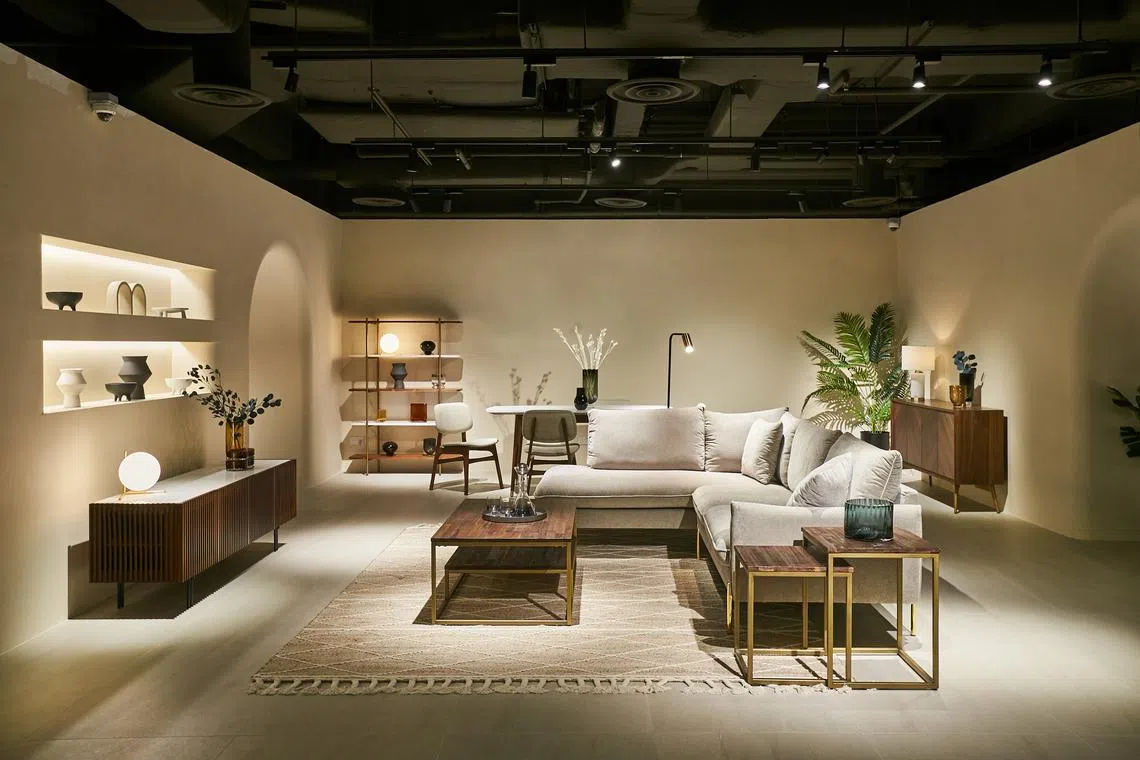
This is its fourth showroom worldwide, following the opening of its third in Brisbane last August. Its store in Sydney was set up in 2024 and expanded in 2025; its 24,000 square foot flagship store in Liat Towers was established in 2022.
By 2029, Ee aims to have eight to 12 showrooms in key cities worldwide. These would include stores in major US cities such as Washington, DC, Los Angeles, San Francisco and Seattle, as well as in Melbourne and Perth in Australia.
He added that achieving this would put Castlery “on track” to evolve from a digital-first furniture retailer into a “proper global retail brand”.
“If we’re nationwide (in a single market), it gives customers a sense of assurance that we’re not just an online challenger brand, but a serious operator.”
Established in 2013, Castlery employs more than 500 staff worldwide, with 200 in its Singapore headquarters. The brand has sold more than a million pieces of furniture and introduced more than 7,000 products to date.
“Measured” approach to offline expansion
Ahead of its New York flagship store opening, Castlery has spent the past few years building up its US operations.
It entered the US in late-2019, starting off with two warehouses, one each in New Jersey and in Los Angeles, California.
Today, it delivers to all 50 states and has six warehouses across the country, with the addition of sites in Seattle and Georgia in 2023, then Texas and Chicago in 2024.
This has cut delivery times to its US customers, many of whom rent their homes and need furniture delivered with short lead times, noted Ee.
“We were very aggressive in the first two to three years, when we were scaling the business online in the US,” he said.
With offline expansion, however, he said he would take a “measured” approach, given the evolving global developments and ongoing geopolitical tensions.
The brand also intends to analyse the performance of its New York showroom before committing to more store openings in the country.
Ee, well aware of New York’s competitive retail environment, said that prominent furniture players such as West Elm and Crate & Barrel, with their multiple outlets, give consumers plenty of options.
“There’s a lot of room for us to grow in the US, but we’re taking things step by step because one’s perspective changes after opening the first store. You get data, you see how customers react and their basket size – all these things,” he said.
Diversifying supply chains, expanding into new markets
Ee has good reason to take things at a more deliberate pace.
After all, Castlery was hit hard by US President Donald Trump’s “Liberation Day” baseline tariffs in 2025, on top of duties on certain furniture imports such as upholstered furniture and kitchen cabinets.
More than half the brand’s products were being manufactured in China and then shipped to US customers, but Chinese imports were slapped with the highest tariff rates – close to 30 per cent.
Castlery has since diversified its supply chain to lower its exposure to tariffs; it has moved some of its manufacturing from China to places such as Vietnam, Thailand, and India, leaving only about a fifth of its production in China today.
The brand has also sought to diversify its customer base beyond the US.
In 2025, Castlery made its first foray into Canada and the UK with e-commerce stores there. Last September, the brand staged an immersive pop-up in London to showcase its furniture at the London Design festival.
Enterprise Singapore (EnterpriseSG) came in with support for the pop-up, by introducing Castlery to UK government agencies and complementary brands, with an eye on potential collaborations; Singapore beverage company Yeo Hiap Seng and restaurant Singapulah, for example, provided food and drinks for the pop-up.
EnterpriseSG also connected Castlery with community networks such as the Singapore Young Professional Network Community and the Singapore UK Association, which boosted awareness of the pop-up and drove turnout, said Ee.
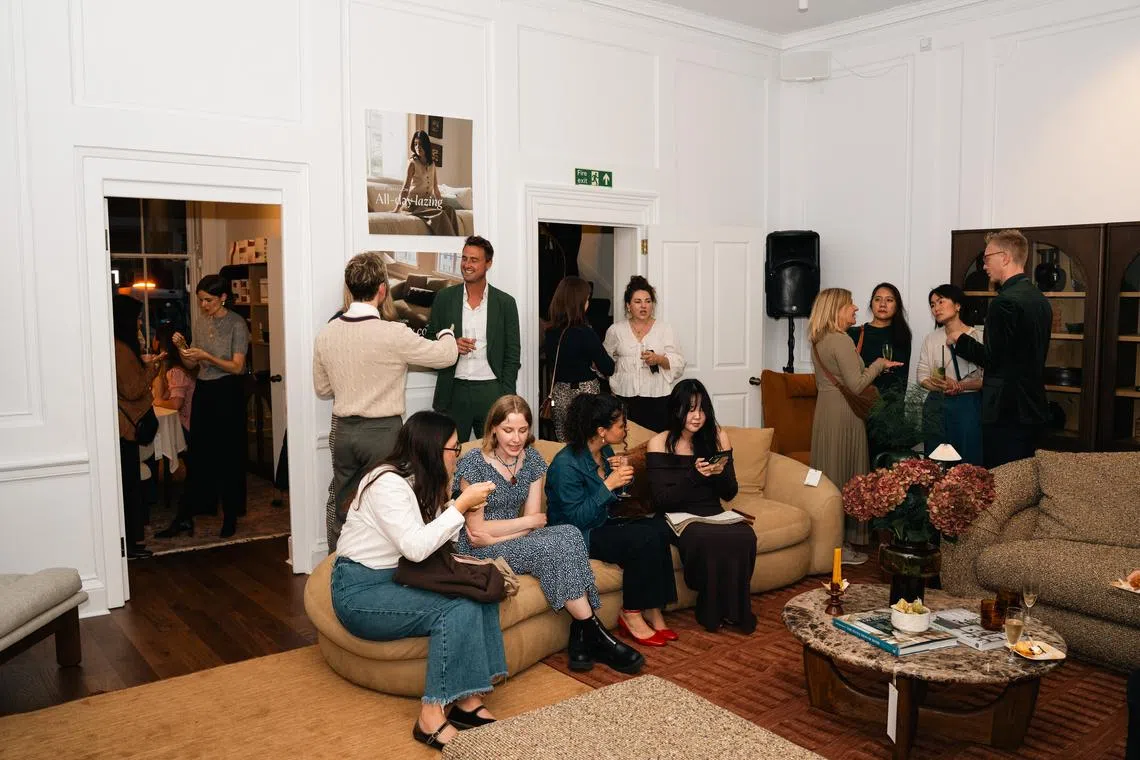
Following the pop-up, Castlery’s UK online sales doubled month-on-month up until November. Ee is now actively scouting for retail locations in London, though no timeline has been set for an opening.
He said: “Unlike the US, there are not so many big furniture brands in the UK. So we think there’s space for us to enter the market, not to mention that the sales pick-up from customers has been very encouraging.”
In Australia, Castlery’s second biggest market, Ee plans to open a showroom in Melbourne in the next 12 months. After a showroom is set up in Perth further down the road, the brand would have a presence in all four of Australia’s key cities.
“Cautiously optimistic” on growth prospects
Still, there are ongoing headwinds.
Ee said having to maintain separate supply chains – one for the US, and another for the rest of its markets – has driven up the brand’s production costs, as higher minimum-order quantities are required.
This has eaten into Castlery’s bottom line by between 1 and 3 per cent – not an insignificant amount for a growing furniture brand, which can typically enjoy margins of between 4 and 8 per cent, he noted.
The brand’s sales dipped for six months after April’s Liberation Day announcements amid consumer uncertainty, although they have since rebounded, said Ee.
Considering these factors, he expects Castlery’s revenue growth for the current FY2026 ending in March to be “flat or in the single-digit” range. This is down from FY2025’s 10 to 15 per cent year-on-year growth.
Profit margins have also been crimped by rising fuel prices, a fallout from the ongoing Middle East conflict, he added.
But Ee remains “cautiously optimistic” about Castlery’s growth prospects.
“We control what we can. You don’t know where the wind will blow, so you build the sail to catch it,” he said.
“In our case, it’s about being close to the customer and creating products that they would want to buy, even in difficult economic times.”
TRENDING NOW

Once staunchly pro-China, Malaysian Chinese businesses are now distancing themselves from Beijing

Stocks to watch: HPL, Aims Apac Reit, Zico, Advanced Systems Automation, ComfortDelGro

‘How many will survive?’: Bubble fears arise as China’s humanoid robotics face reality check
Smaller board lots can’t fix a market run by three banks

