A cause worthy of a food rally
Samsui, a subsidiary of the Soup Restaurant Group, brings good food to underprivileged recipients.

Prisca Ang
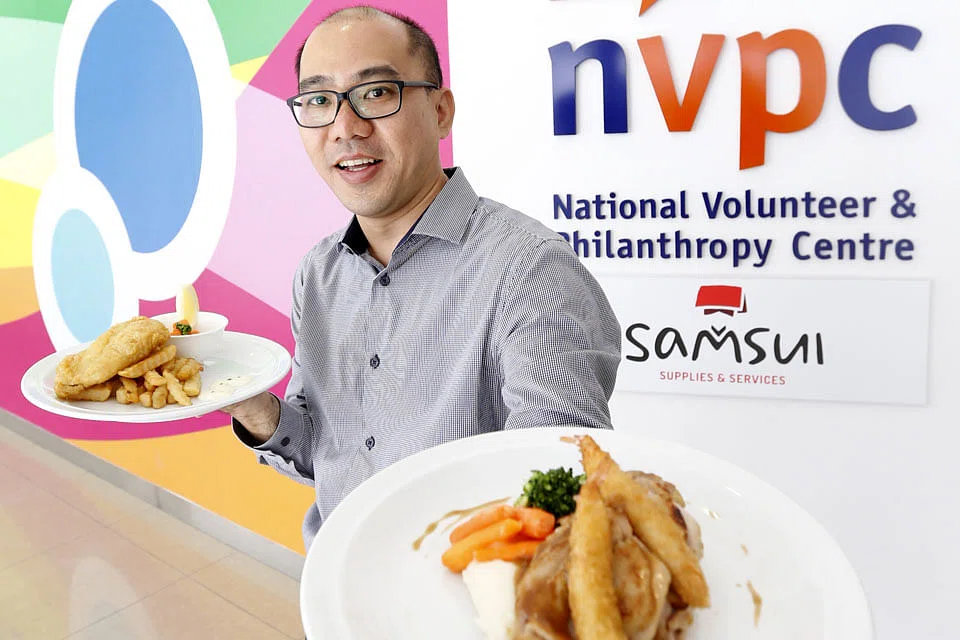
IT might seem idealistic for companies to rally together for a worthy cause.
However, for Samsui Supplies and Services, a sauce producer and distributor of food products, this vision is real and makes for a raison d'etre.
The formula for success has been simple: contributing to the community is never a one-man show.
To date, the two-year-old subsidiary of the Soup Restaurant Group, has already collaborated with more than 10 companies to cater meals to underprivileged members of society at token sums of up to S$3. Sponsored by these companies, the prices compare with a normal market rate of approximately S$5 and above for a meal.
Such an arrangement is especially useful if corporates have special activities in store, such as games, karaoke show-downs, or even interaction sessions during which volunteers engage beneficiaries in conversation.
To Samsui, creating a "common platform for people to gather and do good" is integral in ensuring that projects in the area of corporate social responsibility (CSR) are sustainable.
"What we're trying to do is leverage one another's strengths to create efficiency. If you try to do something outside of your core strength, you might incur additional costs," says director of Samsui Supplies, Ang Kian Peng.
Corporate partners channel their resources towards planning activities for beneficiaries. Meanwhile, Samsui focuses on its "core strength in managing food and beverages (F&B)", says Mr Ang, and enters the picture to "take care of the food component".
A typical meal journeys directly from the central kitchen of Samsui Supplies, where it is cooked and vacuum-packed to keep it fresh and warm. It is then delivered by Samsui to the beneficiary homes, where it is heated before being served by volunteers to beneficiaries such as the elderly and children in homes and care centres.
Catered meals feature fish and chips, which young children in homes, such as the Infant Jesus Homes & Children's Centres, can look forward to. Adults can expect a treat of stewed chicken, while elderly beneficiaries may opt for 'softer' foods such as porridge.
However, the menu is anything but static, especially during festive seasons when special treats are aplenty.
During Chinese New Year, for instance, Samsui served reunion dinner-style dishes and yusheng for the elderly to have a chance at lo hei, also known as the symbolic tossing of raw fish salad.
For Christmas, Samsui Supplies roped in renowned Marina Bay Sands chef Justin Quek to create a "festive, high-end menu which underprivileged beneficiaries do not usually enjoy". Dishes on the menu featured choice ingredients such as brussel sprouts from Holland, turkey, and pumpkin puree.
The catered meals also follow the Health Promotion Board's (HPB) healthy eating guideline by containing 500 calories or less.
Samsui's active catering efforts stem from the subsidiary's conviction that "even though people are underprivileged, they should not be deprived of good food", says Mr Ang.
"The Makan Project", aimed at providing 30,000 meals to underprivileged groups in three months, was born from this belief.
Although it was originally slated to be named "The Eat Project", the catering project in collaboration with corporate partners was eventually re-named "The Makan Project". This allowed it to "resonate more with local culture" since the project is targeted at feeding the local population, says Mr Ang.
Thus far, the meals have benefitted some 20, 000 beneficiaries in various homes and care centres, such as the Singapore Christian Home, Kwong Wai Shiu Hospital and Infant Jesus Homes & Children's Centres.
Riding on the spirit of volunteerism, Samsui has also ventured beyond food to encourage greater involvement at "The Makan Project" events. By working with partners such as Brahm Centre that are good at networking and sourcing for volunteers, Samsui has been able to encourage more individual volunteers to pitch in, says Mr Ang.
Employees of corporates have also chipped in, with many keen to spend their weekends engaging beneficiaries in on-site activities and games.
However, such close collaboration "was not instantaneous", says Mr Ang.
"It took a number of years for us to gather our corporate partners and convince them to jump on board. Along the way, people realise that you're doing it with your heart, and that there's no hidden agenda, which is when they're convinced."
While collaborating closely with corporate partners, the subsidiary has also been whipping up meals for beneficiaries on a more regular basis.
Minds-run multi-service centre Mindsville, for one, has been receiving daily meals from Samsui, with two meals provided for each person. This has proved a relief to homes, which often face difficulty in hiring professional chefs, says Mr Ang.
"We tell the homes that they should focus on the social aspect, to serve their clients well and take care of the beneficiaries. We then bring the kitchen to them, enabling them to focus on their core activities."
And food is not the only thing the subsidiary has been providing. Samsui has been outsourcing value chain functions in sauce production to Minds beneficiaries, creating jobs in the process.
Delivery orders are sent from each of the Soup Restaurant Group's 17 outlets to a central warehouse, where a team of ten to twelve Minds trainees help to pack dry goods such as sugar and salt in boxes. The boxes are then collected by Samsui's drivers and delivered to the group's outlets.
Samsui intends to "scale up activity" in the future. The subsidiary aims to bulk-purchase more dry goods with other voluntary welfare organisations who need them, giving MINDS "more volume and creating more employment for the trainees". The arrangement could simulatenously lower the prices of these goods, increasing affordability.
Another plan in the pipeline for Samsui would be hawker stalls which could be managed by people with intellectual disabilities, each to be run by two pairs of parent-and-child. Samsui hopes that this arrangement, which is still under discussion with the relevant authorities, could provide "a long term livelihood for the underprivileged".
"We realised that it's very tough for parents of children with intellectual disabilities to work. This way, parents can oversee the stall and take care of their children at the same time, in alternate shifts."
The arrangement could also enable the intellectually disabled to be "financially independent" even after their parents pass on, ensuring a "sense of continuity", says Mr Ang.
The subsidiary continues to have high hopes for its projects. This year, it is looking at a target of 50, 000 meals to be delivered to its beneficiaries. It also aims to rope in more corporate partners, creating a network where "there are no duplication efforts and everyone has a unique role to play within the CSR web".
As it grows, the subsidiary bears this in mind: just keep going.
Says Mr Ang: "Your project will grow by itself, and people will start believing in it."
"You don't have to start big - you can start small, and grow."