


Defending against virus risks with tech tools
Blockchain technology, Bluetooth and artificial intelligence are just a few of the technologies being used to defend against various threats.
AS Singapore takes a cautious, risk-managed approach to reopening its borders and economy, technology solutions will play a key role in preventing a resurgence of the Covid-19 virus.
Blockchain technology, Bluetooth and artificial intelligence (AI) are just a few of the technologies being used to defend against threats like counterfeit Covid-19 test results and community spread in workplaces.
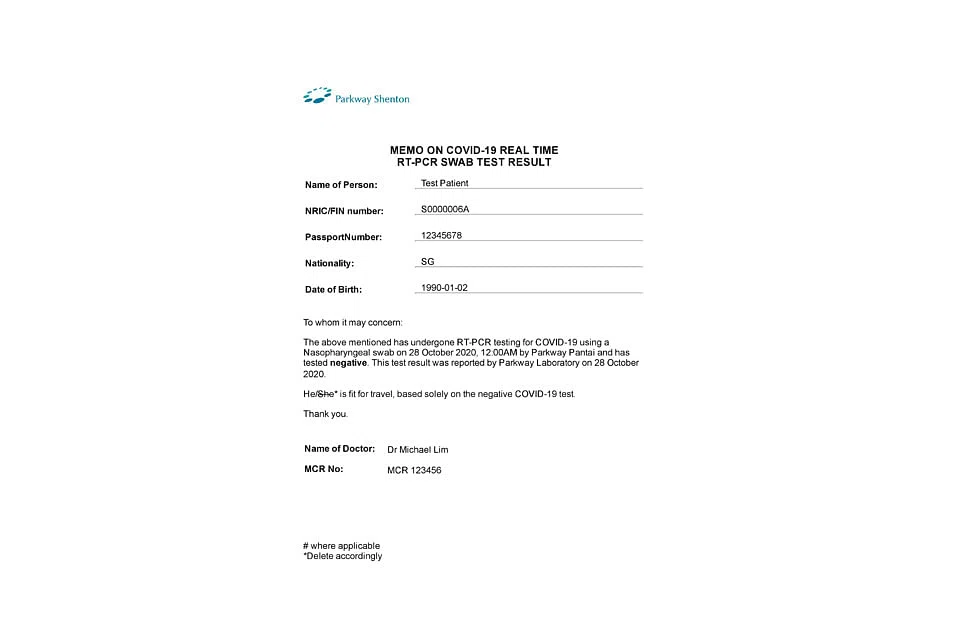
Local firm Accredify is using blockchain technology to make Covid-19 test results harder to forge, building on a solution originally created to combat the rise of fake academic certificates.
Its technology for tamper-proof digital certificates has been used by the Ministry of Health to issue easily verified digital discharge memos for migrant workers who were cleared to return to work.
Now, Accredify is working with Parkway Pantai to issue tamper-proof digital Covid-19 test result documents for travellers taking pre-departure swab tests. Immigration authorities can scan the QR codes on these documents to view the verified result on the website of the healthcare provider that issued the document.
Parkway Pantai started issuing Covid-19 test results in this form in early November, and plans to integrate Accredify's technology into its healthcare networks in overseas markets. Accredify has also partnered Gleneagles Hong Kong Hospital, which will use its solution when issuing Covid-19 test results to travellers using the Singapore-Hong Kong air travel bubble from Nov 22.
Secure sharing
Quah Zheng Wei, CEO of Accredify, believes that his firm's solution has greater implications for the healthcare industry as a whole, because the use of blockchain technology makes it possible to share health data securely.
"Accredify transfers ownership of healthcare data back to the hands of the individual and allows him or her to decide what to share and who to share them with," Mr Quah said. "This changes the entire landscape as we are unlocking opportunities that were not possible in the past."
Some of these opportunities include sharing of health data between local and foreign healthcare providers for patients seeking treatment overseas, easier verification of medical claims by insurers, and a digital health booklet in the form of a mobile app so individuals can carry with them medical records like immunisations, allergies or certifications of medical conditions.
Accredify has already co-developed such an app with SGInnovate, called the Digital Health Passport, with the support of the National Research Foundation. The app will be launched by Nov 30.
The other aspect of Singapore's reopening, that of restarting business operations, requires ensuring that employees comply with safe management measures such as physical distancing. This is fairly straightforward in offices with designated desks, but is more difficult in manufacturing, warehouse and retail environments. Companies therefore need effective long-term solutions to automate the enforcement of safe management measures.
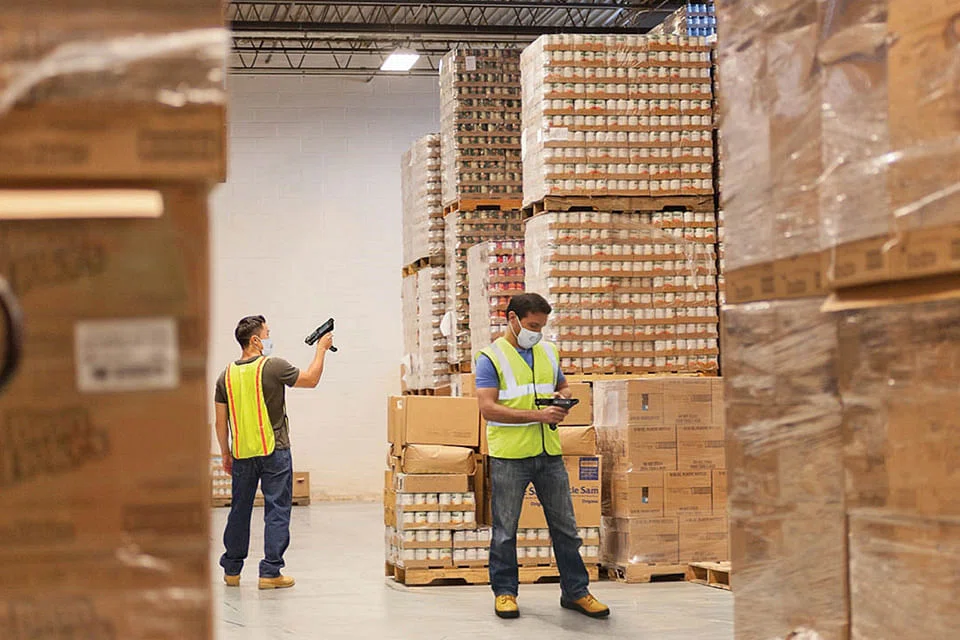
In March, a global team of engineers and supply chain operations leaders at enterprise solutions provider Zebra Technologies developed a mobile device application that leverages Zebra's devices such as handheld scanners and mobile computers for this purpose.
Using Bluetooth and Wifi, the MotionWorks Proximity solution enables these Zebra devices that employees already use in warehouse and retail environments to detect if users spend longer than 60 seconds in close proximity with a co-worker.
Warning sound
If this happens, the devices will issue a sound warning every minute from that point. If three consecutive warnings are ignored in a five-minute period, a "proximity event" is registered with date, time and length of the social distancing violation for follow-up by supervisors. The data is tied to employee identification (IDs) or anonymised user IDs and can be used for contact tracing.
The cloud-based solution was launched in Singapore in June, and firms that already use Zebra's compatible devices will not need to implement new infrastructure to use it. It is offered on a subscription basis, with costs dependent on factors such as the number of users and the complexity of the environment.
"Solutions like MotionWorks Proximity will allow businesses to accommodate social distancing orders while at the same time maintain or even improve their operation workflows as economies reopen," said Royston Phua, vertical practice lead for APAC Supply Chains at Zebra Technologies.
Another solution was developed by technology multinational HP Inc and AI Singapore (AISG) in a collaboration called Project Safe Eye during the circuit breaker in May.
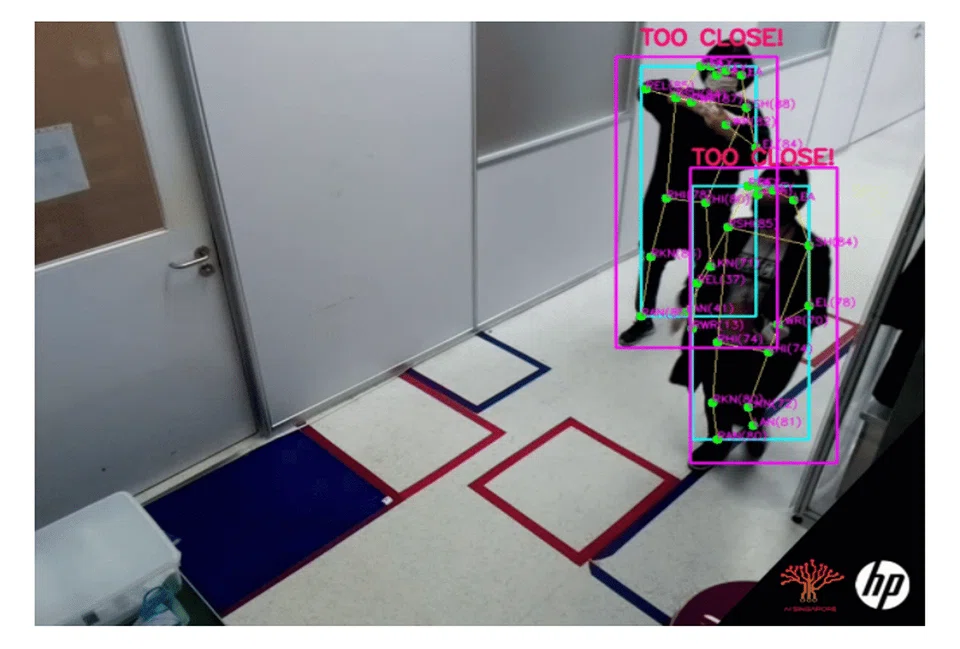
Their trial solution was built on AISG's social distancing mobile application FinePose. The app uses AI and cameras such as those in mobile phones to calculate physical distance between individuals. If they are too close together, on-screen visual markers will turn from green to red as a warning. Normally, AISG recommends projecting the video feed onto an external monitor so the warnings are easier to see.
Upgraded solution
Project Safe Eye took the solution a step further by incorporating Internet of Things technology through a real-time camera feed and video display, as well as automatic verbal warnings issued in addition to the visual indicators.
The upgraded solution has also helped HP to improve workflows to manage human traffic, said HP Inc director of engineering Jamie Neo. For example, an additional exit was opened at one worksite after data showed that the original exit was getting congested at the end of each workday.
Ms Neo said the solution takes just two to four hours to set up at a new location, and HP has rolled it out in about 35 locations across its production areas.
AISG has made the alpha version of the FinePose Android app available on its Makerspace site. Companies that would like to deploy FinePose on other devices, such as cameras and laptops, can contact AISG for further discussion, and costs would depend on the nature and scope of each project.
Said Ms Neo: "As AISG uses our work with them as a blueprint for other manufacturers to ensure safe return to their workplaces and production lines, we hope that other companies can also benefit from the groundwork that we have done to help protect the privacy of their work, people and data as well."
TRENDING NOW

Indonesia begins cutting natural gas exports to Singapore from Oct 24: reports

Singapore’s central gas buyer affirms Indonesia’s role as ‘important partner’ amid export review warning

KKR founders among investors buying 42% of Peter Lim’s Valencia; club valued at US$1.4 billion

NEA issues notices to 10 Singapore-based companies, including Wilmar and APP, over haze

