
SGSME logo
COMMENTARY

Does Singapore’s F&B industry face an unsustainable future?

With the industry as a whole earning less than it spends, consolidation might be for the best
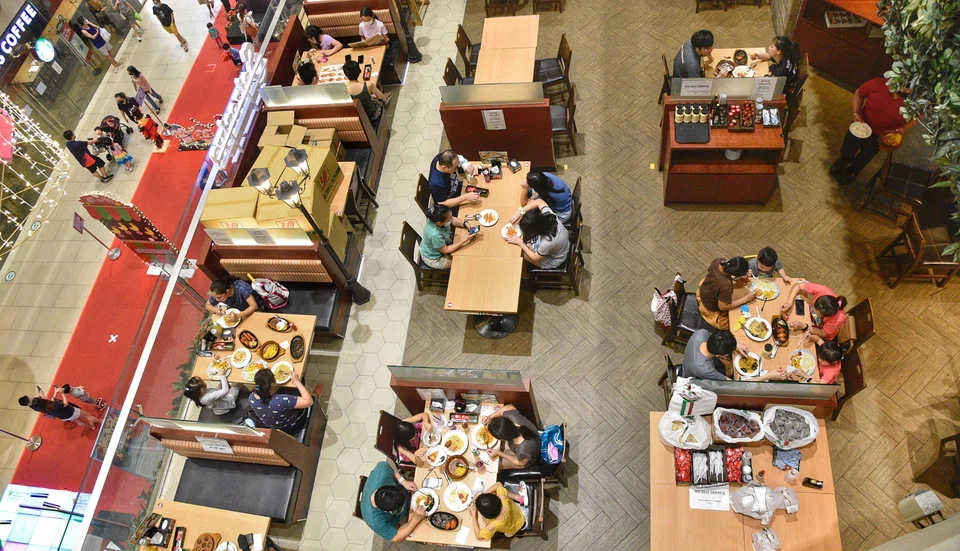
    • Singapore's F&B industry has welcomed more businesses while consumer spending stagnated.
    • Singapore's F&B industry has welcomed more businesses while consumer spending stagnated. PHOTO: BT FILE
    Published Thu, Oct 24, 2024 · 05:00 AM

    BENEATH the surface of Singapore’s vibrant food scene lies a simmering crisis: a high rate of closures in the food & beverage (F&B) sector. What contributes to this trend, and how can restaurateurs adapt to these challenging times?

    Singapore had 5,560 restaurants with an industry operating revenue of S$3.85 billion in 2022, according to the most recent data from the Department of Statistics.

    But industry operating expenditure was S$3.97 billion – meaning that on average, each restaurant incurred a loss of S$21,000. The last time the restaurant industry had operating revenues greater than expenses was in 2012.


    Between 2014 and 2022, the number of restaurants grew 41.4 per cent. Yet operating revenue rose only 1.21 per cent over the same period, while operating expenses increased by 4.12 per cent.

    The main business expenses for restaurants have risen: food costs by 25 per cent, rent per square foot by 36 per cent, and average labour nominal earnings by 30 per cent.

    The picture is clear: the industry has welcomed more businesses – with higher subsequent costs – while consumer spending stagnated. This has reduced or even eliminated already thin profit margins.

    New outlets continue to enter the market despite the industry’s increasing costs. From the start of 2024 through August, 2,598 new F&B outlets opened in Singapore, even as 2,193 closed.

    The opening of new outlets suggests that the market is driven by optimism. However, the increase also means that only those which differentiate themselves or diversify their revenue streams have the potential for success.

    Diversifying revenue streams

    Amid this competitive landscape, restaurants must find ways to diversify their revenue streams or use their dining area outside regular operational hours.

    One option is to operate a virtual or ghost kitchen – which serve delivery orders only – within existing restaurant premises. Using ingredients that they already have on hand, but with different preparation methods, restaurants can offer new delivery-only concepts. This can maximise kitchen output with minimal impact on dine-in customers.

    Another possibility is that of collaborative spaces. Cafes or bakeries can partner with complementary businesses such as bookstores, repair shops or boutique clothing brands. Such co-branded experiences encourage cross-traffic and increase dwell time, which can boost revenue for both entities.

    A third idea is to incorporate a retail component, using the restaurant’s own goods or partnering local artisans. This can create a new revenue stream, offering customers the convenience of taking products home when they do not have the time to dine in.

    Finally, restaurants can consider hosting events and workshops. As restaurants are often closed outside dining hours, renting out the space for wine tastings, talks or workshops can provide an additional source of revenue.

    Standing out

    Restaurants should also try to stand out from the competition.

    First, unique experiences can be a differentiator for new restaurants. Consider “gastrogaming”, where high-quality food is paired with gaming.

    Popular options include darts, racing simulators, mini-golf, e-sports, or virtual reality. These can attract a niche audience and create word-of-mouth advertising.

    With gastrogaming, either the food or the gaming can be customers’ primary reason for patronising the establishment – but both add to the bottom line.

    Second, the use of technology can streamline operations and increase guest enjoyment. Reservation systems driven by artificial intelligence, for instance, can ensure guests are well taken care of.

    Data analytics can also provide restaurants with in-depth customer analysis, allowing for personalised marketing campaigns and upselling during their visit.

    Third, restaurants can differentiate themselves by prioritising sustainability, as consumers are increasingly aware of environmental issues.

    Some moves include reducing food miles by sourcing ingredients locally; offering plant-based options; implementing waste reduction programmes; and obtaining a sustainable certification.

    Is consolidation the answer?

    The restaurant industry as a whole has seen relatively flat revenue growth, while enduring increased operating costs and competition – suggesting that it is oversaturated. To course-correct, the industry and its partners have a few options.

    If restaurants cannot create alternative revenue streams, they could increase menu prices to combat rising costs. However, as consumers are arguably reaching the limits of what they are willing to spend on dining out, higher menu prices would likely cause a drop in patronage.

    Alternatively, banks and other financial institutions should ensure that restaurateurs applying for loans have business plans with realistic predictions for customer numbers and revenue streams. Comprehensive market analysis should be done for the potential location, and a feasibility study conducted before loans are authorised.

    A final short-term solution is to limit the number of new restaurant licences issued each month until the restaurant industry consolidates.

    If there is an in-depth review of applications, and only those with a higher probability of success are approved, Singapore will see fewer openings and an overall shrinking of the industry – creating a healthier market with more sustainable profit margins.

    In an oversaturated industry, individual restaurateurs need to stand out from their competitors and find alternate revenue streams to be profitable.

    But for the industry as a whole to thrive, what is needed is a realistic understanding of market capacity, a review and limit of new restaurants entering the market, and a willingness to break away from traditions.

    The writer is an assistant professor at the EHL Hospitality Business School, Campus Singapore


