


Using AI to solve problems before they happen
Predictive maintenance software firm Avanseus expects good demand for its software especially with the global trend of remote working.
 Add BT as a preferred source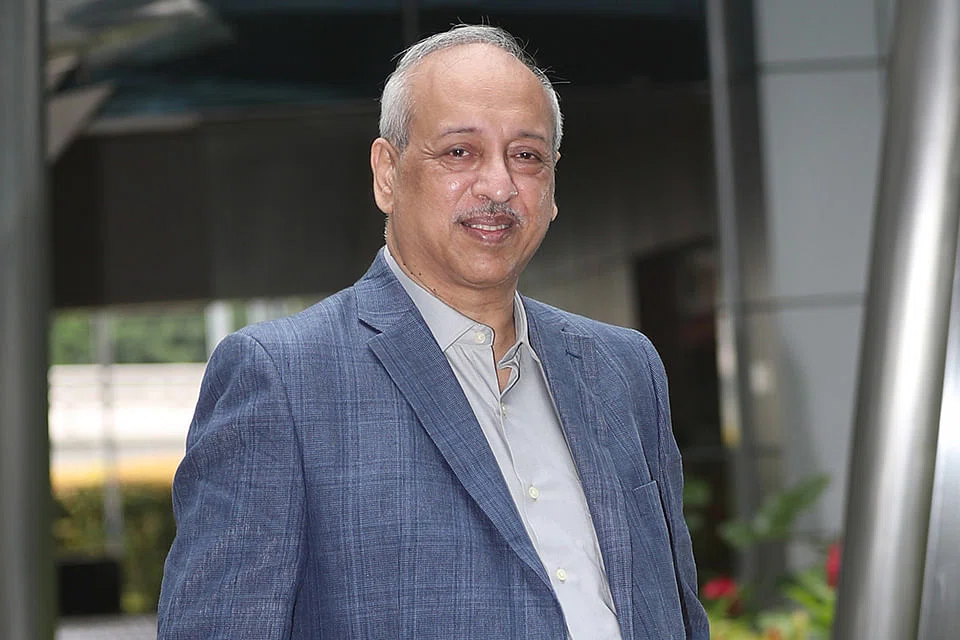
DeeperDive is a beta AI feature. Refer to full articles for the facts.
AS the world patiently awaits the roll-out and mass adoption of 5G technology in the coming years, so too, does Bhargab Mitra.
After all, the founder and chief executive of predictive maintenance software firm Avanseus Holdings has already been waiting for five years.
A telecommunications veteran with more than two decades of experience with industry stalwarts such as Ericsson and Nokia, Mr Mitra had predicted a business opportunity that synergised with 5G back in 2015.
"When I knew this (5G) was coming in, I was determined to work in some area which could really address this particular domain," he told The Business Times.
That area was the maintenance of telecommunications and other networking equipment, which was a slow and rather inefficient process.
Typically, repairs were carried out on the equipment as they failed, which did not improve the overall robustness of the networks, said Mr Mitra.
Navigate Asia in
a new global order
Get the insights delivered to your inbox.
Avanseus' solution, therefore, was to introduce artificial intelligence (AI) into the mix.
The firm harnesses AI to predict faults across telecommunications and other network types up to 15 days before they occur, which allows for preventive - not reactive - maintenance.
The software, dubbed Cognitive Assistant for Networks, or CAN, is usually deployed via cloud computing platforms such as Amazon Web Services and Microsoft Azure.
Cost savings
Once deployed, the aim for CAN is to reduce operational costs of telecommunications providers by up to 30 per cent, Mr Mitra said.
Such savings are possible if CAN has been deployed with a firm for at least 12 months, as the software has built-in machine learning capabilities to continuously improve its predictive proficiency.
Apart from reducing costs, CAN helps with lessening the possibility of service disruptions as well, which can come with hefty fines.
In September, two telcos here - M1 and StarHub - were fined a combined S$610,000 by the Infocomm Media Development Authority for Internet service disruptions in April and May.
Additionally, a key plank of Avanseus' business model is to be 5G-ready, said Mr Mitra.
Part of the complexities of building a 5G network include the massive amount of new networking infrastructure, which would need to be maintained.
In Singapore, the nationwide 5G networks are set to be completed by 2025, and will be built by Singtel, along with a joint venture between StarHub and M1.
Global 5G adoption
Globally, 5G adoption is expected to cover close to two-thirds of the world's population by 2025, according to a June report by Ericsson.
However, even before the advent of 5G, Avanseus managed to convince some of the largest telecommunications firms in Europe, Asia, and South America to deploy CAN - albeit, with some difficulty.
"When you go to a customer and you tell them, I am going to predict something which has not happened, people look at you with suspicion," Mr Mitra said. "It sounds like an ideal scenario. But how are you going to do it?"
The answer, he said, was AI and digitalisation. And it worked - Avanseus' clients include Bharti Airtel, Vodafone Europe, and Brazilian telco Oi.
The firm has seen its revenue double year on year since 2017 and expects to ring in between US$4 million and US$5 million in 2020.
Avanseus expects to be profitable this year as well, noted Mr Mitra, even as the global movement restrictions brought on as a response to the Covid-19 pandemic has somewhat stifled expectations.
"From a delivery point of view ... we can deliver 100 per cent remotely, so our existing customers, they are in fact expanding their orders," he said.
"What was impacted is that you can't meet the customer for the sales purpose, (so) customer decision making is a little bit slow."
Another pain point that the firm endured was the need to purchase additional bandwidth for high-speed Internet for its employees, who began working from home because of government measures to curb the spread of the Covid-19 virus.
Heightened demand
Yet, it is not all bad. The global trend to remote work, along with cancelled business travel, is likely to drive demand in high quality mobile communications, said Mr Mitra.
The heightened demand could then translate to increased pressure on telecommunications providers to ramp up maintenance works, which is where Avanseus comes in.
"Our software, in 2021, is definitely going to see a good growth - that is very clear," he said.

Decoding Asia newsletter: your guide to navigating Asia in a new global order. Sign up here to get Decoding Asia newsletter. Delivered to your inbox. Free.
Copyright SPH Media. All rights reserved.
TRENDING NOW

Shelving S$5 billion office redevelopment plan proved ‘wise’ as geopolitical risks mount: OCBC chairman

Why where you park your joint venture matters: Lessons from a US$689 million shareholder dispute

China pips the US if Asean is forced to choose, but analysts warn against reading it like a sports result

Singaporeans can now buy record amount of yen per Singdollar

