How business leaders can accelerate growth when the world slows
Three attributes stand out: embrace transformation, adopt a deal-making and collaboration mindset and commit to a vision of the future beyond current challenges.
 Add BT as a preferred source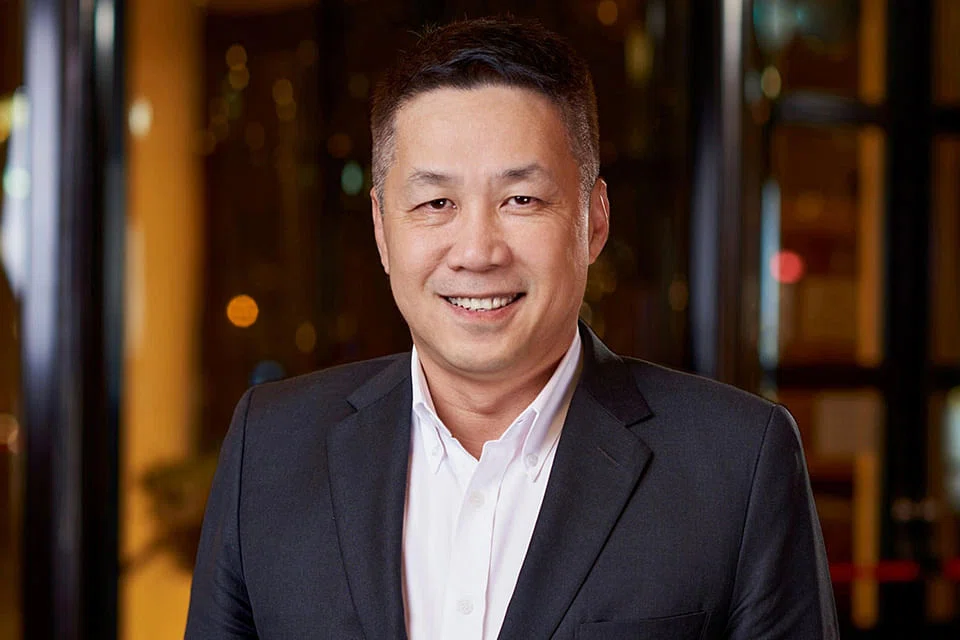
THE past 18 months have been a roller-coaster ride for businesses. According to the International Monetary Fund, the global economy contracted by 3.1 per cent globally in 2020.
For entrepreneurs, the challenges are no less daunting. Based on the Global Entrepreneurship Monitor 2020/2021 Global Report, 43 per cent of its respondents knew someone who had ceased a business as a result of the pandemic. In Singapore, between March 2020 and September 2021, more than 73,000 business entities ceased operations, even as nearly 103,600 were formed.
Given the volatility and fast-evolving situation, businesses have had to navigate disruption with agility to reduce risk, build resilience and drive growth. For Singapore companies, growth often means expanding overseas given our small domestic market.
As Singapore Prime Minister Lee Hsien Loong highlighted during the National Day Rally 2021, there is a need to help Singapore companies go out into the world, seize new opportunities and grow their business.
With digitalisation and the rapid rise of e-commerce further accelerated by the pandemic, it has become more critical for businesses - with the right digital strategy - to develop customer-centric products and services, drive market diversification, and latch onto the opportunities of the global marketplace.
Strategic deal-making unlocks opportunities
Mergers and acquisitions (M&As) and partnerships have long been an option for businesses to penetrate new markets with greater confidence. The pandemic, which has driven many businesses to transform to survive and build a path forward, may have emboldened more business leaders towards an inorganic growth approach, judging from the 23rd EY Global Capital Confidence Barometer conducted in March.
The survey found that M&A appetite among South-east Asian corporates hit a record high of 56 per cent with cross-border deals being the key focus.
Beyond access to new markets, large companies have been known to build out their competencies or diversify their products and services through acquisitions. Diversification can help to protect companies' bottom line against unforeseen circumstances, in other words, build resilience.
Another strategic driver for M&As is the need to secure supply chains. Recent shifts in trade and regulations are highlighting vulnerabilities in supply chains. Businesses are thus seeking to build resilient supply chains that can withstand geopolitical, climate or economic stresses, and are secure for the long term.
Collaboration co-creates success
For companies that are lacking in capabilities to match their growth ambitions, many have traditionally sought to acquire smaller and innovative companies to benefit from their niche expertise.
Those who find M&As expensive, culturally difficult or complex given post-merger integration issues may find it appealing to collaborate with external entrepreneurs via innovation hubs or create agile cross-functional teams or "tribes" that are empowered to innovate without being encumbered by corporate structures.
As industry boundaries increasingly blur, companies are realising that competitors and disruptors can also co-thrive as collaborators. For entrepreneurial companies and established incumbents alike, building strategic partnerships through digital ecosystems to share resources, data and capabilities can be a powerful way to achieve differential growth together.
Essentially, can you be part of an interconnected set of offerings provided by businesses across different sectors, fulfilling consumer needs in one integrated experience? To do so successfully, companies must be clear about the role they can play in such an ecosystem and how they can monetise it.
Growing out of a crisis
Another barrier to growth is liquidity constraints. For some, the challenge is severe enough to lead to collapse, while for others, it only leaves room to manage basic operations and not significant business repositioning.
With sources of finance practising stringent lending, companies may instead look to divestments or carve-outs to raise capital.
Finding the right buyer may not be a simple exercise, but the robust M&A appetite, coupled with continued strong interest from family offices, private equity and venture capitalists to invest in a good story, does present opportunities for companies to benefit from carve-outs.
Research by EY-Parthenon has shown that companies that moved with conviction to acquire or divest during crises had a significantly higher total shareholder return, notwithstanding taking an initial hit on the cashflow, which would later greatly improve.
To drive sustainable long-term growth, it is imperative to not stand still now even while the world slows. Sometimes the best way out of a short-term crisis is to grow out of the problem.
To that end, business leaders should embrace three attributes: a transformation imperative that is crucial to positioning for growth in an endemic-pandemic world; a deal-making mindset to accelerate strategic transformation; and a vision of the future to bridge the gap between short-term pressures and long-term value creation.
- The writer is Singapore and Brunei managing partner, Ernst & Young.
- The views reflected in this article are those of the author and do not necessarily reflect the views of the global EY organisation or its member firms.
Decoding Asia newsletter: your guide to navigating Asia in a new global order. Sign up here to get Decoding Asia newsletter. Delivered to your inbox. Free.
Share with us your feedback on BT's products and services