Following in their fathers’ footsteps, they bring precision engineering into the future
A younger generation of business leaders is going digital and automated

SECOND and third-generation bosses are taking Singapore’s legacy precision engineering (PE) companies into the future, helping the industry shed its old image of manual labour by adopting greater automation and digitalisation.
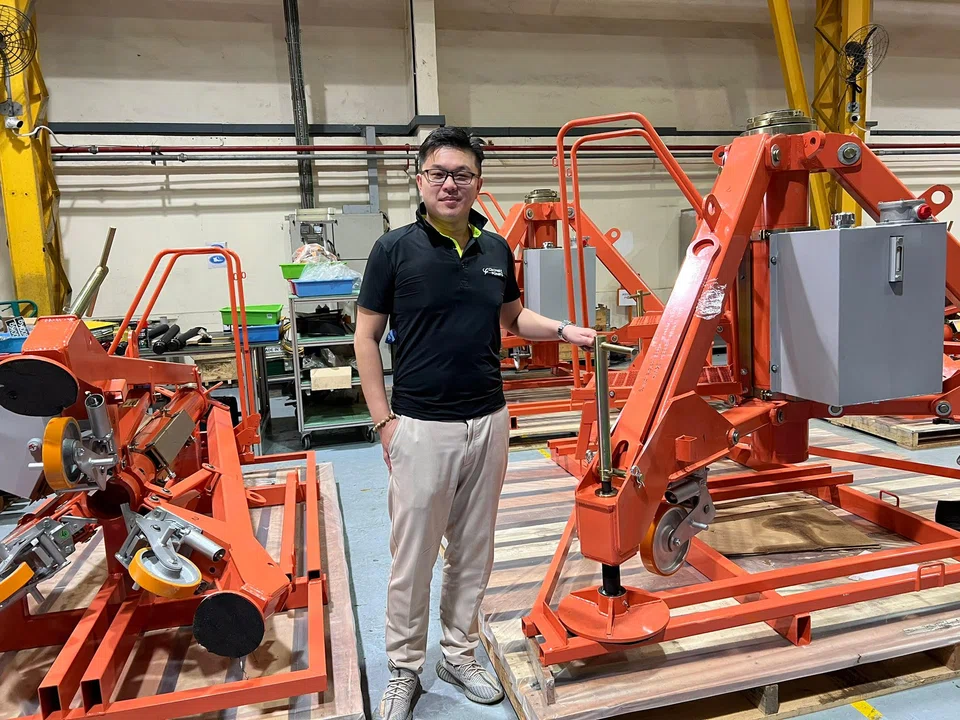
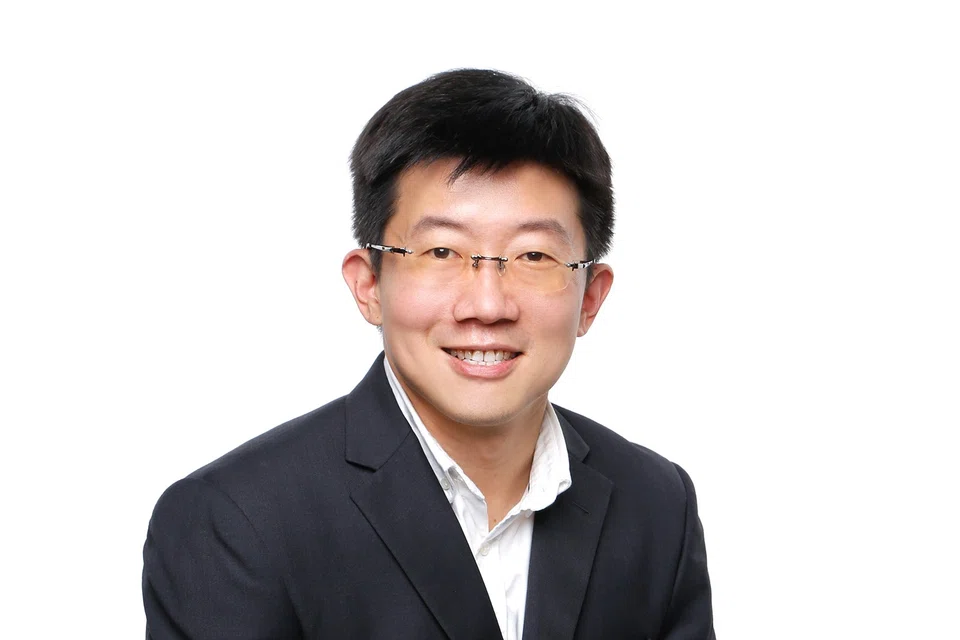
Flexmech Engineering, which turns 40 in 2023, started to transform 7 years ago when Tan Ru-Ding and his brother took over from their parents. Both brothers are now managing directors.
Previously, Flexmech’s main business was the contract manufacturing and distribution of machines and tools. Today, the company has immersed itself in conceptualising and developing new products and automation equipment for clients, said Tan.
“Previously we were … a service bureau, we made things on demand. When somebody wants something, we’ll make it for them. When somebody has a product, we will distribute it for them,” he said. “There was not much value-add … not much engineering involved.”
“(Now) it’s really a new direction for the company,” said Tan, chairman of Singapore Precision Engineering and Technology Association (SPETA) Generation II, a group of younger generation bosses. “We are adding an element of design engineering.”
Flexmech is involved in the research and development of original products, creating things that “people don’t even know that they want yet”, Tan said. One example is its i4.0 sensor, created last year in partnership with the Singapore Institute of Manufacturing Technology (SIMTech) Innovation Factory.
The magnetic sensor can be easily stuck onto machines to track data such as temperature, humidity, vibrations and acceleration. Using the data, companies can predict when a machine might break down or when it might need servicing or replacement.
“Traditionally, nobody would know when a machine is going to break down, because nobody collects any data,” Tan noted. “When a component such as a spindle spoils, it becomes a big deal, because you cannot continue production and you cannot meet your deadlines.”
Out with the old, in with the new
The next 10 years will be critical as more older generation leaders pass on the baton to the younger generation, said Tan.
Another second-generation leader who has already taken over is Ryan Ng, general manager and director of Chong Fong Engineering. The company was founded in 1976 and Ng has been with it for the past 10 years.
Establishing a strong foothold in Singapore’s aerospace tooling market about 6 years ago, the company has pivoted to derive about 70 per cent of its revenue from this area. It previously focused on welding, metal fabrication and machining in its Malaysian factory, as well as designing and building automobile solutions in its Thailand factory.
Chong Fong has also started exporting its products to the United States, Dubai, China, and some parts of Europe. “We evolved from a machinery shop to an automation house, to then expand overseas,” Ng said.
Although the pandemic dealt a heavy blow due to Chong Fong’s reliance on the aerospace industry, the company’s outlook is now “much better” and it is set to see more projects this year than in the past 2 years.
But there are still challenges such as supply chain disruptions and difficulties in attracting young talent. Said Ng: “A component ... used to have a lead time of 10 weeks, (but this) has now become 4 months. This longer lead time affects overall delivery arrangements. There’s also the challenge of material sources – because of disruption, some stock productions have stopped, or the prices have gone extremely high, and we have to source from different suppliers.”
As for talent, there is an enduring misconception that the PE industry is traditional in its methods, said Tan.
“It’s really a creative industry, and it takes a whole wealth of information to even start participating in the process. It’s a great career to have.” Companies should not portray themselves as “uncreative engineering companies”, he added.
The PE industry offers viable career paths for young entrants, say industry players. Take third-generation leader Kwan Lifeng, the enterprise development manager of CKE Manufacturing. The company has 2 factories in Singapore and provides machining and welding services for the oil and gas industry.
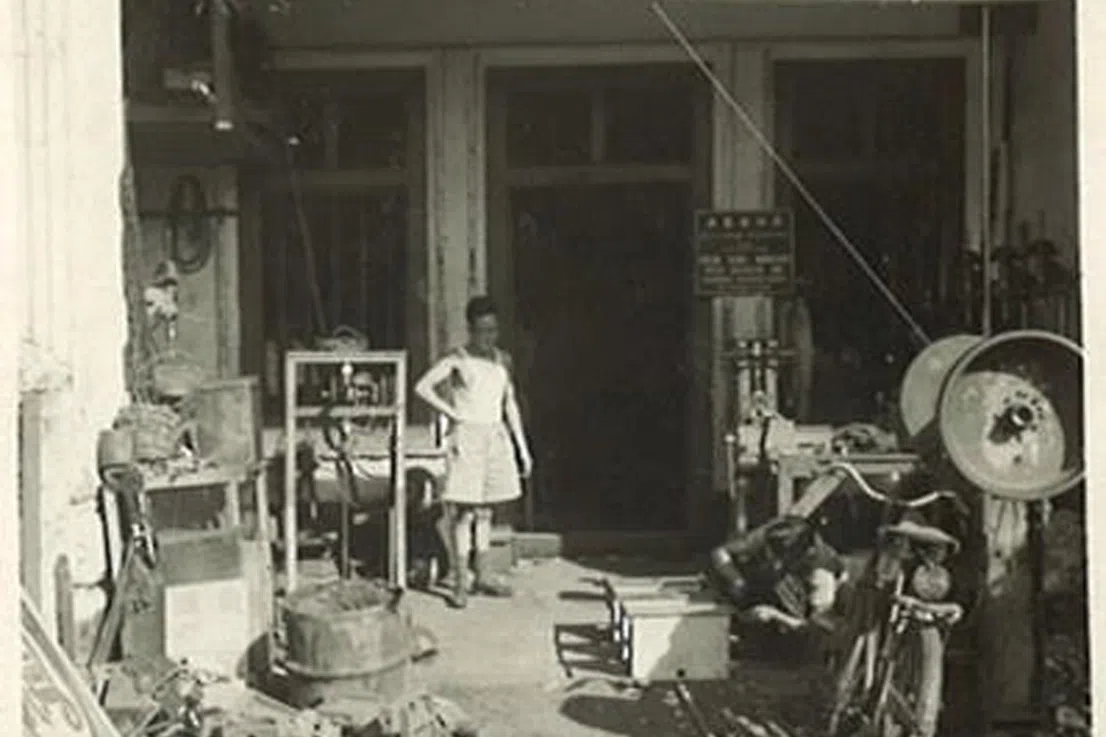
Kwan, who was a technical theatre student in his early years, did not originally intend to join his grandfather’s company. But because he wanted to have a stable job before marriage, he stepped into the company 15 years ago.
“Starting from sales, I got more involved in the technical aspects of the business. Went to ITE (Institute of Technical Education), went to SIMTech for training, and went to Malaysia for welding courses. Unknowingly, I got drawn into the system,” Kwan quipped.
He harbours no regrets and is instead on a mission to surpass the achievements of his predecessors, with digitalisation and the use of data.
“If you are able to quantify experiences and transform it into data, you will make less mistakes and (can) try to catch up with what they (predecessors) know,” he noted. “Technology will help to shorten the gap.”
The company also works with institutes of higher learning on work-study programmes and in attracting younger graduates to be interns and full-timers.
“There is some success in polytechnic (and) university graduates joining us, but not a lot of them are working on the machines and doing the technical stuff,” said Kwan. “So our next step will be on how we can make it more attractive for young graduates to work on the production shophouse floor.”
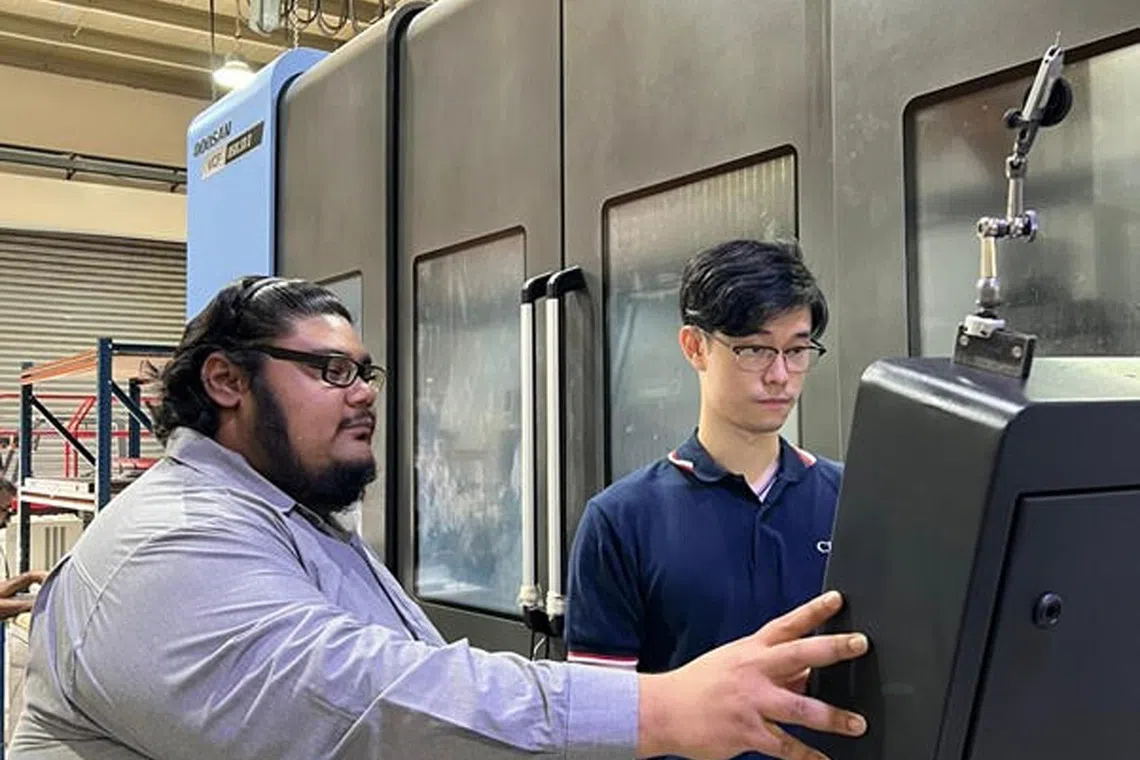
Second generation learns together
Tan, Ng, and Kwan are all part of SPETA Generation II, a sub-grouping that began 2 years ago with 5 members and has since grown to 40.
“It started out as an informal group to share our sob stories; it was a lot like a therapy session,” Tan said. “But now we try to meet once every month and give people something to aspire towards, inspiring each other in the right direction.”
Members visit factories on a regular basis, meeting the company’s founders or key members to learn more about the PE industry. They also attend seminars, conferences and learning courses together.
“It’s a place where we as second generation leaders have a forum to ask questions and solve our doubts,” Tan noted. “Very often, it’s difficult to have our parents as our only mentors. We need another source of guidance – SPETA Gen II provides that.”