A growing appetite for Melvados’ frozen gourmet meals
This is the first of a 3-part series on home-grown gourmet food manufacturers that are making waves in Singapore’s F&B scene

Paige Lim
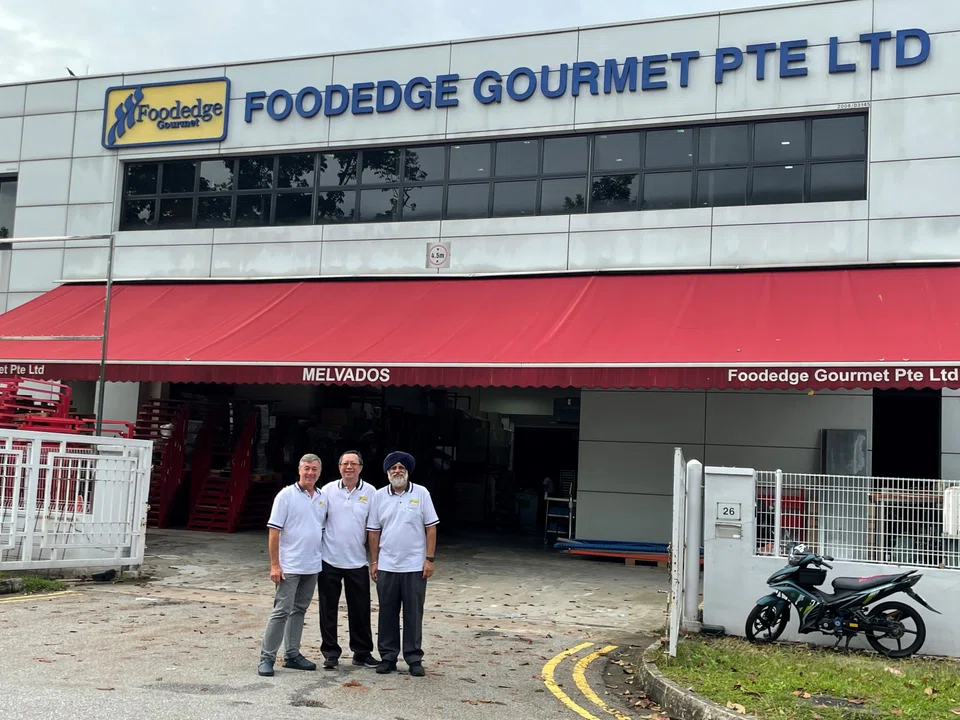
THE start of the Covid-19 pandemic nearly obliterated Foodedge Gourmet’s sales of frozen meals to businesses, but it also led to a newfound popularity with consumers.
The food manufacturer used to make about S$30,000 in sales each day, mostly from supplying frozen gourmet meals to hotels, airlines, restaurants and cafes.
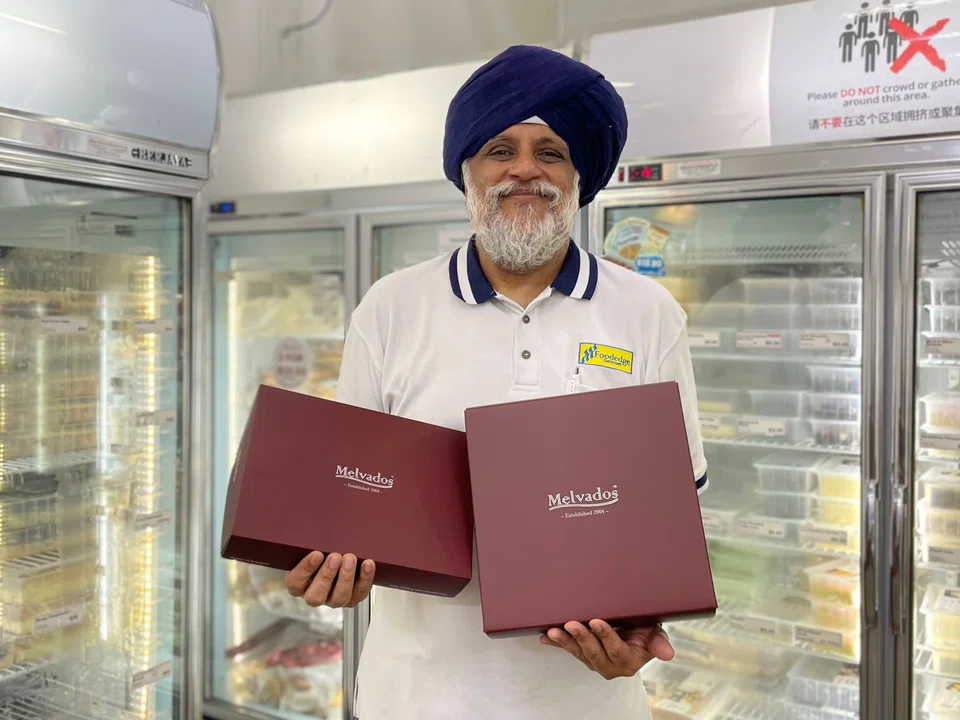
All that changed when Covid-19 struck in early 2020. Foodedge’s business-to-business (B2B) sales fell “almost down to zero” during the “circuit breaker” that year, as nobody could dine out or travel, recalled co-founder Manmeet Singh.
But there was a silver lining to the crisis. Though the company lost its main pool of client revenue, there was an instant spike in online sales of frozen food products under its consumer-facing retail brand Melvados.
“We were very surprised … immediately we were delivering hundreds of orders a day,” Singh said.
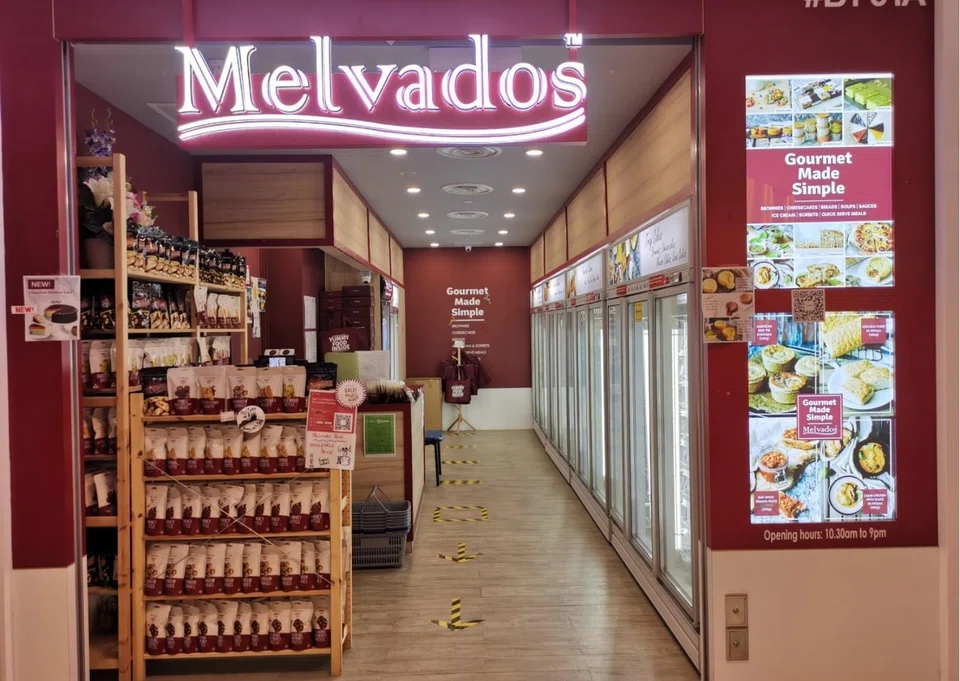
At that time, Melvados had its own online shop, as well as 4 physical stores which remained open. Its products – including ice-cream, brownies, cakes, snacks and ready-made frozen meals – were also listed on grocery platforms GrabMart and pandamart.
“I think some people already knew (Melvados) then, but they never saw the urge to order from us until the (other) shops closed. People wanted to stock up on meals, and we had a lot of meals ready,” Singh added.
The brand benefited from the pandemic-era trend of food gifting too, as corporate orders for food hampers and welfare packs surged.
‘Clean’ before it was cool
The pandemic may have thrust Melvados into the spotlight, but the brand goes back a long way. Back in 1996, Singh and his business partner Raymond Foo were running a cold chain logistics business.
What struck them, however, was how most of the imported ice cream that they transported was made with palm oil. They also noticed that pre-packaged frozen meals – otherwise known as “TV dinners” – from the United States contained a large amount of preservatives.
“You wouldn’t want to eat them if you read the ingredients on their labels, but at that time, nobody was reading them. We felt that we could make the same meals, but in a better way,” said Singh.
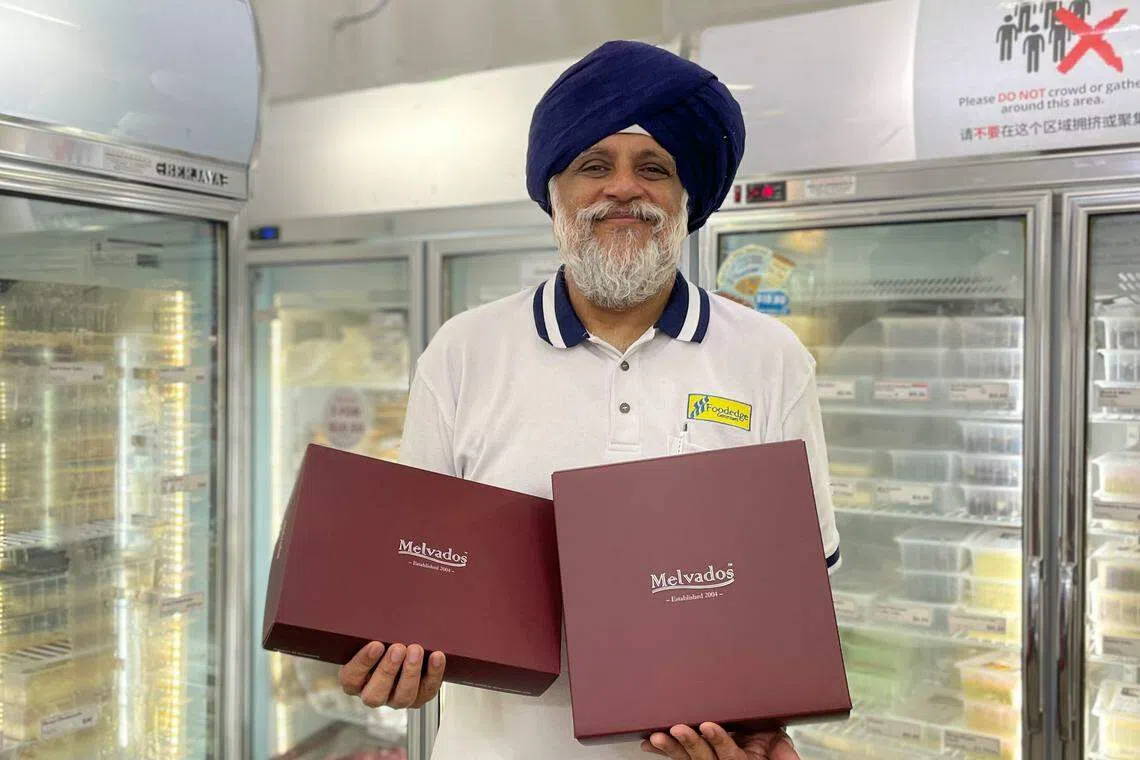
So in 2003, Singh and Foo set up wholesale trading company Foodedge Gourmet. After roping in pastry chef Karl Ableitner, the trio pivoted into food manufacturing a year later, producing frozen desserts such as ice cream, brownies and cakes. They started out by supplying their products to other businesses, but then created the consumer brand Melvados soon after.
Their early decision to offer “clean label” products – made with simple ingredients and without artificial additives or preservatives – is paying off today, as it resonates with a growing pool of health-conscious and socially responsible consumers.
Consumers have not always focused on this, said Singh. “When we first started out, international brands added a lot of preservatives to their products to make them last longer, but nobody saw preservatives as bad yet. (But) our goal was always to sell premium frozen food at reasonable prices. We’re trying to be as ‘clean label’ as possible, and we use freezing as our preservation method,” he said.
Freezing also prevents food wastage, Singh added. Many of Foodedge’s frozen products such as tray cakes and lasagnas are pre-portioned, so cafes need only defrost the required quantity each day.
Establishing Melvados on home ground
Before the pandemic, some 70-80 per cent of Foodedge’s total sales were from its B2B arm, with the rest from Melvados. Today, it is an even split – with revenue from Melvados set to grow further.
“The pandemic gave us a very clear direction of our future in this business, that Melvados could be a very big thing for us. We’ve been concentrating on getting it right in the Singapore market,” said Singh.
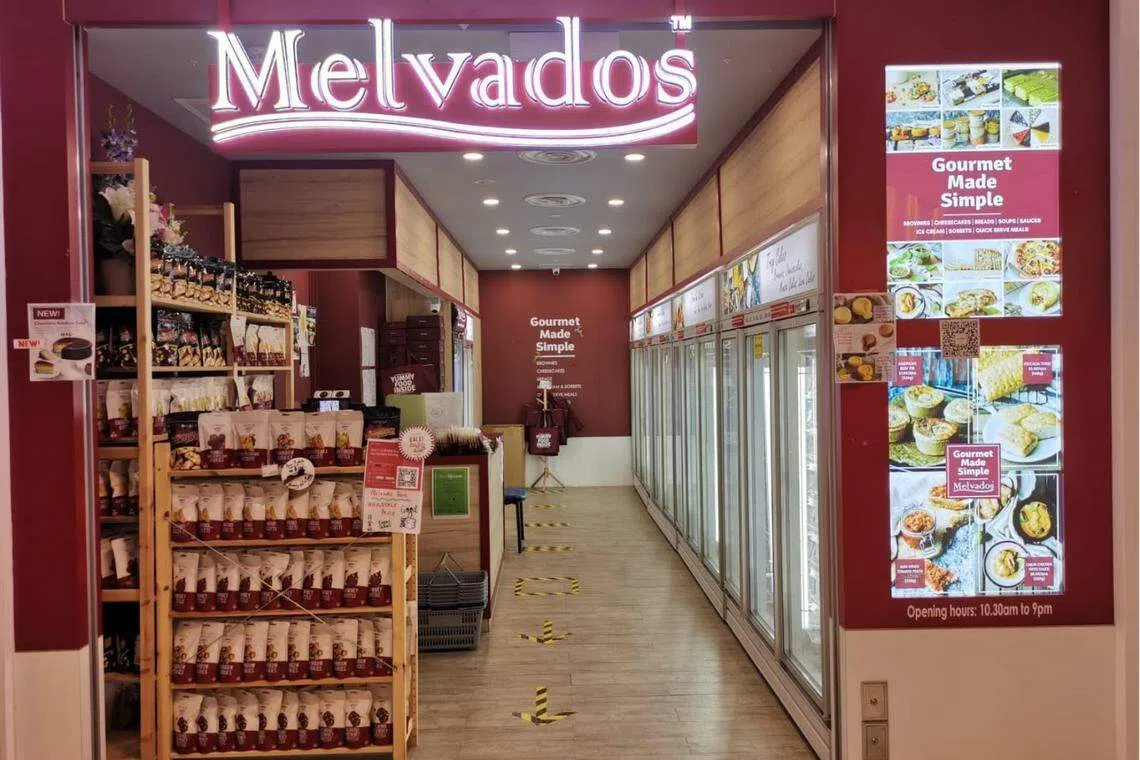
Melvados will be opening its 9th and 10th stores here in November, on the way to its target of 15 stores in Singapore within the next 2 years.
The brand is also relaunching on online grocery marketplace RedMart in September, having temporarily left the platform before the pandemic. Its products can already be found on NTUC Fairprice’s online marketplace, Amazon Fresh, Deliveroo, GrabMart and pandamart, on top of its own online shop.
The team hopes to eventually export Melvados’ products – all of which are halal-certified – to Malaysia, Indonesia, Dubai, Japan and South Korea. Its products were previously exported to Shanghai, though this has since halted due to logistical disruptions caused by the city’s lockdowns.
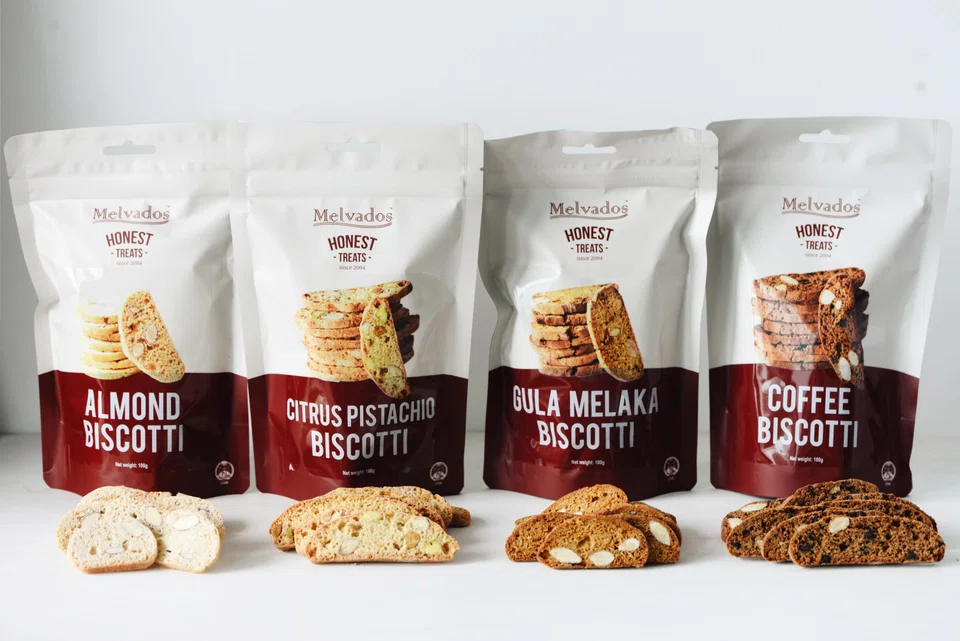
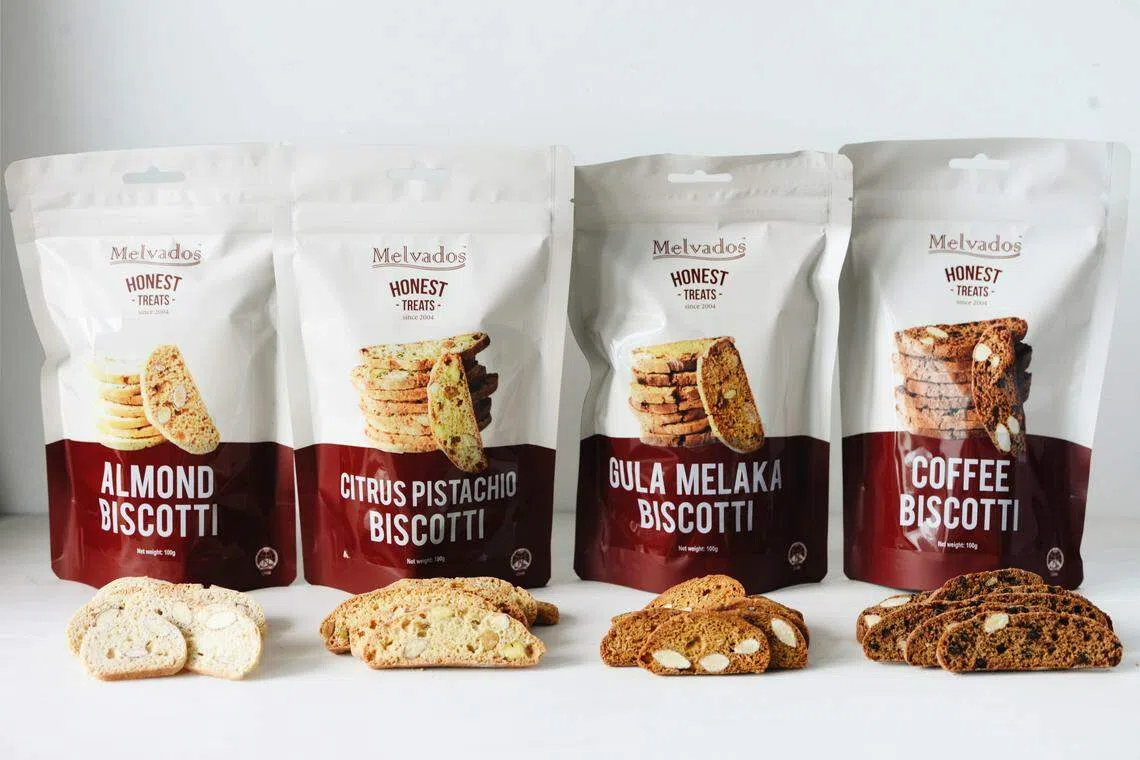
“We do a lot of localisation of snacks, so this will be appreciated in the region,” Singh said. The brand has rolled out distinctly local-flavoured snacks, from ondeh ondeh brittle and gula melaka biscotti, to kopi peng ice cream. Its desserts and snacks are also carried by about 15 cafes and coffee chains, including Starbucks.
At the moment, though, the priority is to strengthen the Melvados brand on home ground, Singh said. In a recent survey conducted in partnership with Nanyang Business School, only 20 per cent of Singaporeans polled were aware of Melvados.
“There’s still 80 per cent of the market that doesn’t know who we are, so our focus now is to build a brand that everybody knows. Most importantly, we want people to know us as a Singapore brand. That’s the first target.”