


Haircut chain kcuts owner goes global with express Korean facials
KC Group aims to break into the US with its Kskin brand

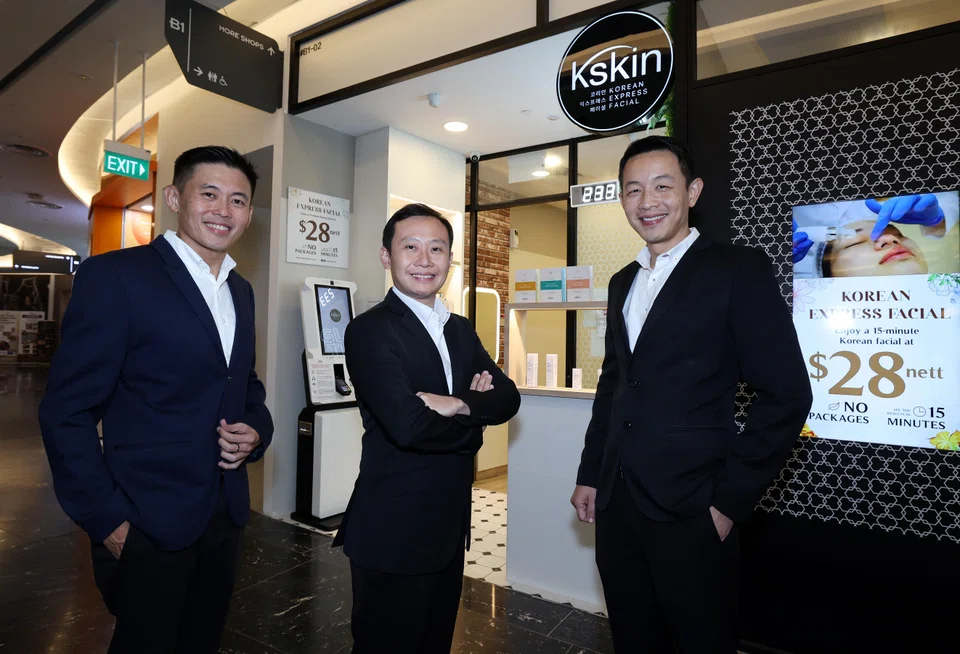
EXPRESS haircut chain kcuts may be KC Group’s most visible brand in Singapore, but the biggest contributor to sales is facial brand Kskin – which will lead the company’s first foray into the US later this year.
Kskin was also the first KC Group concept to go overseas, with outlets opened in Johor, Kuala Lumpur, and Manila in 2023. By end-2024, there will be 12 Kskin outlets in Malaysia and nine in the Philippines.
In the fourth quarter this year, KC Group will also open a Kskin outlet in Atlanta, Georgia, via a franchisee.
Co-founder Samuel Pei is confident of Kskin’s business model, which aims to disrupt the beauty industry’s usual reliance on appointments and packages. At Kskin, customers can simply walk in and pay per facial treatment.
“We see ourselves as pioneers, and we hope Kskin will change the way people purchase and consume beauty services,” said Pei. “And if we can be successful in the US, it is testament to the brand’s strength.”
KC Group was founded in 2013 by Pei, Bernard Ng and Brian Ng, who all met as accountancy course mates in Nanyang Technological University in 2002.
In their freshmen year, the trio set up their first business together: design and production house Bideas, which specialised in exhibition booth set-ups. Bideas is now managed by another business partner.
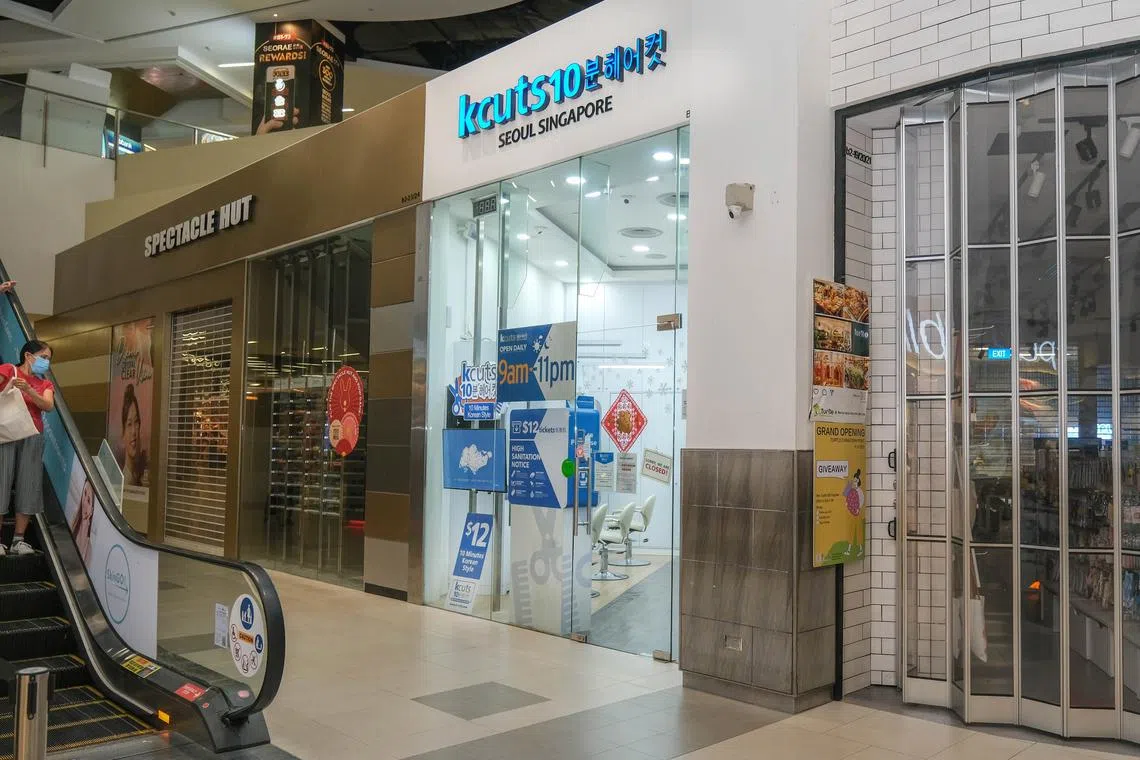
The trio set up kcuts in 2013 to capitalise on the so-called “Korean wave” sweeping through Singapore then.
The chain offers 10-minute budget haircuts by stylists from South Korea.
“A pain point for guys back then was that we had to wait a very long time for our haircuts,” said Bernard Ng. “So we thought, why not offer more options in the market?”
At that time, the main express haircut players were QB House and EC House. Today, kcuts has 74 outlets in Singapore – more than double that of each of their rivals.
KC Group has since added eight more brands: full-service hair salons Apgujeong Hair Studio, Myeongdong Hair Studio and Kerluxe Hair Studio; barber brands James Barker Barber and Clippers Barber; and beauty salons Hanbang Skin Solutions, Kskin and Smoovee Skin.
Kskin, kcuts, Clippers and Smoovee Skin operate via a franchise model, while the rest of the brands are directly run.
From quick cuts to quick facials
The group began to diversify from hair salons to beauty treatments in 2018, with the opening of Korean facial centre Hanbang Skin Solutions.
Over time, the trio noticed that customers preferred 40 or 60-minute treatments over 90-minute ones, and were hesitant to commit to big packages. This spurred them to come up with Kskin: a no-frills express concept offering 15-minute to 30-minute Korean facials on a pay-per-facial basis, with no appointments required.
As for the worry that this might mean long waiting times, Bernard Ng noted that the brief duration of Kskin’s facials allows for fast turnarounds.
Kskin’s first outlet opened in August 2020, in the thick of the Covid-19 pandemic – which provided an unexpected boost. Business boomed as quick facials appealed to consumers who were wary about staying out for long, due to the risk of catching Covid-19, said Pei.
Since then, Kskin has expanded to 57 outlets in Singapore, with six more to open here by year-end.
KC Group is also exploring a partnership with the Agency for Science, Technology and Research Skin Research Lab to create proprietary skin solutions and product lines.
Going global with Kskin
Despite kcuts’ local success, the trio decided against bringing the brand to South-east Asia, due to the ready availability of budget haircut services in most markets.
Instead, they saw strong export potential for Kskin, as even in developing regional economies, consumers often place a premium on tried-and-tested overseas beauty brands.
“When we introduced Kskin, people found it refreshing,” said Pei. “We got a natural momentum and went quite viral on TikTok, because they couldn’t believe we didn’t sell packages.”
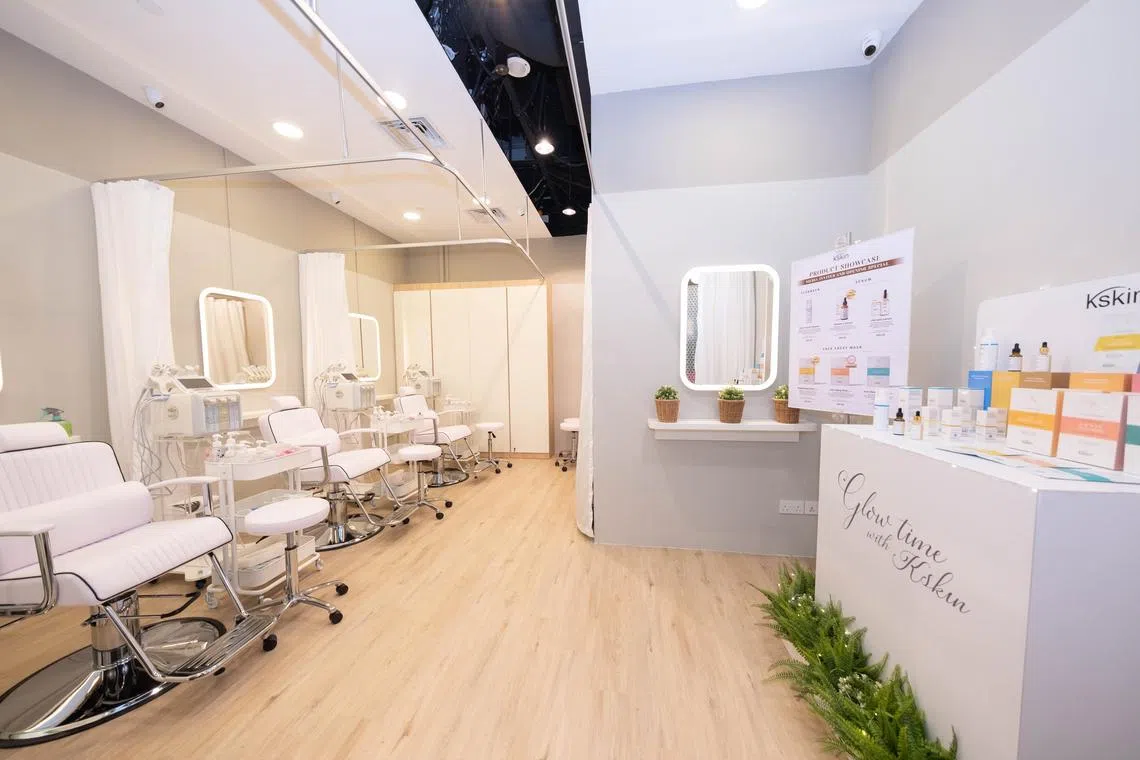
The trio anticipate a similar reaction in the US, where most beauty service providers operate on a membership model.
Pei also believes Kskin’s pricing gives it a competitive edge, estimating that its shorter facials cost about 20 to 30 per cent less than longer offerings in the market.
KC Group is eyeing India and Indonesia next for Kskin’s expansion.
It is in talks with strategic partners, and is open to either a joint venture or franchise model in either market.
The group is on track to hit its goal of 100 Kskin outlets globally by end-2024, said Bernard Ng. To achieve further economies of scale, it aims to have 500 Kskin outlets by end-2027 across eight markets, including Vietnam and Thailand.
Kskin is the largest single contributor to group revenue, accounting for about 30 per cent.
Total group revenue rose to about S$40 million in FY2023, up from S$32 million the year before. In FY2024, revenue is expected to exceed S$50 million, largely driven by Kskin’s growth.
The group’s other brands have also been expanding.
In Singapore, KC Group has 200 stores across its nine brands. Twelve more stores across kcuts, Clippers, Smoovee Skin and Myeongdong Hair Studio will open here this year, while Clippers’ first overseas outlet will open in Johor Bahru in Q4.
The company has also sought to improve the customer experience through digitalisation. Last June, kcuts rolled out a mobile app where users can check the queues at each outlet, select preferred stylists and purchase digital tickets to queue on the go.
“Now customers can run other errands while queuing up digitally using our app,” said Bernard Ng, who believes such an app is a first in Singapore’s industry. “We want to give them more flexibility and convenience.”
The app cost about S$500,000 and took two years to develop. A similar app for Kskin is in the works, featuring not just digital queueing but also artificial intelligence-driven skin analysis based on photos taken by users.
TRENDING NOW
Prima to move out of historic Keppel Road flour mill building in 2028

Grab CEO’s wife Chloe Tong on life with Anthony Tan and finding her purpose

OCBC sheds S$8 billion in value as shares close nearly 6% down; analysts cautious on banks

As Asia’s food delivery giants rejig the pie, who will win the market?

