


Haj-travel specialist Halijah Travels aims to stay relevant in a ‘dying’ industry
The family business is the only tour agency among 42 companies recognised as a SG Heritage Business

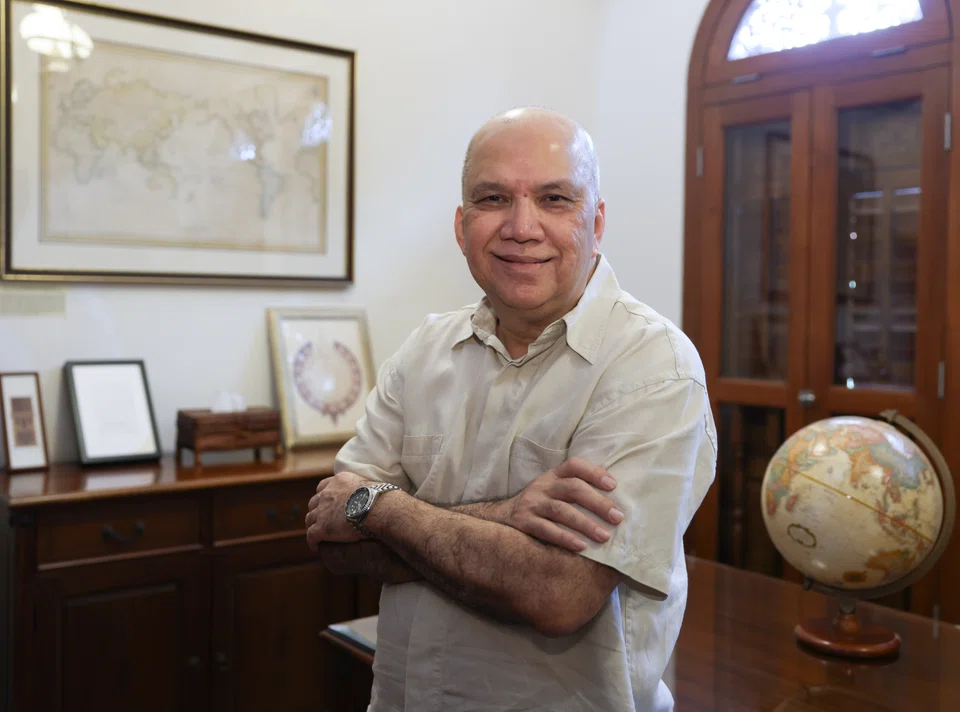
[SINGAPORE] Historically, Singapore’s strategic location made it not just a key port city, but a major transit point for those seeking to perform the Islamic pilgrimage of Haj.
In the 19th century, Singapore was more accessible than Jakarta for residents of the Riau Islands, said Haffidz Abdul Hamid, general manager of Halijah Travels.
For those in Malaysia’s east coast, it was also more convenient to travel south to Singapore, rather than cross the country to Port Klang.
“Those with money, they (would) look for a Haj broker,” he said. Those without would work in Singapore first, to eventually pay their way.
“In the past, people struggled – they didn’t complain. They went two weeks by ship. Some even died on route, some died coming back, didn’t even see a relative,” he noted. “That’s the hardship they went through.”
These days, however, people complain about taking a nine-hour plane ride to Saudi Arabia, where the Haj is performed, Haffidz quipped. “So people need to know – things evolve, but there’s always history to teach us to be appreciative of our current situation.”
For Haffidz, Singapore’s role as a Haj transit point is an important piece of heritage that he hopes to keep alive – which is why he applied for the SG Heritage Business Scheme.
In October, Halijah Travels was officially recognised under the scheme, as the only travel agency among the 42 local businesses.
“I expected a lot of food (businesses) because heritage – people always link it to food,” he said. “Being the only travel agent – and it’s inaugural – is an honour.”



From librarian to tour operator
Haffidz’s sister set up Halijah Travels in 1991, several years after working as a Haj broker. Haffidz and his brother took over the business in 1997, after her death.
“She had a passion for it and we thought, she’d spent time on it, why not continue it,” said Haffidz. She had established a following by then and a “ready market”.
But this meant making the hard decision to leave their jobs: Haffidz was a librarian and his brother, a teacher.
Yet, the skills learnt in his previous career proved invaluable. Likening the SG Heritage Business application to a “thesis” where the business had to show its commitment to the community, Haffidz quipped that he was “lucky” that as a former librarian, he documented a lot.
He is hopeful that the recognition will bring more business. “It’s like an endorsement that you are not the ‘fly by night’ type.”
Changing travel trends
Many early Haj brokers were based in Kampong Glam, which is why Halijah Travels moved to the historic district in 2001.
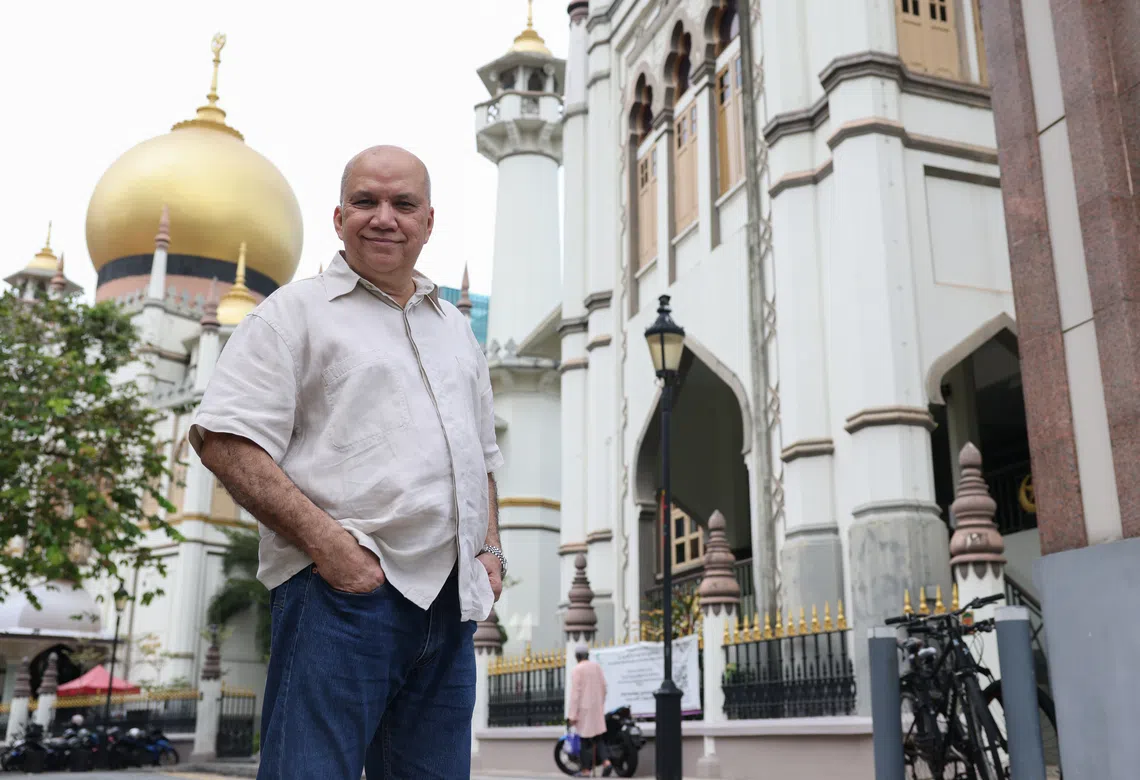
Tour packages for the Haj and the Umrah – also known as the “mini Haj” – account for about 70 per cent of Halijah’s business.
Each year, about 900 Haj pilgrims from Singapore are allowed in Mecca.
The mandatory pilgrimage is highly regulated: only travel agents approved by the Islamic Religious Council of Singapore are allowed to offer services to pilgrims.
However, fewer restrictions surround the Umrah, a voluntary pilgrimage to the holy city that can be performed at almost any time of the year.
In past decades, Singaporean pilgrims were less demanding, but also less savvy and thus vulnerable to scams, recalled Haffidz.
“Religion is a very powerful tool, not (just) to convince, but to even con people, so it’s good to be discerning.”
The agency used to hold seminars for its customers – some of whom were first-time travellers – and even invited a Singapore Airlines in-flight supervisor.
“He came and explained during the class, how to wear a seat belt, how to recline your seat, how to go to the toilet, how to lock the toilet door – because people didn’t know,” he recalled with amusement.
“And we even arranged for buses to (take) them to clear immigration, then go and stay at one mosque in Malaysia.”
Those were the needs of consumers then. Today, the more common challenges are health or fitness, as the pilgrimage requires walking long distances.
Tour agencies face a challenge of their own: the well-heeled younger generation prefer to book their own trips online.
“I think it’s something you’ve got to accept because the young will book hotels and flights on their own,” said Haffidz. “You cannot prevent it, that’s a natural evolution of things.”
Still, when he organises free Umrah preparatory classes – complete with materials – at a nearby madrasah, he opens these sessions to all, even non-customers.
Sometimes, independent travellers even call and ask for advice – which Haffidz provides.
“To me, that’s part of the service, and you also show them how you operate. So next time they go Haj, they know who to go to.”
Maintaining standards
One priority for Halijah is maintaining its level of service “so that you don’t lose your clients and you get more”, said Haffidz.
Non-pilgrimage tour packages are growing less popular, despite being more affordable, he noted.
“Sometimes it can be more costly for them on their own rather than going with a group, because groups bring economies of scale,” he said. “(But) people want to customise and they want to be in their private group.”
Halijah tries to match such requests, especially for destinations such as Morocco or Spain, where it is possible to take smaller groups at a lower cost.
He also sees potential in reaching out to a “new breed of clients” who want to take a family holiday, but meet their religious needs by going for Umrah at the same time.
“For them, when you spend… you do your religious and spiritual fulfilment at the same time – you don’t feel guilty about it.”
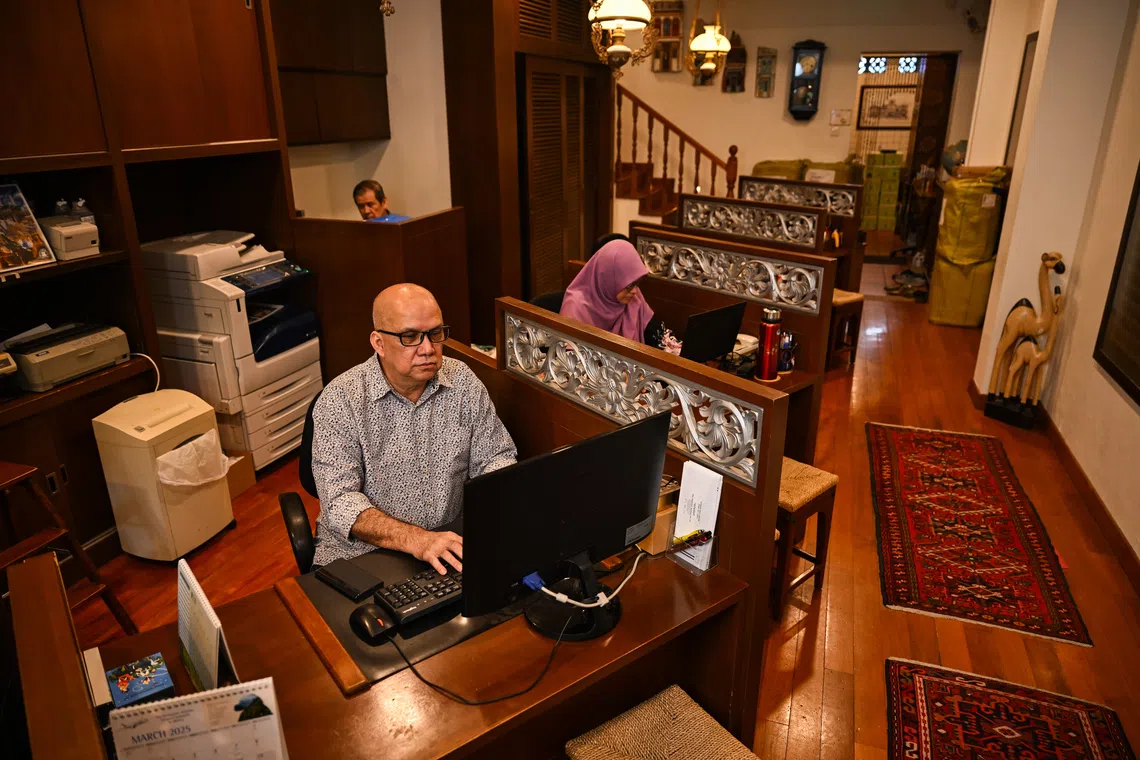
There are two opposing ways to pursue growth, said Haffidz. One is to focus on bulk travel, which may compromise quality. The other is to offer bespoke tours for a niche market.
But he does not aim to expand aggressively. Being a travel agency “actually is a dying business”, he said matter-of-factly.
“For now, I think we just make sure that whatever’s started by my late sister, we sustain and then try to improve on it.”
“When you do business, the worst is when you want to win all the time, then you may have a problem,” he said, adding that one cannot be too “calculative”.
“There are times when we do group tours, we lose money, but it is saved by the other groups. So I think the most important thing is you need to manage your expectations and work within your means.”
This is part of a series on companies recognised under the National Heritage Board’s SG Heritage Business Scheme.
Decoding Asia newsletter: your guide to navigating Asia in a new global order. Sign up here to get Decoding Asia newsletter. Delivered to your inbox. Free.
Copyright SPH Media. All rights reserved.






