


A Hive of retail innovation
Benicia Tan
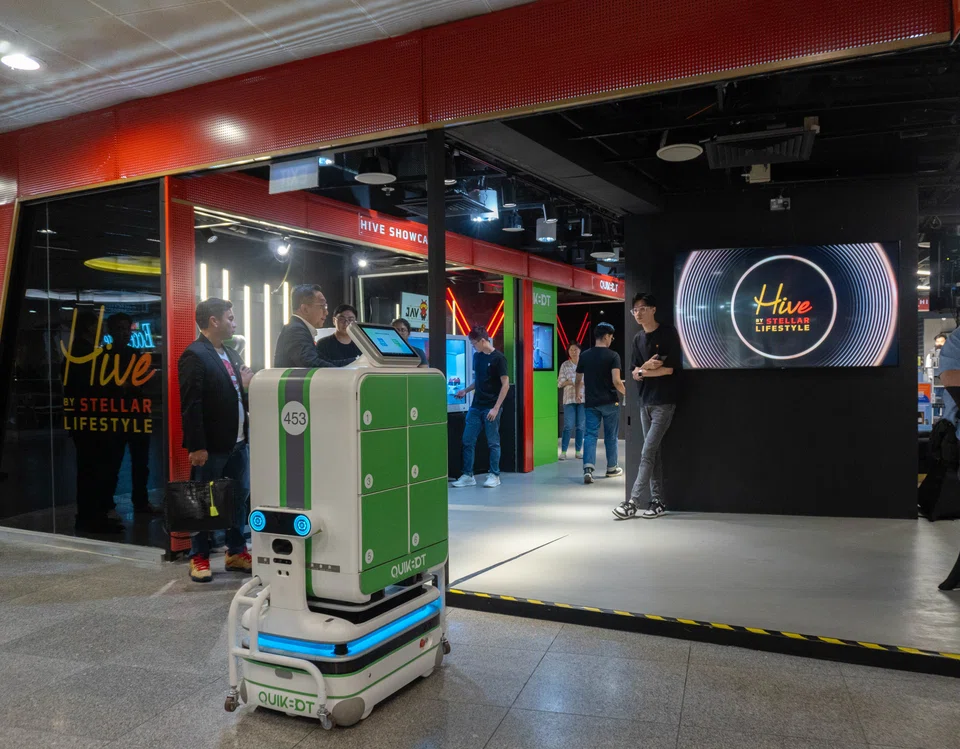
ROBOT-MANNED shops, electricity-generating tiles, and delivery robots are among the innovative retail approaches at a new showcase space at Esplanade MRT station.
Launched by SMRT business unit Stellar Lifestyle on Monday (Jan 22), the Hive 2.0 space features local retail startups alongside a co-working kitchen and a high-tech gym.
Javis: Driving automation, even for bubble tea
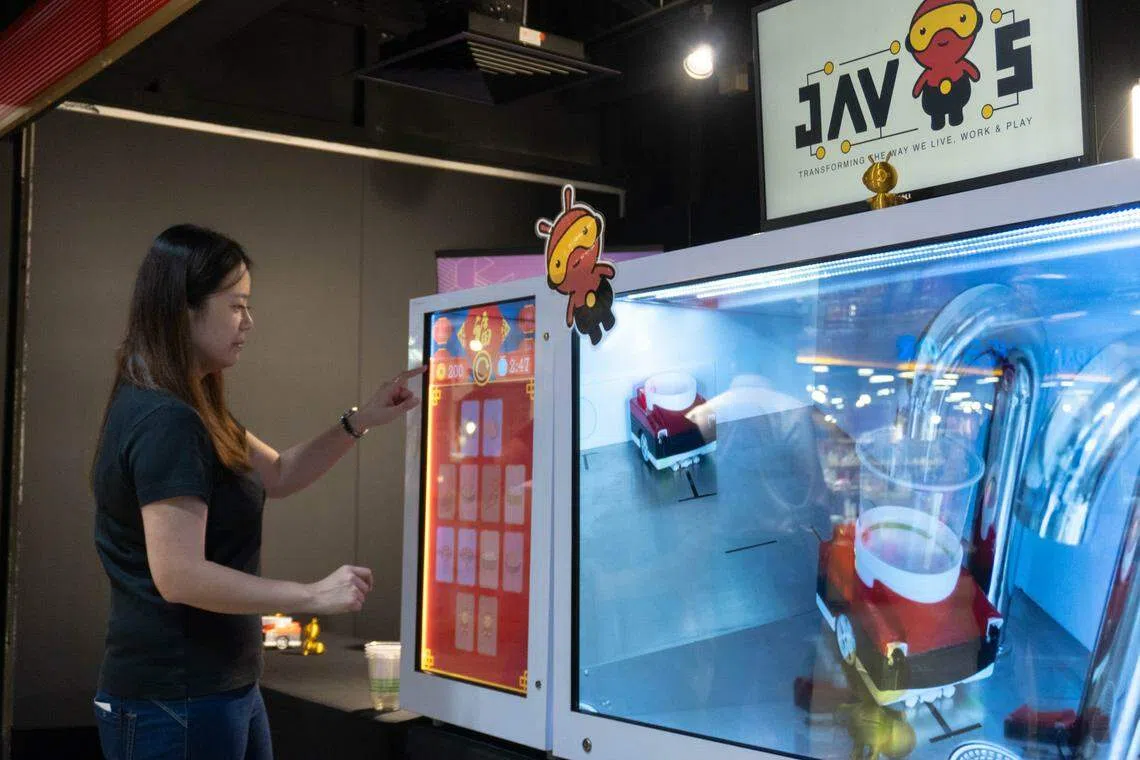
Commuters craving bubble tea can order via an app and collect their drink – customised and prepared entirely by robots – within five minutes, from Javis’ fully automated bubble tea kiosk in Hive 2.0. (* see amendment note below)
Once an order is received, the machine gets to work. From sugar to freshly brewed tea to toppings, ingredients are dispensed automatically, tailored to each customer’s order.
Within the machine, automated guided vehicles transport the cup from one ingredient-adding station to the next, and the finished drink is served to the customer by a robotic arm.
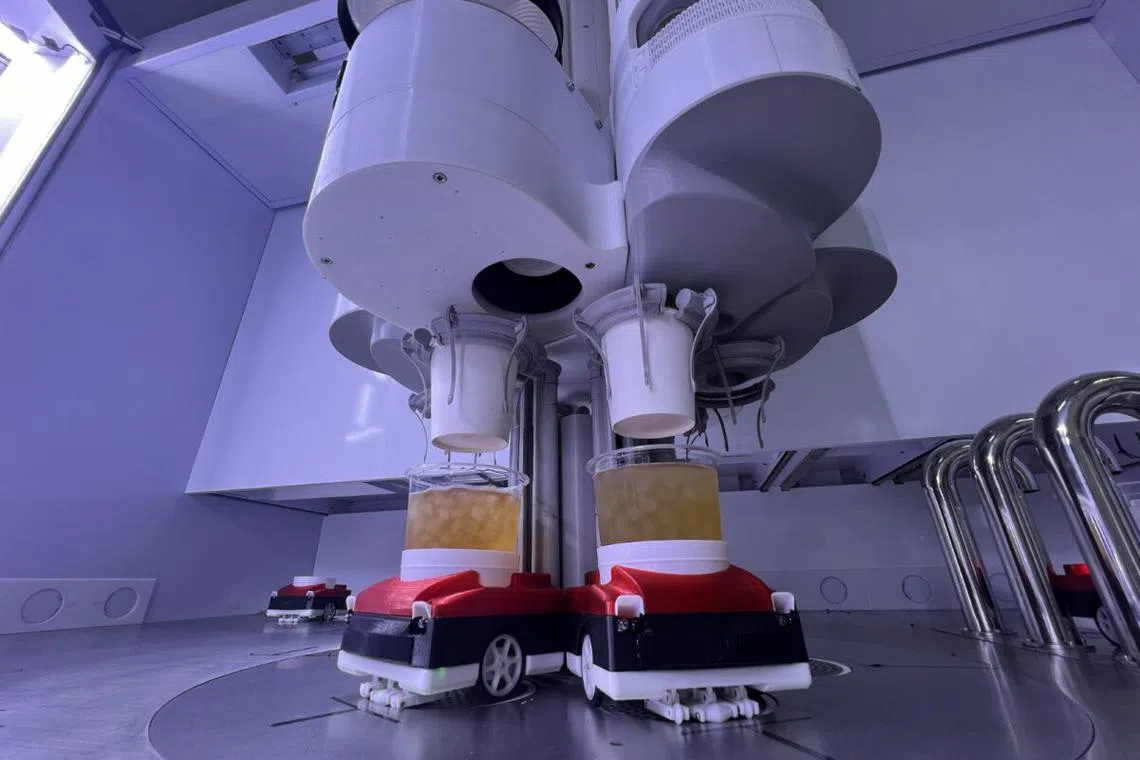
Customers who order on the spot can see the whole process of their drinks being prepared, and play mini-games to earn points that can be redeemed for a discount on their next cup of tea.
Javis is not just a bubble tea company, however. It is chiefly an automation startup, with the concept shop at Hive 2.0 marking its first commercially available solution.
“It took us three years of research and development to get us to where we are today,” said the company’s founder Joyce Lim, herself a bubble tea aficionado. “We see automation as a solution to addressing the issues of manpower shortage and long wait times in the food and beverage industry.”
In a separate project, Javis is developing a digital platform through which expectant mothers in need can obtain free supplies such as diapers, feeding essentials and strollers for their newborns, for up to a year.
These supplies will be provided through the Baby Safe programme run by Safe Place, an initiative of Lakeside Family Services. Javis helped to develop this solution as a participant of the Open Innovation Programme organised by the Infocomm Media Development Authority.
Javis’ digital platform analyses data from previous orders to help manage the inventory of supplies. This addresses challenges that Safe Place has faced before, such as inefficiencies and errors due to manual inventory management, and difficulty in projecting when to restock items.
Said Javis chief operating officer John Cheong: “We hope to make meaningful impacts on sectors we believe have been largely overlooked, such as the social service sector.”
Tap Tiles: Paving a new way to generate electricity
With Tap Tiles’ electricity-generating tiles, customer footfall can benefit not just shops, but landlords too.
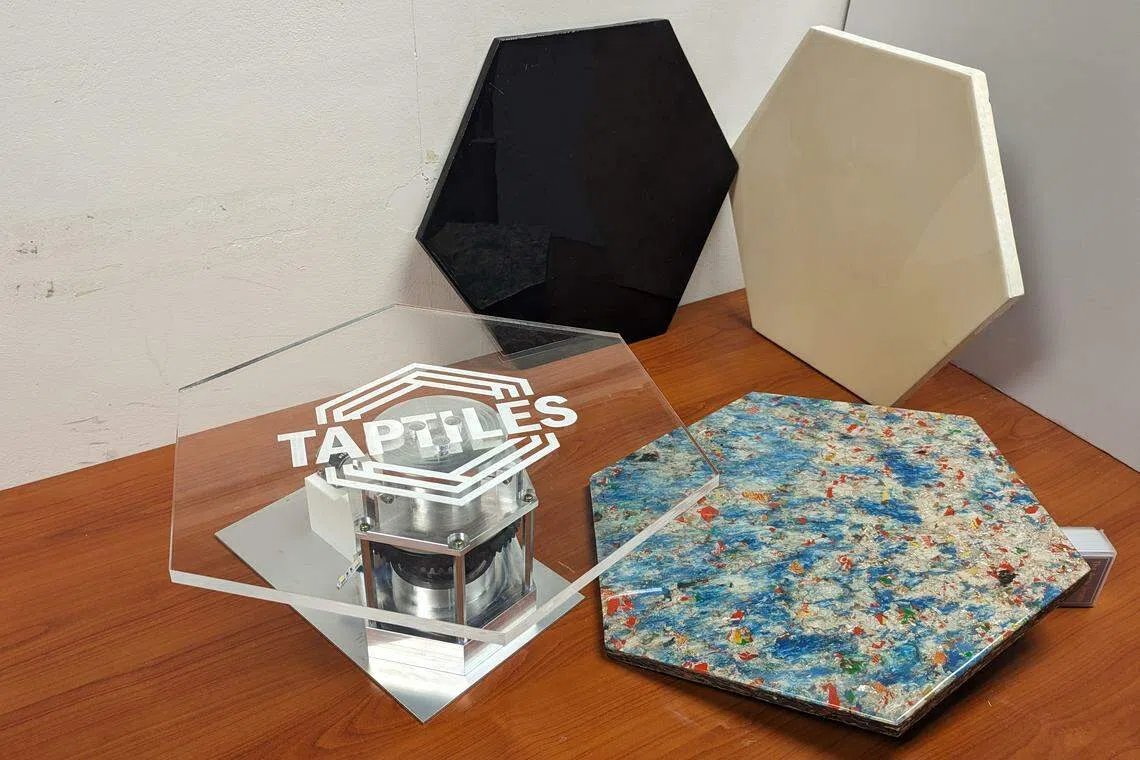
The startup’s “kinetic tiles” generate electricity when stepped on. With enough foot traffic, an array of these Tap Tiles would be able to power lighting or displays, thus reducing energy costs.
These tiles also collect footfall data, which can provide insights to building managers and event organisers to prevent overcrowding.
Started by four students from the Singapore University of Technology and Design, the startup plans to eventually sell its tiles to developers of high footfall areas such as malls and MRT stations.
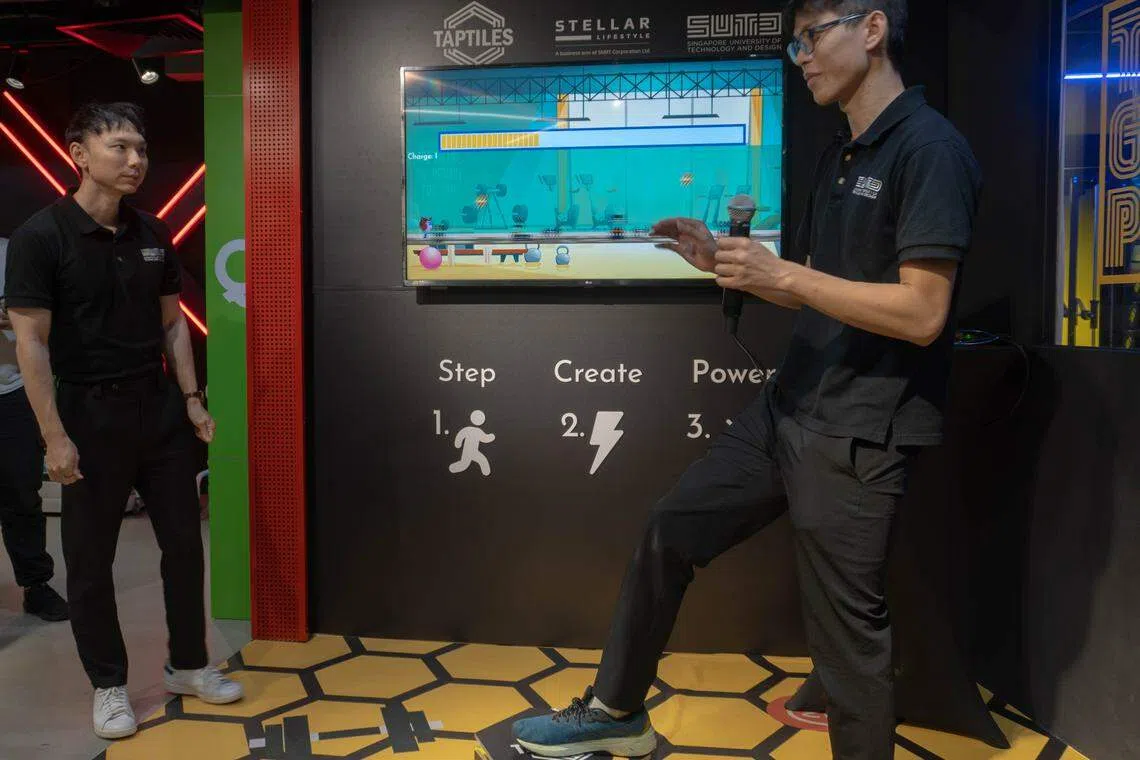
For now, however, its kinetic tile is still in the prototype stage. At Hive 2.0, passers-by can step on a tile to play a game. At the end of the game, users are shown how much energy was generated by their steps.
Jordan Lee, co-founder of Tap Tiles, said: “We wanted to showcase the tiles in a fun way, and this is also an interactive way for people to learn about sustainability.”
As part of the company’s upcoming product testing phase, the installation will be updated to an eight-tile setup for a two-player dance game in April.
QuikBot Technologies: Robots making deliveries
Office workers at South Beach Tower can get their convenience store purchases delivered not by human couriers, but by helpful robots from QuikBot Technologies.
In a tie-up with the 7-Eleven branch at Hive 2.0, customers can make purchases through QuikBot’s app and pay for these to be delivered to their offices.
Since 2021, QuikBot Technologies has been designing autonomous robots for final-mile delivery services, in both business-to-business (B2B) or business-to-consumer (B2C) uses. The Hive 2.0 setup is the first commercial application of its autonomous delivery system.
The 7-Eleven branch in Hive 2.0 is the chain’s first unmanned autonomous “Shop & Go” store in Singapore, where customers simply tap a credit card upon entry, pick up what they need and leave. Smart cameras detect their purchases, which are automatically charged to their credit card.
For QuikBot orders, however, a staff member helps to retrieve the purchase from the store and load it onto a delivery robot. Guided by its sensors, the robot travels from Hive 2.0 and takes the lift at Esplanade MRT station, heading for South Beach Tower.
But it does not make the full journey. Instead, it passes the delivery items to other robots located along the path between the station and South Beach Tower.
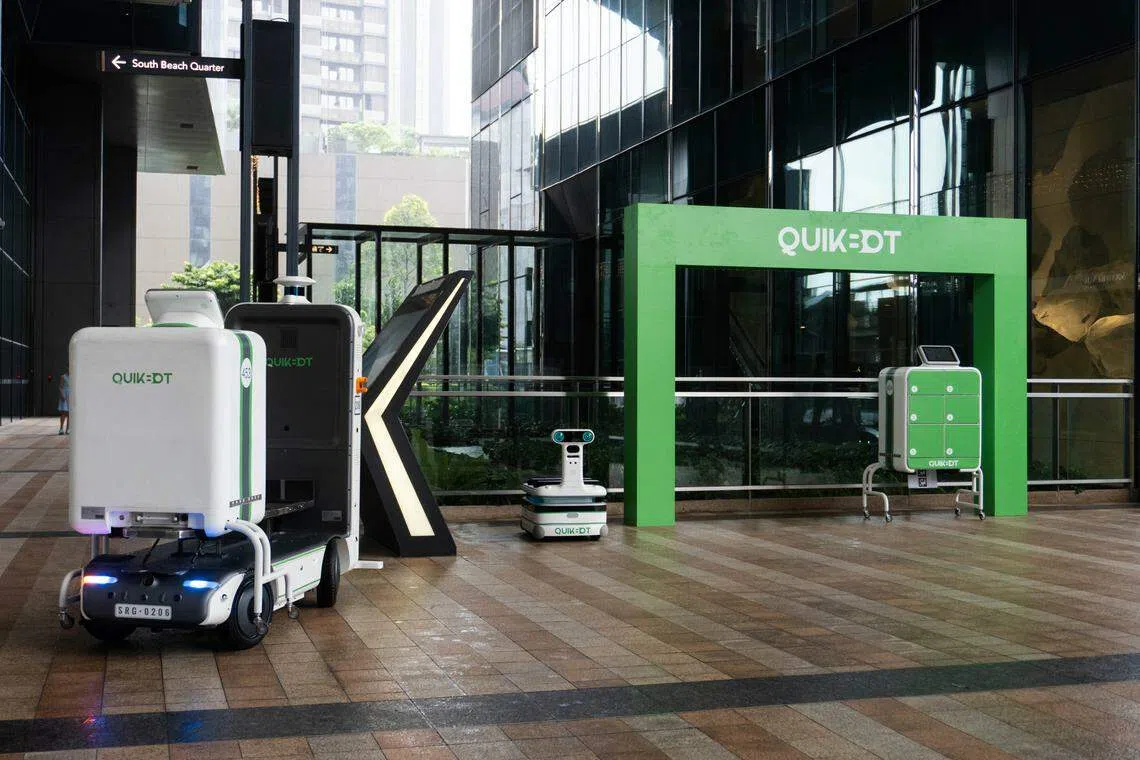
Once at South Beach Tower, authorised robots enter a gantry and take the escalator up to the final office destination.
“Stellar Lifestyle is a key partner, and we will collaborate on engaging their tenants to embark on this journey with us,” said Quickbot Technologies founder Alan Ng.
In addition to this B2C deployment at South Beach Tower, the company plans to expand its B2B services too, with upcoming trials planned.
* Amendment note: An earlier version of this story stated that customers can collect their drink within 10 minutes. Javis’ owners later clarified that the drink can be prepared within five minutes.
TRENDING NOW

Indonesia begins cutting natural gas exports to Singapore from Oct 24: reports

Singapore’s central gas buyer affirms Indonesia’s role as ‘important partner’ amid export review warning

KKR founders among investors buying 42% of Peter Lim’s Valencia; club valued at US$1.4 billion

NEA issues notices to 10 Singapore-based companies, including Wilmar and APP, over haze

