


How Business Improvement Districts can help SMEs succeed
SMALL and medium-sized enterprises (SMEs) do not have to face challenges alone – particularly if they are part of a precinct where development efforts are led by a local body.
Since 2017, the Urban Redevelopment Authority’s (URA) Business Improvement District (BID) programme has been piloted in areas such as the Singapore River, Marina Bay and Tanjong Pagar.
In five selected districts, local “place managers” help to develop the area, which includes supporting their SME members in everything from navigating the competitive business landscape to tackling operation costs and manpower constraints.
These place managers are usually not-for-profit organisations that are formed by existing stakeholders in the precinct. These privately led bodies have the responsibility of engaging with local businesses to collaborate on enhancement initiatives for the area.
Under the BID programme, the government provides seed funding for every dollar of membership fees collected, which goes towards stakeholder-led place-management initiatives.
Place managers play a particularly important role in supporting SMEs, which have limited resources and may not know how to tap government support. This can range from commercial partnerships to infrastructure developments, marketing campaigns and events.
Here are some key ways in which BIDs can benefit SMEs:
- Providing a collective voice
SMEs often struggle to have their individual voices heard. A BID provides a platform for SMEs to collectively voice their concerns and ideas, so that their needs can be addressed effectively.
For the Singapore River, the place manager Singapore River One (SRO) has been acting as a collective voice since 2012, even before the BID programme.
In 2015, for instance, SRO negotiated the free conversion of liquefied petroleum gas to piped gas for its merchants at the Singapore River. This helped some SMEs save gas piping costs of up to S$10,000 per installation – a major achievement for businesses of that scale.
- Marketing and promotion
With SMEs focusing their limited resources on revenue and operations, they may overlook marketing and branding – even though these are important for building awareness.
BIDs therefore need to develop coordinated marketing campaigns and events to attract foot traffic to their precincts.
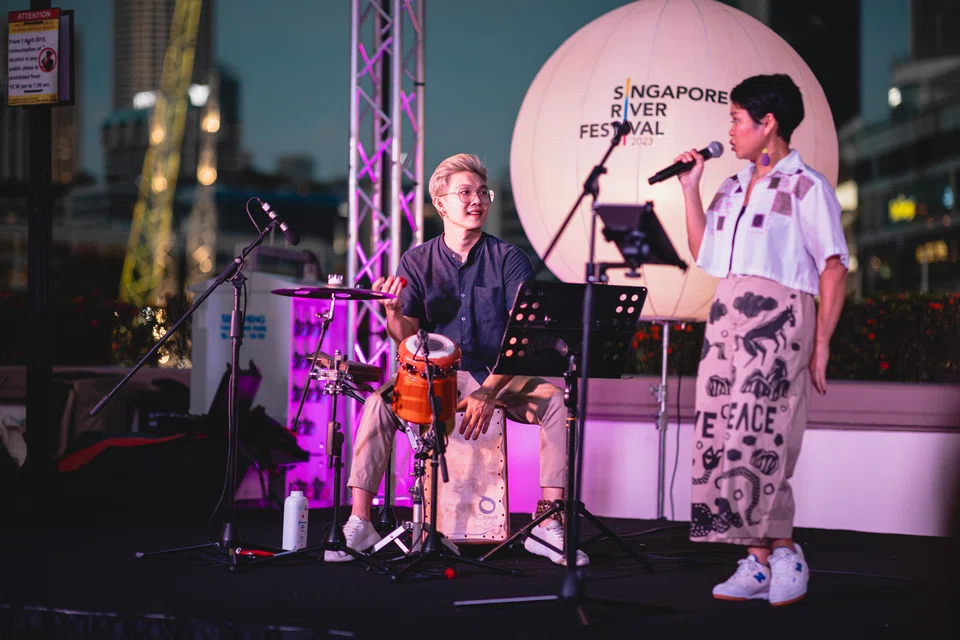
At the Singapore River, annual events include the Singapore River Festival and the St Patrick’s Day Street Festival. The most recent St Patrick’s weekend saw revenue spike by about 40 per cent for merchants there.
- Networking and collaboration
Within a BID, SMEs have the opportunity to network and collaborate with neighbouring businesses.
This can lead to strategic partnerships, cross-promotions, and shared resources, while fostering a stronger sense of community and aiding the BID’s destination marketing efforts.
- Data and research
BIDs can collect and analyse data about consumer behaviour, foot-traffic patterns and other relevant metrics. This information helps in charting and implementing work plans, making place-making initiatives more relevant and effective.
When such data is shared with SMEs, it can also help them make informed business decisions and adapt to changing market trends, in tandem with the BID’s marketing initiatives.
- Infrastructure enhancements
BIDs also provide well-maintained and aesthetically pleasing infrastructure to better engage visitors and enhance the area. This can include public seating, mini-parks, street furniture and even street art.
In good times and bad
In times of adversity, it is crucial for BIDs to step up and provide support to their SMEs. When Covid-19 caused business to dive for most SMEs at the Singapore River, SRO took the lead in providing support, such as S$200,000 worth of vouchers, offering consumers major discounts of 30 per cent.
As the economy emerged from the pandemic, SRO continued to make plans for the precinct, launching a four-year plan for 2021 to 2025. This covers how to continuously rejuvenate visitors’ experience of the Singapore River; enhance the value of properties; and create everyday spaces that spur a sense of connection with visitors and the larger public.
As stated on the URA’s website, the BID pilot aims to enable the government to assess the model’s feasibility – with the possibility of future legislation that can empower the private sector to take ownership of their precincts.
In this rapidly evolving business landscape, BIDs should be here to stay, beyond just being a pilot project. They can work with SMEs on collaborative efforts to enhance local precincts, driving attention to these smaller businesses and enabling them to ride Singapore’s strong tourism rebound.
Together with stakeholders, BIDs must continue pushing boundaries with the relevant agencies to change and shape policies that will benefit with precincts, making Singapore a thriving destination for all seeking to invest, live, work or play.
The writer is executive director of Singapore River One
TRENDING NOW

Grab CEO’s wife Chloe Tong on life with Anthony Tan and finding her purpose

He built the Vingroup empire. Now South-east Asia’s richest man is handing some key roles to his sons

US says China to buy 10 million tonnes of coal in 2027 and 2028

Tokyo reverses baby bust with AI matchmaking and generous subsidies

