


‘Inserting evidence between the lines’: Parties argue over claims of oral agreements

Megan Cheah
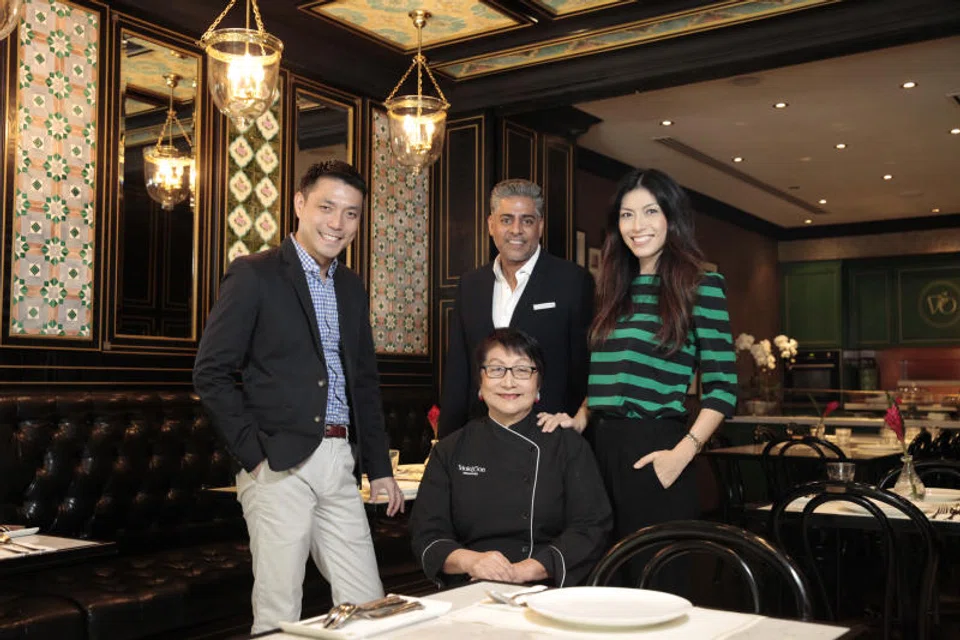
THE shareholder oppression trial brought by restaurateur Violet Oon against her business partner continued on Wednesday (Jul 12), with parties sparring over the existence of verbal promises that Oon’s family alleged had been given to them.
Tay Su-Lyn, Oon’s daughter and a director at Violet Oon Singapore, said during cross-examination that the business partner, Group MMM director Manoj Murjani, had face-to-face meetings with the family. She said that Manoj had threatened to sue the family and wind up Violet Oon Singapore if the family did not pay money to Group MMM for allegedly increasing their salaries without his consent.
In December 2014, Oon was paid a monthly salary of S$5,000, Tay Su-Lyn, S$1,000, and Oon’s son, Tay Yiming, S$4,500. In November 2018, Oon and her son were drawing S$8,000 each per month, and her daughter, S$5,000 a month.
Tay Su-Lyn said Murjani had orally agreed in 2014 – when signing his initial investment into Violet Oon Singapore – that the trio could increase their salaries as the business grew, as long as it was “reasonable”. He had stated that they did not have to seek his permission, she alleged.
Murjani’s lawyer, Thio Shen Yi of TSMP Corp, doubted that the oral agreement occurred.
He highlighted that Tay Yiming’s affidavit stated that Oon, in a November 2014 meeting, had shared a proposal that salary increments would depend on the business hitting certain targets. This meant that Murjani was agreeing to a plan, and not simply allowing the trio to “do anything they wanted”.
If there had been a proposal, there would have been a record of the claimants informing Murjani as a courtesy, Thio said. He observed that Tay Su-Lyn’s affidavit did not mention this oral agreement, and suggested that the agreement was “contrived” for the purposes of the lawsuit.
“You are very good at inserting evidence between the lines,” he said.
Tay replied that Murjani’s behaviour at the time had been “irrational” and she had been scared, as the amount Murjani alleged her family owed jumped multiple times, from S$300,000 to an eventual S$1.55 million. She was therefore focused on this issue, rather than the oral agreement, in her affidavit, she said.
Tay Su-Lyn also told the court that her family had a number of “common expectations” when they signed the initial shareholding agreement in 2014.
Those expectations included the fact that the family and Group MMM, each of which held half of Violet Oon Singapore, would equally inject funds into the company when required. Furthermore, the family expected that the company’s branding would remain rooted in her mother’s “personal identity, cultural heritage and family”, and that the children would eventually succeed their mother.
However, during the pandemic, Oon and her children injected S$650,000 in additional working capital to Violet Oon Singapore, while Group MMM had “omitted, neglected, or otherwise refused to provide any tangible financial support”, according to Tay Yiming’s affidavit.
Thio argued that Group MMM had no obligation to contribute an equal sum of money to the company. He said there was no written record that the family had reminded Group MMM of such a responsibility.
As for the company’s branding and succession, Thio said the idea that it would remain rooted in Violet Oon’s personal identity and that the family would always remain involved were not common expectations and would have had to be communicated to any parties joining the business. Thio said: “You may have had hopes that (Murjani) would do certain things, you may have had your own expectations… that certain things would happen in a certain way, but these were not obligations that you could insist that (he) comply with.”






