


Joe Green makes concrete go green
Industrial waste material is recycled to make lightweight, eco-friendly precast walls
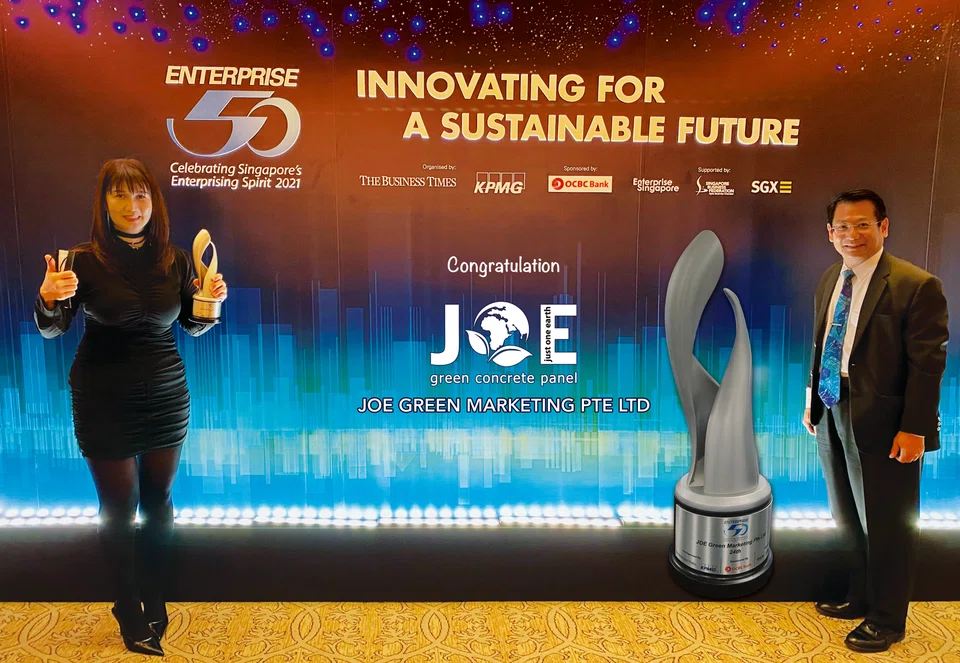
WHAT do the upcoming public flats in Tengah estate have in common with Changi Airport’s Jewel? The answer may not be immediately visible, but it is central to both developments: their eco-friendly precast concrete walls, supplied by Joe Green Marketing.
The company is a registered Housing and Development Board supplier, and its precast panels are used in over a thousand residential, industrial and commercial buildings in Singapore. Besides being physically lightweight, Joe Green’s hollow-core concrete panels are light in terms of environmental impact, as they are made from recycled materials.
The company’s green journey was prompted by necessity. Set up in 2006 by managing director Boediman Widjaja, Joe Green began in a small rented industrial factory in Tuas. In its early days, the company explored different kinds of wall panels as well as different ways of producing them – but the results were not satisfactory.
Indonesia’s ban on sand exports, just the following year, was a game changer. As sand is a crucial ingredient in the production of concrete walls, Widjaja had to reconsider the survivability of the business. He decided to try something different: using recycled material from the building industry.
His idea worked. Today, Joe Green recycles concrete and uncontaminated industrial waste such as ceramic, turning these into “aggregates” – granular material such as gravel or sand – that are then processed into concrete panels.
In 2011, the company invested RM30 million (S$9 million) in a new 3.5-hectare factory in Johor to produce these panels. The timing could not have been better, as Singapore had begun to place an increasing focus on sustainable development.
As buildings account for over 20 per cent of the country’s emissions, greening these structures is a key strategy in achieving national sustainability ambitions. The Singapore Green Building Masterplan also spurred green building developments and increased the demand for eco-friendly building materials.
Today, five items in Joe Green’s product series have received the highest possible rating awarded by the Singapore Green Building Council. The company’s name captures its sustainability ambitions: “Joe” is an acronym for “Just one Earth”, said Widjaja.
“We have just one earth,” he said. “We need to protect her by minimising our environmental impact and damage, especially in the built environment.”
Nothing goes to waste
The construction industry has one of the highest carbon footprints, and concrete is a key contributor. Not only does manufacturing cement generate substantial carbon emissions, mining the required aggregates – sand or granite, for instance – also has a significant environmental impact.
At the same time, when buildings are demolished, the debris is often disposed of in landfills instead of being put to use.
This “take, make, dispose” model of the linear economy is putting significant pressure on the environment, said Widjaja. Joe Green is instead working towards creating a circular economy with green products and practices.
The company has cut the use of cement in its green wall panels by 20 per cent, by blending it with cement substitutes. In addition, its panels comprise at least 30 per cent recycled concrete aggregates that come from crushed industrial waste.
The company also strives to be a zero-waste manufacturer, said Widjaja: “We don’t throw anything out of the factory.”
Instead of disposing of production rejects and site debris as industrial waste, the company installed a crusher plant in 2011 to recycle these. It also collects timber blocks from packaging for reuse after delivery, and harvests rainwater to minimise water used in the concrete curing process.
Green innovation
About seven years ago, Joe Green started exploring the possibility of using industrial waste to produce lightweight aggregates. In 2019, a research and development (R&D) lab was set up for this project at Joe Green’s Singapore office.
In collaboration with industrial and academic experts from Japan, China and Europe, the R&D team developed the required technology and came up with a final product for commercialisation: lightweight green aggregates, or “Ligra”.
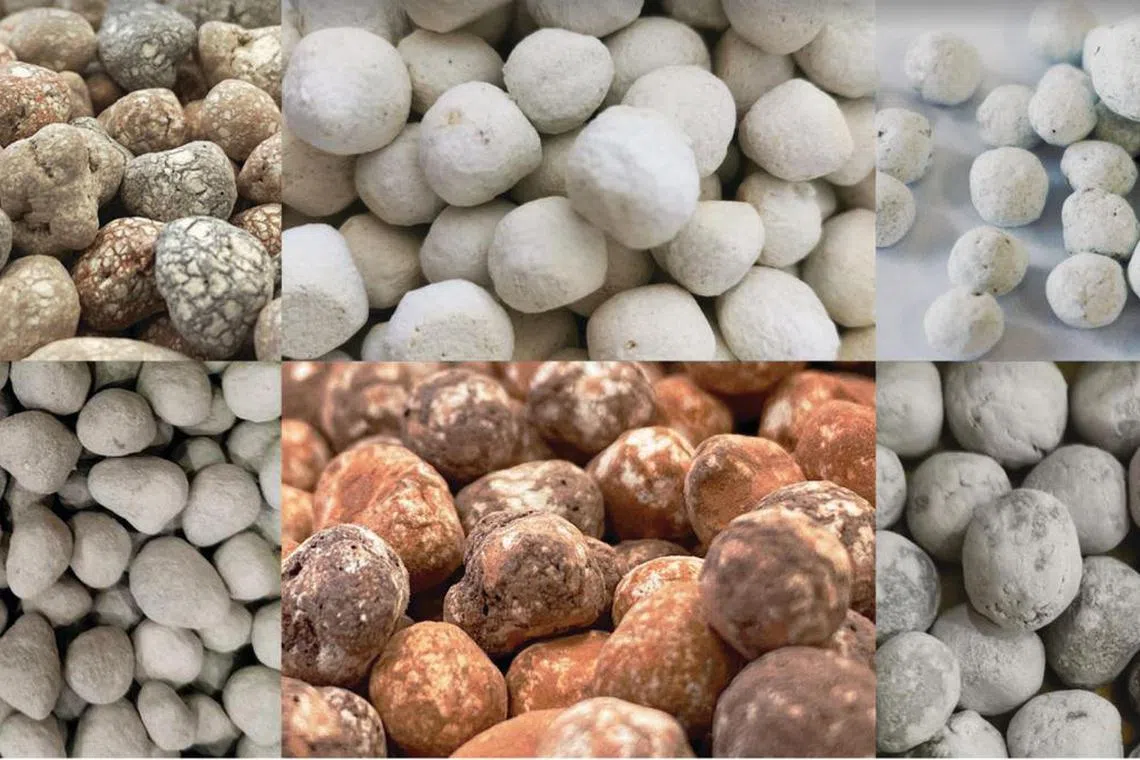
The light and eco-friendly concrete made from Ligra has many structural and architectural applications. Strong and highly resistant to fire, with good thermal insulation and low water absorption, it can meet many industry-specific requirements. It can be used for floating platforms as the panels remain stable even in less-than-calm waters, and for wall finishing to reduce the use of air-conditioning.
Building developers can save on construction costs and manpower, as the lighter wall panels place less of a demand on building structures. Said Widjaja: “If I can make a strong wall panel with half the current weight, we will gain more market share.”
Already a key player in Singapore for precast concrete wall panels, and with a strong presence in Malaysia, Joe Green is setting its sights higher. The company has a plant in Jakarta and plans for a second one in Malaysia, buoyed by the recovery of the construction industry as the pandemic eases.
Widjaja’s vision is for Joe Green to have factories in more major cities by 2030, riding on the strong interest in sustainable development and decarbonisation.
For him, everything boils down to having a vision and looking to the future – in this case, preparing for a green world. He said: “If you can anticipate, you can be the winner.”
This series is part of the Enterprise 50 Educational Project between the E50 partners and the NUS Business School. Joe Green Marketing was among the winners in 2021. The annual E50 ranking is co-organised by The Business Times and KPMG, sponsored by OCBC Bank, and supported by Enterprise Singapore, Singapore Exchange and Singapore Business Federation.
TRENDING NOW

Malaysian king buys stake in Singapore-listed mining firm expanding into rare earths

Grab CEO’s wife Chloe Tong on life with Anthony Tan and finding her purpose

Once staunchly pro-China, Malaysian Chinese businesses are now distancing themselves from Beijing

Longer wait times expected as S’pore healthcare institutions report system disruptions

