


Killiney Group steps up food manufacturing for retail, eyes first Japan outlet in Tokyo
The heritage kopitiam operator also aims to secure the UAE as a new export destination by 2027

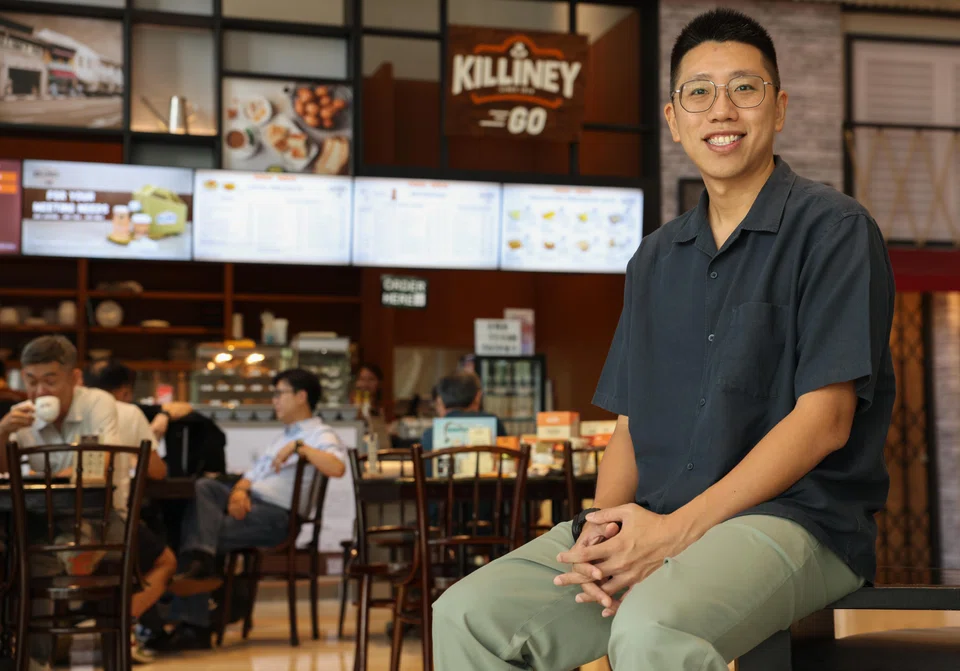
[SINGAPORE] Home-grown heritage coffee shop operator Killiney Group is doubling down on food manufacturing for retail, in a bid to diversify its revenue beyond its outlets and grow through exports.
Though second-generation owner and director Woon Tien Yuan sees room to expand Killiney’s store count in the Republic, he is already preparing for the possibility of the business reaching saturation point.
“Some of the biggest coffee shop chains have 80 to 100 outlets. We may achieve this one day, and then what’s next?” Woon told The Business Times. There are 45 Killiney outlets in Singapore, comprising franchise and company-operated stores.
As he sees it, retail products hold stronger potential when it comes to global scalability.
“It’s already very difficult to open one outlet overseas, not to mention 10 outlets. But with exports, growth can be exponential because of the larger volumes.”
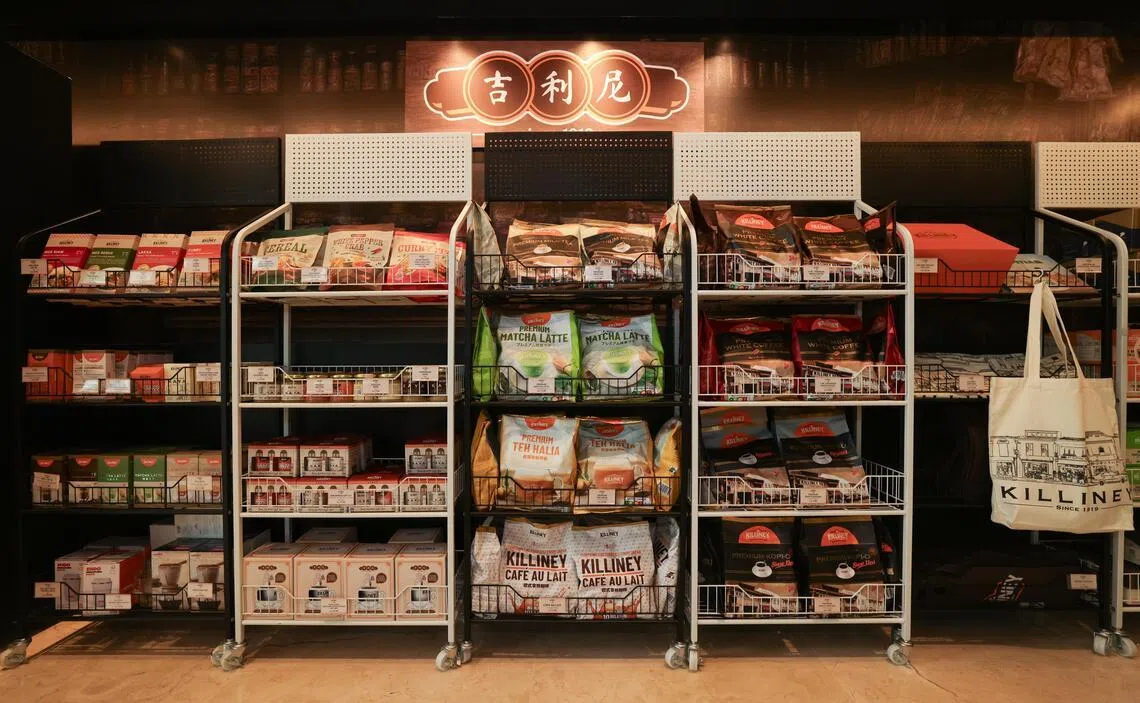
Over the last six years, Killiney has developed a range of 70 retail products across categories. These include powdered and canned beverages; kaya and peanut butter spreads; gift sets; and ready-to-cook food pastes such as laksa, mee siam and curry.
As part of the group’s accelerated retail push, Woon aims to expand the product range to a hundred by 2030.
He is also targeting Japan and the United Arab Emirates as new export destinations by 2027, with talks with local distributors already under way.
Killiney currently exports to 11 markets in the Asia-Pacific and Europe, including Australia, Indonesia, China, the United Kingdom and Switzerland.
Today, retail accounts for 20 per cent of group revenue, with the outlets contributing the rest. Woon hopes to achieve an even split by 2030 as export volumes grow.
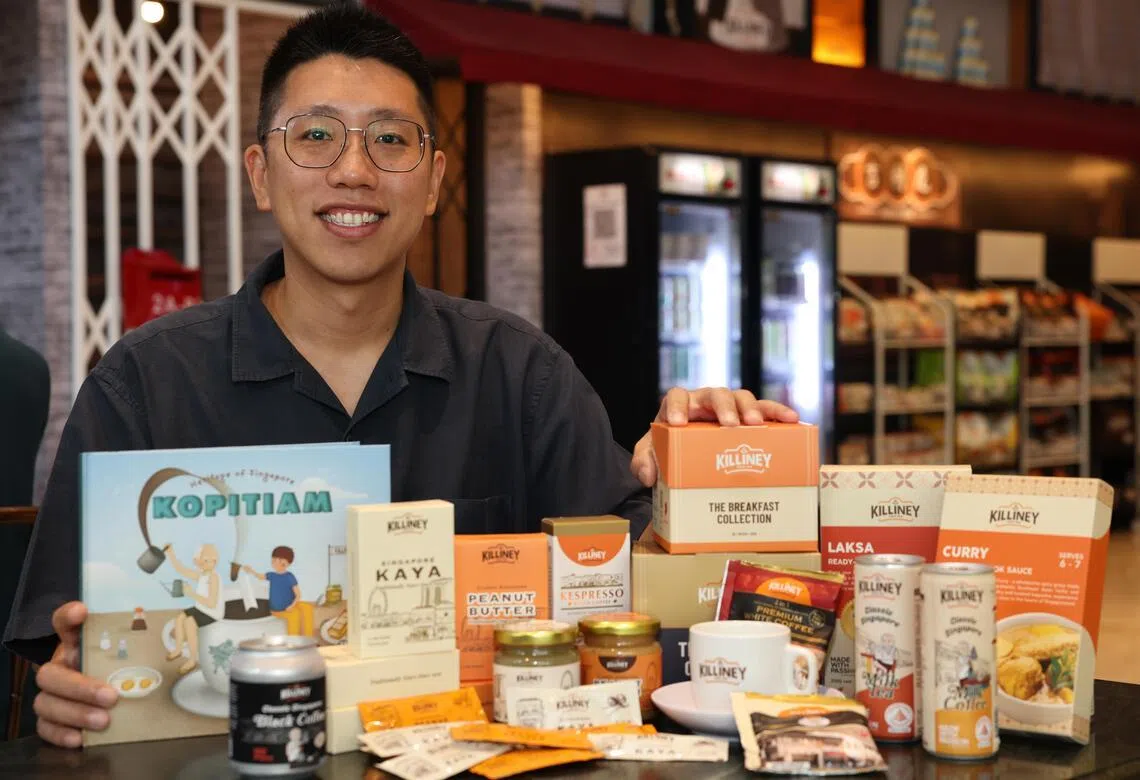
From kaya sachets to osmanthus-infused coffee
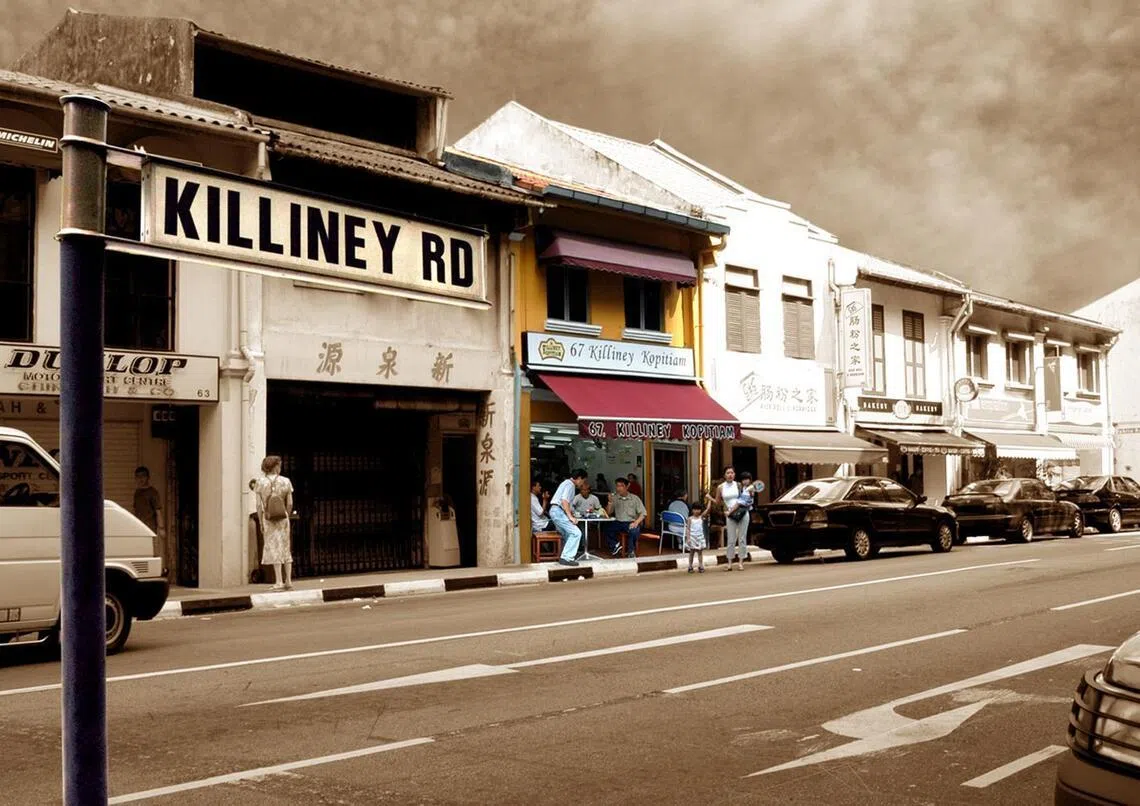
Killiney Group is behind Killiney Kopitiam, Singapore’s oldest Hainanese coffee shop. Its first outlet, established in 1919 at 67 Killiney Road, is still in operation.
The group’s foray into retail began in early 2020, when it partnered foodtech startup Hoow Foods to develop a formula for instant coffee.
Concurrently, it set up manufacturing facility Nanyang Beverage to build its own production and research and development capabilities for the Killiney brand.
Initially focused on powdered beverages, Nanyang Beverage gradually expanded into other product categories such as kaya.
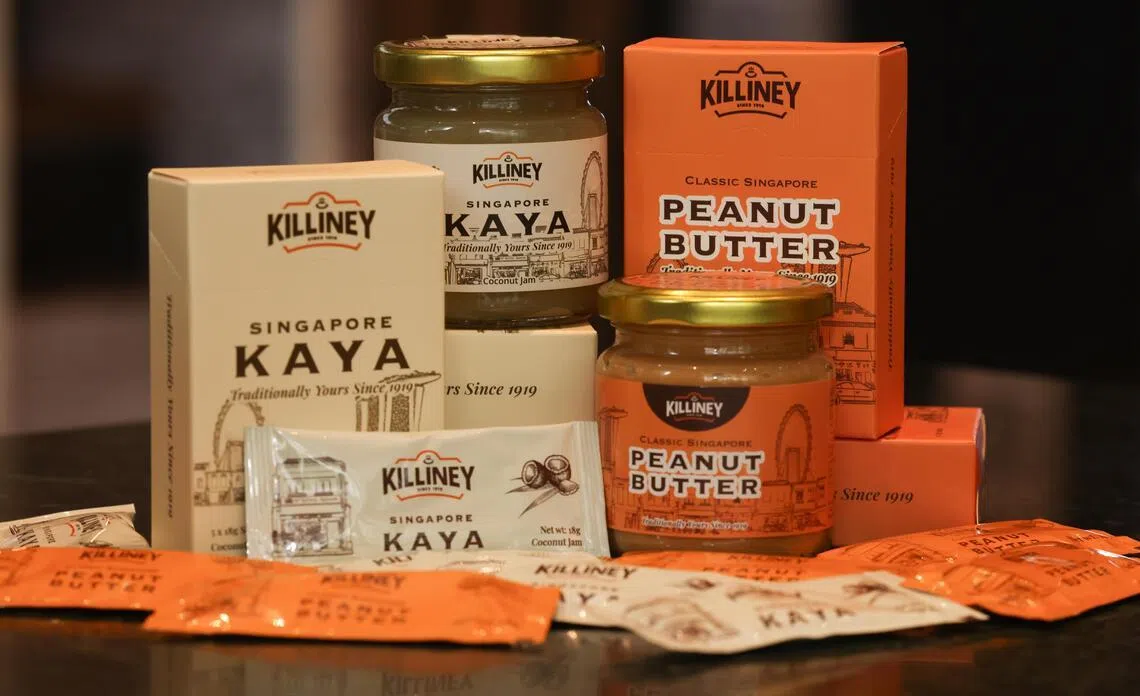
One key innovation was the development of kaya with an 18-month shelf life, making it easier for customers to bring the product overseas. Taking things a step further, the group introduced kaya sachets for greater convenience.
“Kaya is always traditionally packaged in a jar, whether big or small, then put in a fridge,” said Woon.
“But Covid-19 reinforced the importance of single-use products because there’s no cross-contamination, so we thought, why not change the format of a traditional product into something more convenient for people?”
Developing the kaya sachets, however, came with “a little bit of risk”, he added. As higher production costs had to be factored in, a jar would still be cheaper to buy than the sachets, which are sold in boxes of five.
Despite initial concerns that consumers would not bite, the product was a hit. Many tourists bought the sachets as food souvenirs, while locals took them on their travels as they were light enough to be checked into luggage or hand-carried on board planes.
An upcoming creation is osmanthus-infused black coffee, which Woon developed in response to the growing popularity of floral tea among the younger generation. Billed as the first of its kind in the market, the product is set to be launched by end-2026.
Increasing distribution channels
As manufacturing scaled up, the group took a strategic minority stake in Gourmet Supplies, an F&B manufacturer and distributor, in 2023.
This allowed it to access Gourmet Supplies’ distribution network of more than 2,000 offline and online channels across Singapore, including supermarkets, minimarts, cafes, food service operators, hotels, e-commerce platforms and vending machines.
As Woon sees it, the partnership is a win-win as both companies can cross-distribute each other’s products. For instance, Gourmet Supplies’ in-house range of canned drinks is now sold at Killiney outlets, giving customers more beverage options.
Killiney’s retail line-up has also caught the attention of Sats, which provides in-flight catering services to airlines.
Since 2024, its powdered premium milk tea sachets have been served on Scoot flights, with its beverages also available in Sats Premier Lounges at airports.
In April, Taiwanese full-service carrier Starlux Airlines began serving its kaya sachets on board.
Launching F&B and retail concept KillineyGO
Alongside the expansion of the retail range, Woon sought ways to display more of the merchandise at Killiney outlets. But he soon realised that many stores lacked the space to carry the full range.
Operating a pure retail concept was not sustainable either, as Woon learnt from The Killiney Experience – the group’s first retail-only store at Changi Airport Terminal 1. It closed in June 2025 after two years.
“Many people who visited our airport store wanted a cup of fresh brew, but we couldn’t offer that as the store did not have a water point,” he recalled.
“The key learning point was that future stores needed to serve fresh brews while displaying merchandise.”
That prompted Woon to launch KillineyGO in 2024, an F&B and retail concept that stocks the full range of Killiney-branded merchandise and allows customers to dine in.
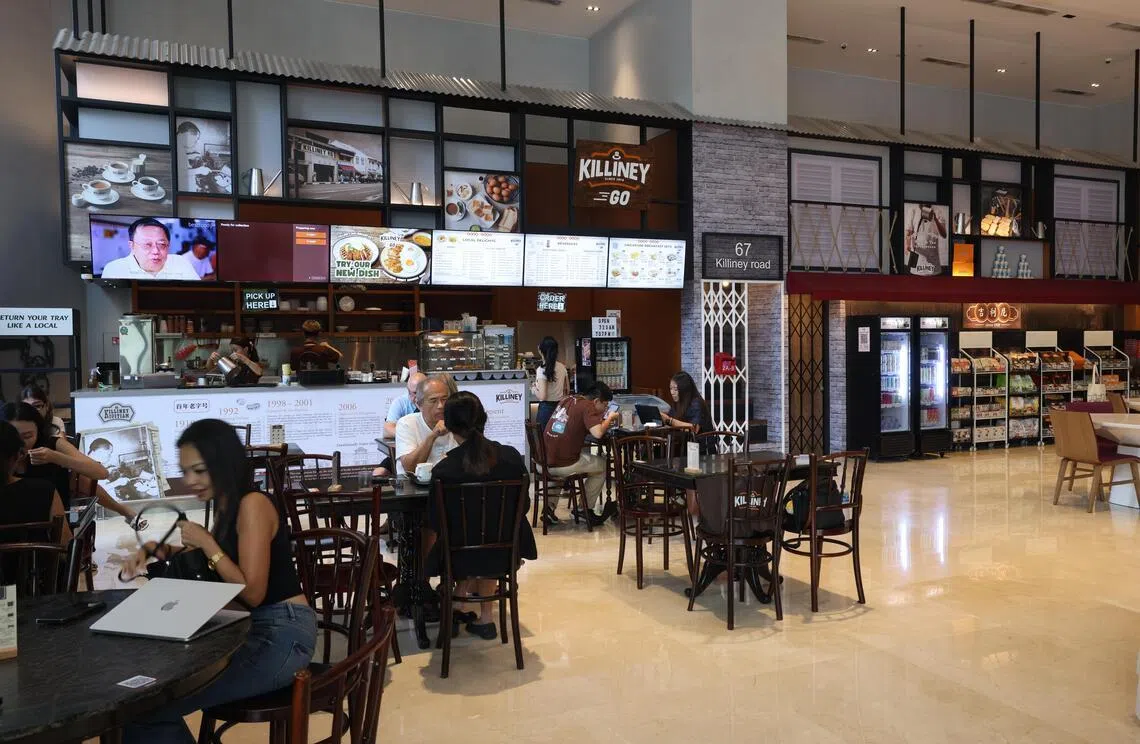
“With KillineyGO, we wanted to highlight that retail is a big part of our DNA,” he said.
There are five KillineyGO outlets in Singapore today. Its newest store opened in January at the lobby of Mercure Singapore On Stevens, marking the group’s first such partnership with a premium hotel.
Woon considers the hotel location as a viable alternative to opening an outlet at the airport, as it allows Killiney to reach a similar demographic of tourists and travellers.
“Most people who want to grow their brand globally might think they need to have a presence in the airport. But it’s not easy to survive there,” he explained, citing the now-shuttered The Killiney Experience.
To extend the brand’s reach, Woon aims to secure more collaborations with hotels to supply Killiney-branded merchandise.
These include its Nespresso-compatible coffee capsules for guest rooms – many of which have Nespresso machines – as well as gift boxes containing local products that hotels can present to premium-tier guests.
“There are some brands that only want to be associated with certain types of customers or locations. But we want Killiney to be a local brand that can be anywhere – from neighbourhoods to hotels.”
With the growth of the retail business, Woon expects the group’s top line to grow 15 to 20 per cent year on year in the 2026 financial year.
Gunning for Japan
Meanwhile, he plans to take a more deliberate approach to local store expansion.
While the group previously relied on franchising to scale quickly, it will now focus on opening more company-operated outlets in Singapore for quality control, he said. He aims to have 60 to 70 Killiney stores in Singapore by 2030.
As for internationalisation, Woon is exploring the possibility of opening a Killiney outlet with a retail section in Tokyo – its first in Japan.
The group already operates six franchise outlets in Indonesia, as well as one each in Malaysia and the Philippines.
Despite Japan’s notoriety as a tough market for foreign brands to enter, Woon noted its familiarity with Singapore cuisine. “The Japanese are well-travelled; many of them are familiar with Singapore offerings such as kaya toast, laksa and chicken rice.”
He added that Japan’s strong gifting culture is likely to drive demand for Killiney’s retail products. The group intends to operate the outlet itself.
Said Woon: “Our dream is for everybody to be able to consume some form of Killiney product every day, whether at our stores or in their homes.”






