


Labubu, co-op games, VR: How arcades are keeping patrons hooked
But keeping up with trends can be costly, with new machines costing up to US$100,000


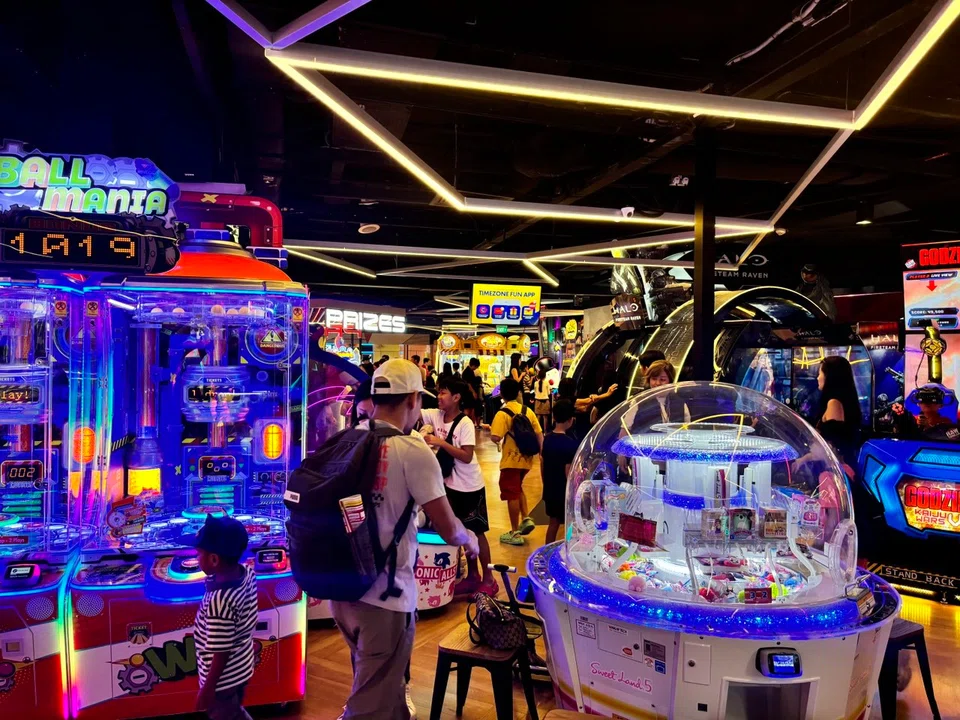
ORIGINAL plushie prizes, cooperative games and tie-ups with popular franchises are among the ways that Singapore’s arcades and gaming venues are trying to entice patrons and stay relevant.
Arcades had their heyday in the 1990s, but declined in popularity from the 2000s with the rise of local area network gaming centres and home video gaming consoles.
But operators of arcades, claw machines and other amusement venues in Singapore say they have been able to attract new customers while maintaining a steady pool of regulars.
About 60 per cent of arcade chain Timezone Singapore’s traffic comes from patrons who visit intentionally, with the rest from impulse-based walk-ins, said general manager Nesh Selva.
Its largest store, at Orchard Xchange, sees around 500 guests on busy days, with an average of 30,000 paying guests a month.
For smaller players such as ClawGey, a standalone claw machine store in the city fringe, returning customers make up the majority of the shop’s monthly footfall, said co-founder Bryan Ong.
Since ClawGey opened in 2019, its monthly customer traffic has risen by 30 to 40 per cent. It now has more than 100 customers a month.
Reeling patrons in
The shop’s efforts to keep up with customers’ tastes and preferences are one reason for its top-line growth and steady stream of regulars, said Ong.
“There is growing hype (around) claw machines not because of the game itself, but rather the prizes people (can) get,” he added. “The types of prizes matter, and when customers see the prizes we offer are something they want, they will play.”
Some of ClawGey’s offerings include figurines from Japanese series such as One Piece, Dragon Ball and Demon Slayer, as well as the popular Labubu dolls from Chinese company Pop Mart.
Since ClawGey began offering Labubu dolls as prizes in April, its monthly sales have increased to more than S$100,000.
Other operators have collaborated with popular brands and franchises to reel in patrons.
Retail-entertainment brand Fun Claw, which has 25 stores across shopping malls in Singapore, has collaborated with food and beverage brands such as Toast Box, Pepper Lunch and Skippy.
Through the tie-ups, Fun Claw’s customers can win limited-edition plushies, along with other prizes provided by the brands.
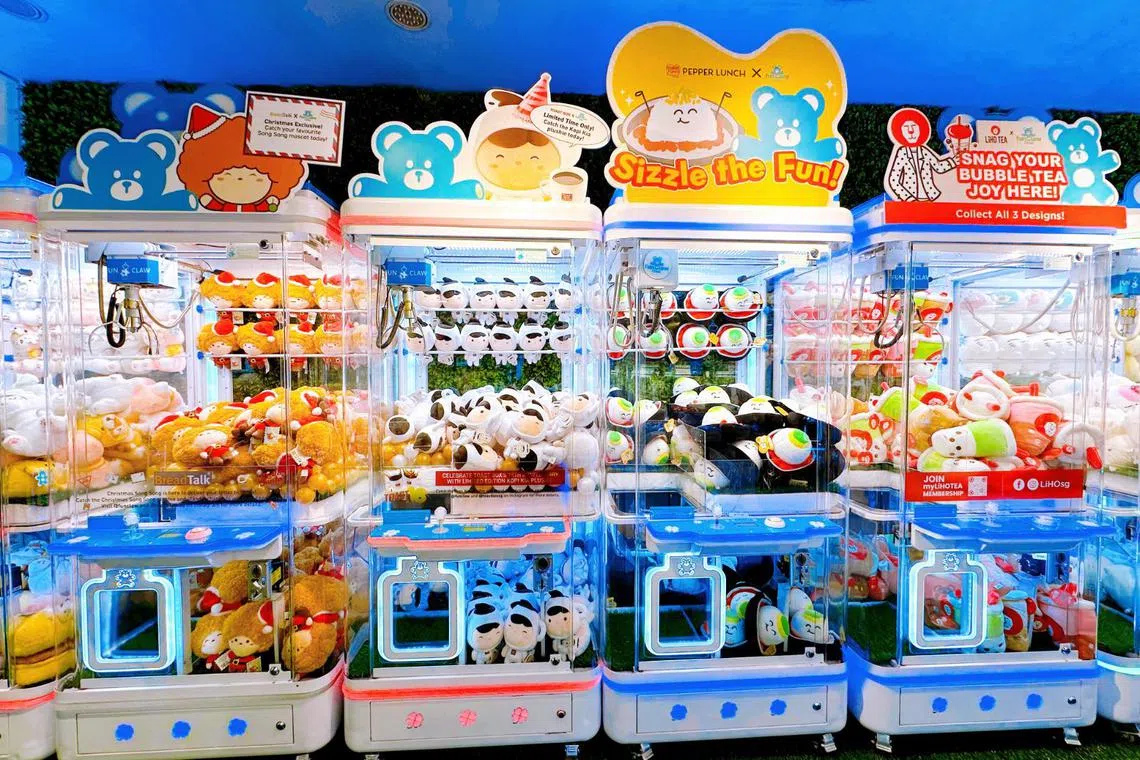
Fun Claw also designs and manufactures exclusive prizes, ranging from plush toys to travel pillows, eye masks and bags. These offerings are refreshed on a monthly or bi-monthly basis, said Michelle Loon, general manager of Fun Claw Singapore.
Without disclosing the costs involved, she said: “Manufacturing our own prizes is more cost-effective and offers significant strategic advantages.” This includes quality control, she added.
But there is a limit to how attractive prizes can be – at least in monetary terms. In March, Singapore’s authorities imposed a cap of S$100 on the value of prizes that can be won in arcade games.
When the regulation kicked in, sales at ClawGey fell to between S$40,000 and S$60,000, from S$100,000 per month before, said Ong. Bigger prizes, such as large anime figurines that can cost up to S$600, could no longer be used to entice people to play.
People tend to try harder for more valuable items and thus spend more on tokens, Ong explained. To retain customers, he gave away the more valuable items as lucky draw prizes.
“It is still a loss, but it is still a good way to entice the customers to spend more... since they would have to spend above S$100 to get a chance at the lucky draw,” he added.
Apart from prizes, the games themselves should be up to date.
At the global level, Timezone has a dedicated product team that scouts for new games from big manufacturers in the United States, China and Europe, said Selva.
The Singapore team then picks from this pool of games, based on what is relevant for the market here.
Hot picks include those from well-known and established media franchises, such as Marvel, Jurassic Park and Jumanji.
Virtual reality (VR) studio Sandbox VR develops its own games, including collaborations with trendy shows and movies.
Currently, its most popular game is based on the South Korean Netflix show Squid Game, said manager Gadafi Ahmad. These games take 12 to 18 months to develop, with nine such games now available.
Co-op mode
Arcade and gaming operators are also offering more interactive experiences to cater to large groups and families.
“The old arcade games, they’re pretty individual,” said Caroline Leong, group chief customer officer of TEEG, Timezone Singapore’s parent company.
“But all the things that we do, and we’re experimenting with… (they are) so social that (they really have) so much more traction and now, people are lining up for it.”
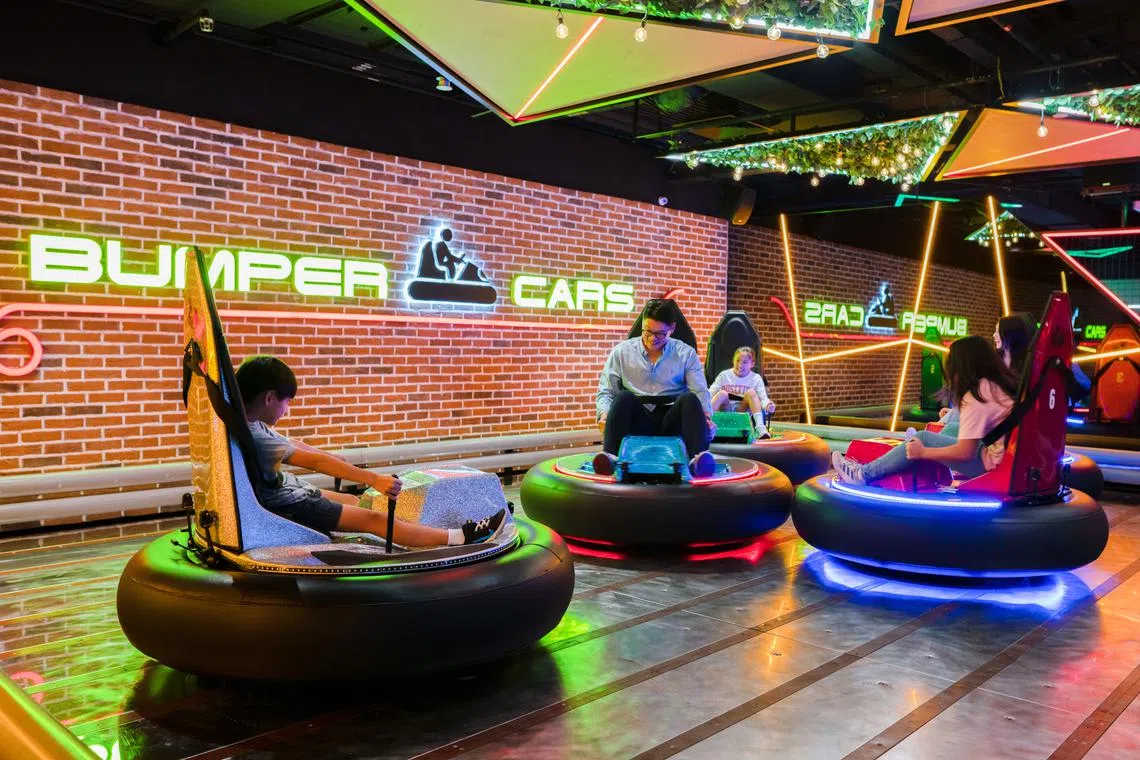
These include cooperative and multiplayer games; amusement games such as bumper cars; and bowling alleys in Timezone’s Orchard and Jurong outlets. VR and arcade operators have also found success with corporate and party bookings.
Corporate groups make up a large proportion of Sandbox VR’s customers, though the company did not provide specific figures. It also offers learning journey experiences for schools, where students experience a shorter VR session with commentary on the technology behind the game.
Timezone started offering birthday parties in 2019 at its VivoCity outlet, and has since expanded the service to other venues. In 2023, it rolled out corporate packages in response to demand from companies. As at October, the company has organised 4,000 events.
Keep them coming back
But the pressure to keep customers entertained comes at a high cost, as operators have to continually refresh their offerings to keep up with trends.
“A lot of customers (will get bored) after playing a game one, two, three times. So it’s always a priority for us to get new experiences,” said Kelvin Pangeran, owner of VR store Go VR.
The expense is especially pronounced for arcade operators, as machines can cost between US$2,000 and US$100,000.
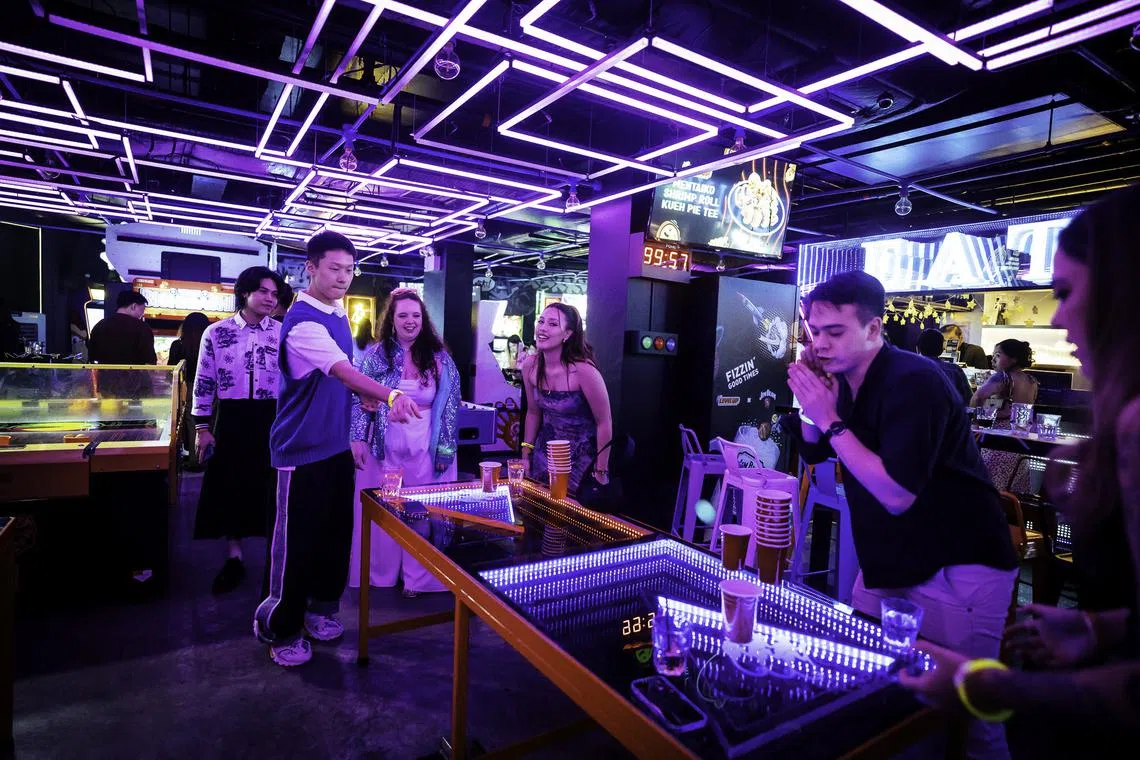
A classic pinball machine can cost around S$10,000 to S$15,000, said Mark Huang, managing director of Level Up, an arcade and live music bar.
This year alone, he has spent close to half a million dollars upgrading and refreshing the games and facilities.
“We invest quite considerable amounts of money into the outlet to do up the sound system, do up the lighting, change out things, so that whenever customers come, they are always intrigued (by) what’s new.”
Timezone invests around US$50 million annually in game purchases for all its arcades across seven countries. Each year, new games make up 15 to 20 per cent of the machines in its Singapore arcades, said Selva.
For VR operators, the initial equipment costs range from S$5,000 to S$50,000 per set, depending on the complexity of the game. But once this is installed, switching out games may be less costly.
Licensing costs for individual games are not as pricey as set-up costs, though they still comprise 15 per cent of the hourly fee that customers pay, noted Pangeran. At Go VR, the average price of a game is around S$5 per hour, with premium ones priced higher.
Consolidation ahead?
Even as industry players strive to stay fresh, they expect consolidation ahead.
A handful of traditional arcade operators from the 1990s remain, but only two – Cow Play Cow Moo and Timezone – appear to still be expanding.
Cow Play Cow Moo has 10 outlets across Singapore, and has expanded into Malaysia and Indonesia.
Timezone plans to keep expanding, and thinks it can “sit comfortably” with a total of 18 to 20 venues in Singapore, up from 15 now, said Selva.
The remaining arcade players, such as Paco FunWorld, Virtualand and Zone X, have only two or three stores each. They either declined or did not respond to The Business Times’ requests for interviews.
Industry players expressed uncertainty over whether operators can continue delivering new experiences to keep patrons captivated.
“There is going to be a limit to how you can keep making your experiences more interesting,” said Sandbox VR’s Gadafi.
TRENDING NOW

If Europe goes to war, the fallout will be felt in East Asia

COE review: Motor traders suggest using vehicle length, engine size and power to classify cars
Firms linked to haze pledge cooperation in meeting with Shanmugam; government to table changes to haze law

Indonesia stocks suffer worst plunge in nearly 30 years as MSCI proposes standalone status

