


From leasing steel plates to renting out buildings

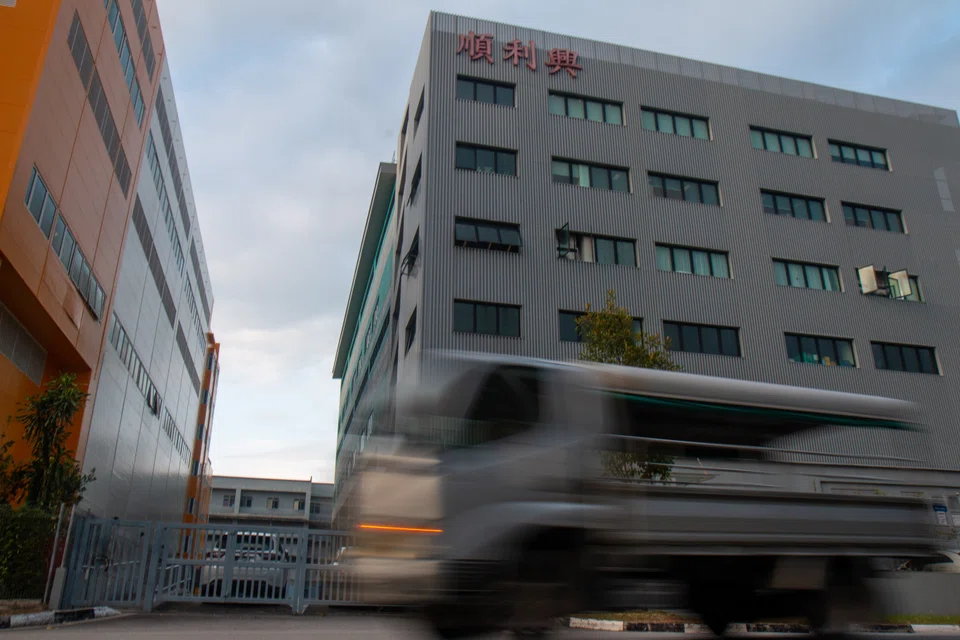
AT MUDDY construction sites, steel plates provide solid ground on which vehicles and workers can move. These humble materials also form the foundation of family business Soon Lee Heng Trading & Transportation, which has expanded into property and financial asset management as well.
“We have morphed into a different entity now, but the base (from) which we started was... the leasing of steel plates,” assistant director Ong Jun Quan told The Business Times.
Both the leasing of steel plates and the trading of steel products remain core to the company’s operations. But Soon Lee Heng has also diversified into managing property and financial assets on an opportunistic basis.
For instance, the company is constructing an 80,000 square foot (sq ft) industrial building in Jurong, having procured the land in 2022. When the building is completed in May, up to 60 per cent of its lettable area will be rented out, with the remainder used by the company and the Ong family’s other businesses.
The project’s payback period – the time required to recoup the cost of the investment – is about half the land lease of 15 years.
“Generally speaking, industrial property doesn’t have that much demand,” Ong said. “It’s just that in certain, specific locations, there are pockets of opportunities that allow us to play that part of the (property management) game.”
It was a similar story for the company’s headquarters in Tampines, which in 2017 marked Soon Lee Heng’s initial foray into property management. The company occupies about a fifth of the 80,000 sq ft facility, with the remainder leased to external parties.
Soon Lee Heng intends to build and operate more industrial properties, and is “actively” bidding for land sale tenders, Ong told BT.
Family business
Incorporated in 2004, Soon Lee Heng is affiliated with the Soon Li Heng Group of Companies, which includes a civil engineering business, building construction company and ecological engineering firm.
The family businesses are run by four brothers, including Ong’s father, Ong Gim Leong, who serves as executive director.
The group’s origins date back to 1975, when the elder Ong and his brothers started a business that provided building material transportation services to construction firms in Singapore.
They then moved up the value chain and began specialising in civil engineering and excavation works in 1980.
Although the companies share a common ownership, the businesses are run independently and are not financially dependent on each other, Ong said. This helps to de-risk operations, as it insulates other businesses from being adversely affected if any particular company does poorly.
A financial buffer
Aside from property, Soon Lee Heng also manages its own stock portfolio, with assets under management of more than S$100 million. Seeded by past retained earnings, the portfolio deals exclusively with stocks listed on the Singapore Exchange.
Including dividends and divestments, it has an annualised rate of return in the “high single digits”, Ong said. As with property, trades are done when opportunities arise. “We don’t actively trade,” he added.
Instead, the company looks out for opportunities during “movement in the markets”. These include the privatisation of the then-Singapore Press Holdings in 2021, and the merger of Sembcorp Marine and Keppel Offshore & Marine in 2023.
Returns from the company’s stock portfolio have served as a bulwark against diminishing margins within its steel plate leasing and steel trading operations, Ong said.
In 2023, the steel businesses accounted for 30 per cent of revenue, with the rest coming from rental income and asset management. Investment returns contributed 60 per cent of net profit.
Steel plate leasing rates have remained about the same for the past 10 years, Ong noted. “We are not expecting (leasing rates) to go up in the near future. Most of the contractors will try to control their budget.”
This is even as manpower and storage costs have increased. The company, which has more than 50 staff, pegs its salary bands to the wages that fresh graduates typically receive.
Its manpower costs have risen by 30 to 50 per cent in the past 10 years, depending on the role, Ong said.
Steeling itself for the future
Another challenge is the construction industry’s fluctuating demand for steel plates. To mitigate this, the company has been working to keep the volume of its contracts stable, said Ong.
One way it hopes to maintain this is through in-house research and development. In 2018, such efforts led to the development of a patented hook for lifting steel plates by crane.
The hook is used to secure steel plates when they are stacked upon foundation piles for stress-testing.
Conventionally, such stress-testing is done by stacking large concrete blocks. But this is “quite risky”, Ong said, citing past instances of workers falling off the blocks, or even the structure collapsing entirely.
Stacking steel plates can achieve the same outcome through safer means, he said. As steel is denser than concrete, the structures do not have to be stacked as high to achieve the same weight.
But securing the metal plates used to be a time-consuming process. To quickly secure the steel plates, Soon Lee Heng’s engineers developed a quick and “foolproof” mechanism that allows the plates to be hooked onto the crane.
“It’s almost like a carabiner,” Ong said. “It’s a simple design, but nobody has introduced it before for this purpose.”
Construction site workplace safety has also come under renewed scrutiny in recent years – which means demand for leasing steel plates for stress-testing purposes is set to grow, Ong noted.
The company does not charge extra for using the hook, and instead touts it as a value-add to potential clients.
“For now, it has not really increased demand for our product,” said Ong. “We need to look at how we can increase awareness of this.”
TRENDING NOW

Knight Frank’s Tan Tee Khoon leaves firm, Nicholas Keong takes over auction business
Keppel Energy, Sembcorp Utilities and Tuas Power to supply biomethane in pilot project

GovTech retrenches another 38 staff in second round of layoffs
Take-up of new private homes dives 45% in Q3 as prices accelerate with 1.4% rise

