


Little Paddington eyes Spark certification for all 10 branches within the next three years
Private pre-school operator’s revenue up 20% in 2025 thanks to higher enrolment numbers, says its chief operating officer
Koh Kim Xuan
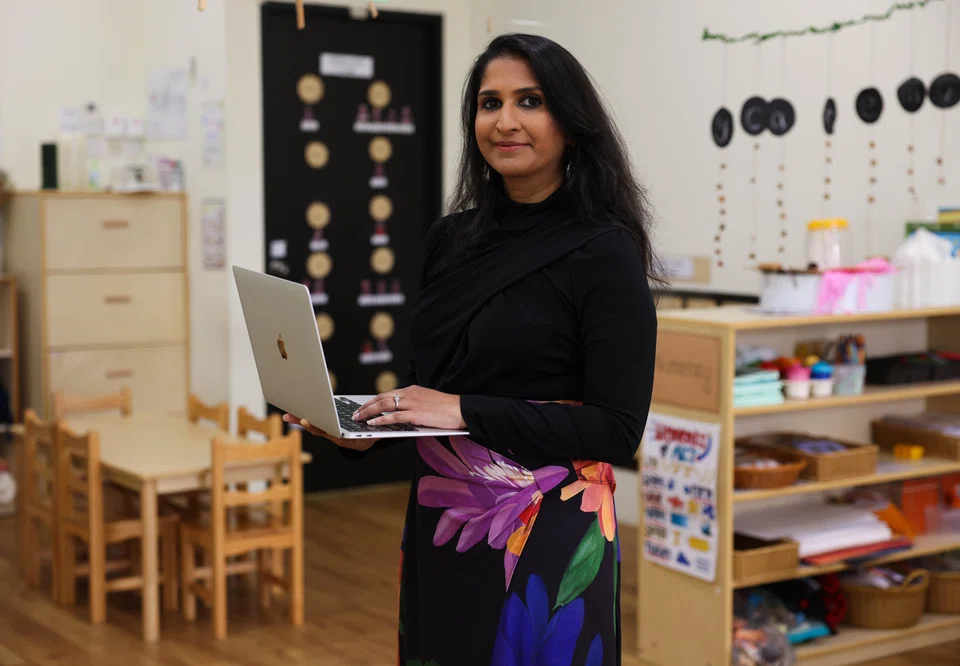
[SINGAPORE] Little Paddington was established a little more than a decade ago in 2015, and is a relatively new player in Singapore’s early childhood education sector.
The private pre-school and infant-care chain has 10 schools in Singapore, with three campuses – including the oldest one in Kovan – already having the Singapore Preschool Accreditation Framework (Spark) certification.
The aim, says chief operating officer Pooja Patodia, is to have the other seven centres obtain the certification – an endorsement of quality pre-school education by the Early Childhood Development Agency (ECDA) – within the next three years.
“We added a lot more nuances to our curriculum, and year on year, we revamped it with more resources and provided more support to our teachers in terms of training,” she said in a recent interview with The Business Times.
The pre-school offers both in-house and external training, which is facilitated by overseas childhood education specialists and university professors.
Evolving industry
As more government regulations requiring a higher quality of pre-school curriculum and educators are being introduced to the sector, alongside increased subsidies for public pre-school players, Patodia said that Little Paddington has to adapt to an ever-changing industry.
It also has to provide greater value for the higher fees it charges as a private entity.
Government pre-schools such as MOE Kindergarten and government-supported schools – for instance, Sparkletots and My First Skool –charge maximum monthly fees of S$415 and S$640, respectively, before subsidies, for full-day childcare.
Little Paddington charges a base cost of S$1,500 per child, with the operator positioning itself as a “premium quality provider in the early childhood space”.
Patodia shared that the pre-school operator’s revenue grew by 20 per cent in 2025, compared with the previous year, thanks to higher enrolment numbers.
To help parents that need it, there is a flexible pricing system. Three months before the start of the next academic year, the staff engages parents to discuss how the fees should be charged, with an option to stretch the payment across the entire duration of the child’s enrolment.
“We do understand that the cost of living is getting higher in Singapore. So we work around different parameters before pricing ourselves,” said Patodia.
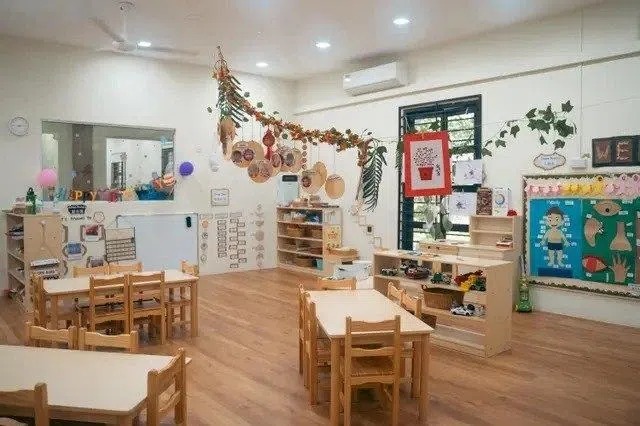
On what makes Little Paddington stand out from the competitors, the COO noted that the private pre-school uses the Reggio Emilia approach. This is an internationally recognised education pedagogy that promotes child-led and play-based learning. Little Paddington also offers “atelier” programmes to all students.
Atelier lessons are largely hands-on, where children learn a variety of subjects such as science, languages, art, outdoor play and cooking. The curriculum is academically rigorous and prepares children for primary school.
Patodia said that Little Paddington’s class sizes are no more than 10 children per teacher, which, she added, is below the guidelines prescribed by ECDA. The smaller classes help to ensure closer support and stronger interactions between the teachers and children.
She added that, apart from academics, Little Paddington also wants to “nurture the children’s self-expression, confidence and emotional quotient to get them used to the big world” through collaborating with social enterprises.
These social enterprises range from the Wildlife Foundation and Red Cross to old-age homes and migrant worker-focused enterprises.
Little Paddington also arranges for students to participate in self-led charity programmes. In a recent collaboration with the Rainbow School, funds were raised through children creating artwork that were bought by parents.
Learning on the job
For Patodia, she said she enjoys working in the early childhood sector as it has always been a passion of hers.
She is constantly on the ground during the day, visiting all 10 branches regularly. Among other responsibilities, she oversees operations, liaises with financial officers and marketing teams, and handles lease agreements with landlords.
“I enjoy learning on the job because that’s when you learn the skills on your own. It is rare to find organisations that allow you to grow with them,” she said.
TRENDING NOW

Once staunchly pro-China, Malaysian Chinese businesses are now distancing themselves from Beijing
The middle power moment arrives in South-east Asia – but not for Asean

DBS, OCBC, UOB face rate hike reality check

Vietnam’s northern provinces, not Hanoi or Ho Chi Minh City, are powering near 10% GDP growth

