

More SMEs seek sustainable financing from Singapore’s banks
Consumer pressure – together with increasing supply chain, regulatory and investor pressure – is driving companies to transition to more sustainable operations

MORE small and medium-sized enterprises (SMEs) in Singapore and the region are tapping sustainable financing options from the Republic’s banks to fund their decarbonisation journeys.
Since the start of the year, DBS has had double-digit percentage growth in the value of sustainable financing taken up by SMEs, compared to December 2023’s figures, said group head of corporate and SME banking Koh Kar Siong.
“Consumer pressure – together with increasing supply chain, regulatory and investor pressure – are driving companies to transition to more sustainable operations,” said Koh.
In 2023, DBS had total sustainable financing commitments – net of repayments – of S$70 billion.
In the first quarter, OCBC has also experienced double-digit percentage growth in the number of SMEs taking up sustainable financing.
This follows the bank’s doubling of its SME sustainable financing loan book to over S$7 billion in 2023. As at Mar 31, OCBC’s total sustainable financing loan commitment stood at S$60.5 billion.
“While SMEs may lack the resources available to large corporations, it has become simpler and less costly for SMEs to access sustainable financing,” said Mike Ng, group chief sustainability officer at OCBC.
As at end-2023, UOB extended about S$6.1 billion in sustainable financing – a 77 per cent increase from year-ago figures – to more than 400 SMEs.
Eric Lian, head of group commercial banking at UOB, said: “With more countries imposing sustainability reporting standards, large corporations increasingly require SME partners within their supply chains to also meet these requirements and be ESG (environmental, social and governance) compliant.
“Otherwise, they may risk missing out on business opportunities.”
From installing solar panels to buying up entire facilities, here are some green projects for which SMEs have tapped sustainable financing.
Ollo Lifestyle: Going green with solar-powered cleaning
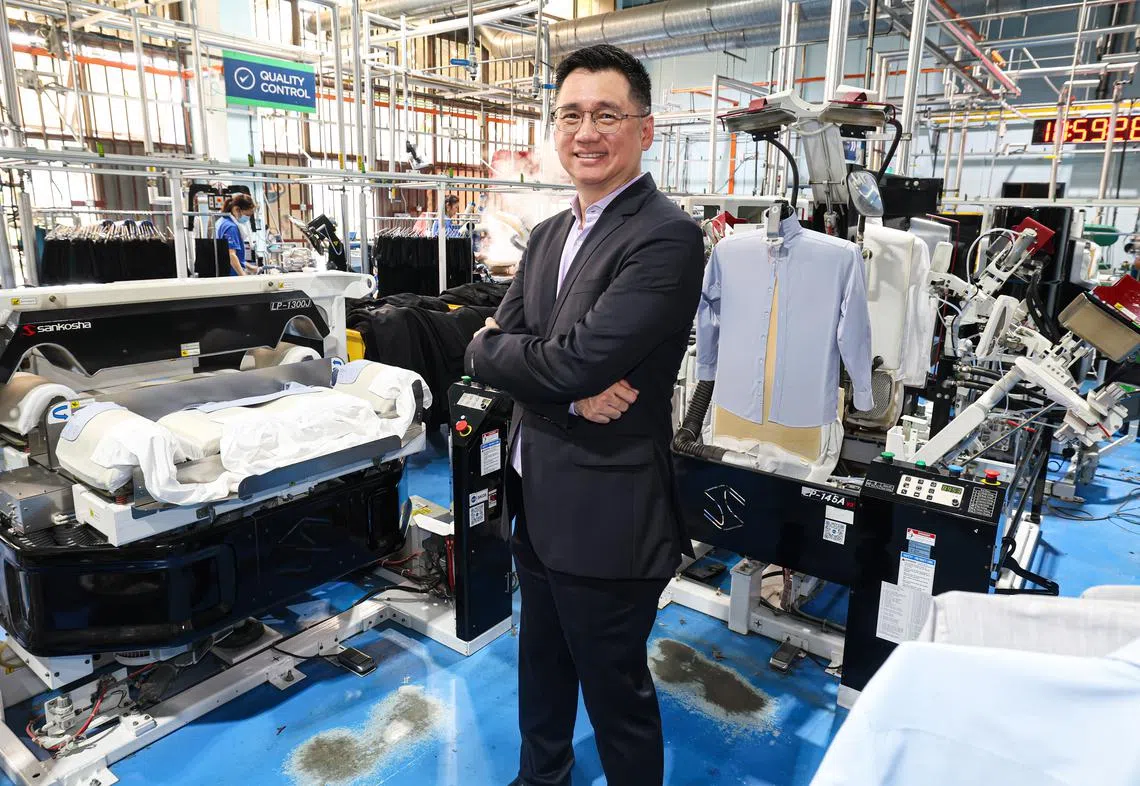
Laundry service provider Ollo Lifestyle is putting a greener spin on its business with solar power and water recycling.
In doing so, Ollo aims to stay ahead of increasingly stringent green requirements imposed by its hospitality clients, chief executive officer Alex Teo told The Business Times (BT).
“For current tenders, usually the first things that they ask about now are your sustainability programmes and initiatives,” Teo said.
“I’m very sure that down the road, we will come to a point where the hotels will say: ‘Look, you must have all these sustainability programmes to be on our list of chosen vendors.’”
The company, which serves hotels only, handles about 500 tonnes of laundry each month. These include bedding and linen, towels, staff uniforms and guest laundry.
Cleaning all these requires about 9,000 cubic metres of water monthly – nearly enough to fill four Olympic-sized swimming pools.
To lower its water usage, Ollo will install a water recycling unit in its two adjoining facilities in Tampines by year-end, aiming to halve its water consumption.
The unit will process discharged water from the cleaning cycles, allowing it to be reused in subsequent laundry loads.
Apart from burnishing Ollo’s green credentials, the water-saving project will help to manage water bills. Water tariffs have risen this year, and will increase again in April 2025.
The S$600,000 project has an expected payback period – the time needed to recoup the investment – of five years, before any government grants.
Ollo similarly hopes to slash its electricity usage, both to go green and to save money. The company has seen its power bills “more than double” in the past few years, Teo said.
By September, Ollo will install about 22,000 square feet of solar panels on the rooftop of its facilities. At peak power generation, the solar panels can provide about 20 per cent of the company’s energy requirements.
Ollo will invest S$300,000 into the project, which has an expected payback period of about seven years.
To fund about half of the combined S$900,000 in capital expenditure, Ollo has tapped a sustainability-linked loan (SLL) from OCBC.
The rest is being funded by internal resources and government grants, with up to S$300,000 coming from national water agency PUB’s Water Efficiency Fund.
Asked why Ollo decided to use debt financing, Teo replied: “I know interest rates are high, but water bills are high, (and) electricity bills are also high – if you do the calculation, I think it’s still okay.”
SLLs differ from traditional bank loans in having lower interest rates if the borrower achieves certain predetermined sustainability performance targets.
As part of the SLL requirements, Ollo has engaged an independent consultant to calculate the company’s carbon footprint and the expected emission savings once its green projects go online.
“We also want to know our (sustainability) markers, so that we can present it to the hotels,” Teo added.
ETA Green: Turning palm oil waste into jet fuel
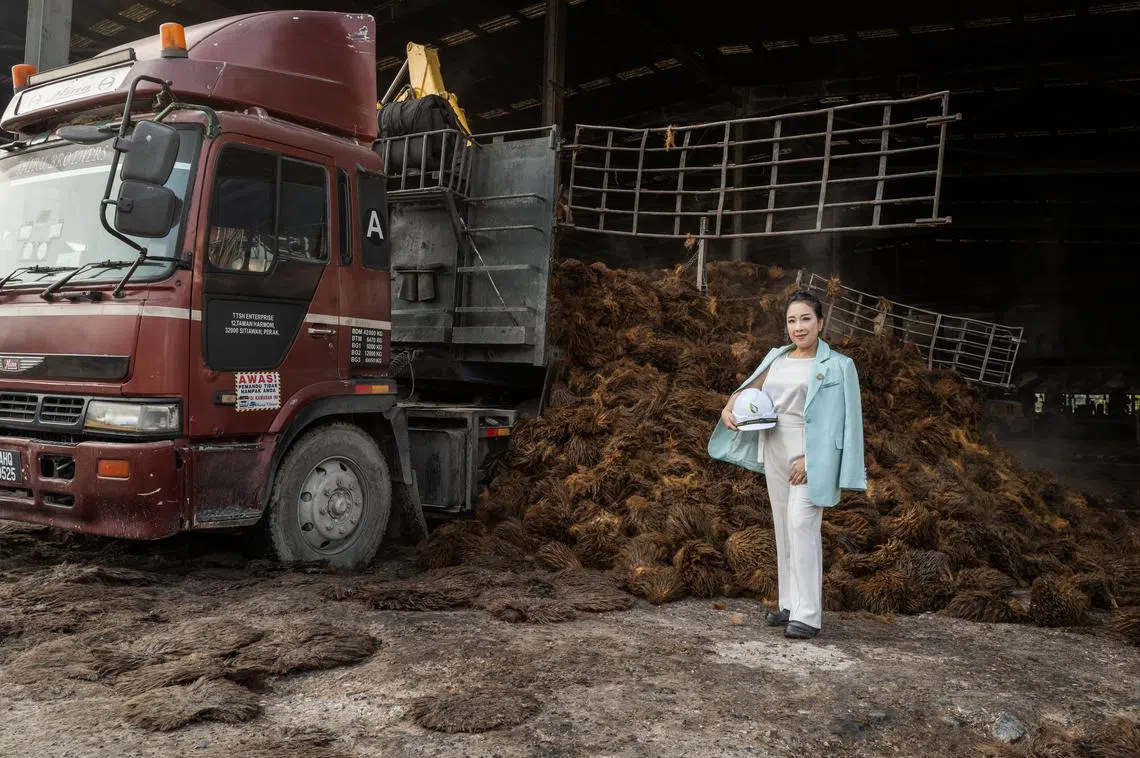
In blending palm oil waste into jet fuel, ETA Green has also given a new lease of life to a previously distressed biomass and waste management facility in Malaysia.
The plant, which sits on 7 hectares of land in Perak, began operations in 2015. But rising costs and Covid-era disruptions caused the facility to be placed under receivership in July 2022.
When it was later put up for sale, Elaine Teh, chairman of Singapore-based consumer goods company Octopus Group, learnt about it from her relationship manager at UOB – and saw an opportunity.
“We sent in a team to do due diligence, to see whether it was viable,” said Teh, who had been looking to invest in green businesses. “They were in distress, but we saw the gem (within).”
More than half of the purchase price was funded by a SLL from UOB, with the remainder from internal resources.
While Teh did consider other sources of funding, she eventually decided on debt financing as preferable to options such as pooling resources with business partners or borrowing from family and friends.
“If I can get (the money) from the bank, and I can run it profitably, and I can service the loan, why not?”
Teh founded Malaysia-based company ETA Green to acquire and run the facility, with the acquisition completed by 2023.
Upon taking over, however, Teh’s team quickly determined that the original business model of selling generated electricity to the grid was not viable, as the price of electricity was “too low”.
Fortuitously, the acquisition of the plant coincided with a surge in interest in sustainable aviation fuel. The biomass plant could easily be adapted to serve this purpose: processing sludge palm oil as an ingredient for such fuel.
Malaysia is the world’s second-largest producer of palm oil, which is used to make food and beauty products, among other things. After palm oil is extracted from the fruit, the empty fruit bunches are the main waste material.
At ETA Green’s plant, these empty fruit bunches are further processed to extract sludge palm oil, which is sold to a third-party collector.
Whatever remains is processed further – into animal feed, for example – and the final waste product is burned to generate electricity. The leftover ash is then sold as fertiliser, completing a zero-waste cycle, said Teh.
In the past, sludge palm oil was used to make soap or candles, which are not high-value items. But now, sludge palm oil prices have increased by “a few times” as it can be used in producing sustainable aviation fuel, she added.
ETA Green’s facility can handle up to 1,200 tonnes of empty fruit bunches per day. As the sole biomass facility in Perak, it collects waste material from palm oil mills across the state and generates up to 12.5 megawatts of electricity.
Sludge palm oil sales now account for about 70 per cent of ETA Green’s overall revenue, with the remainder derived from selling electricity and other by-products.
Fish: Surfing the sustainable seafood wave
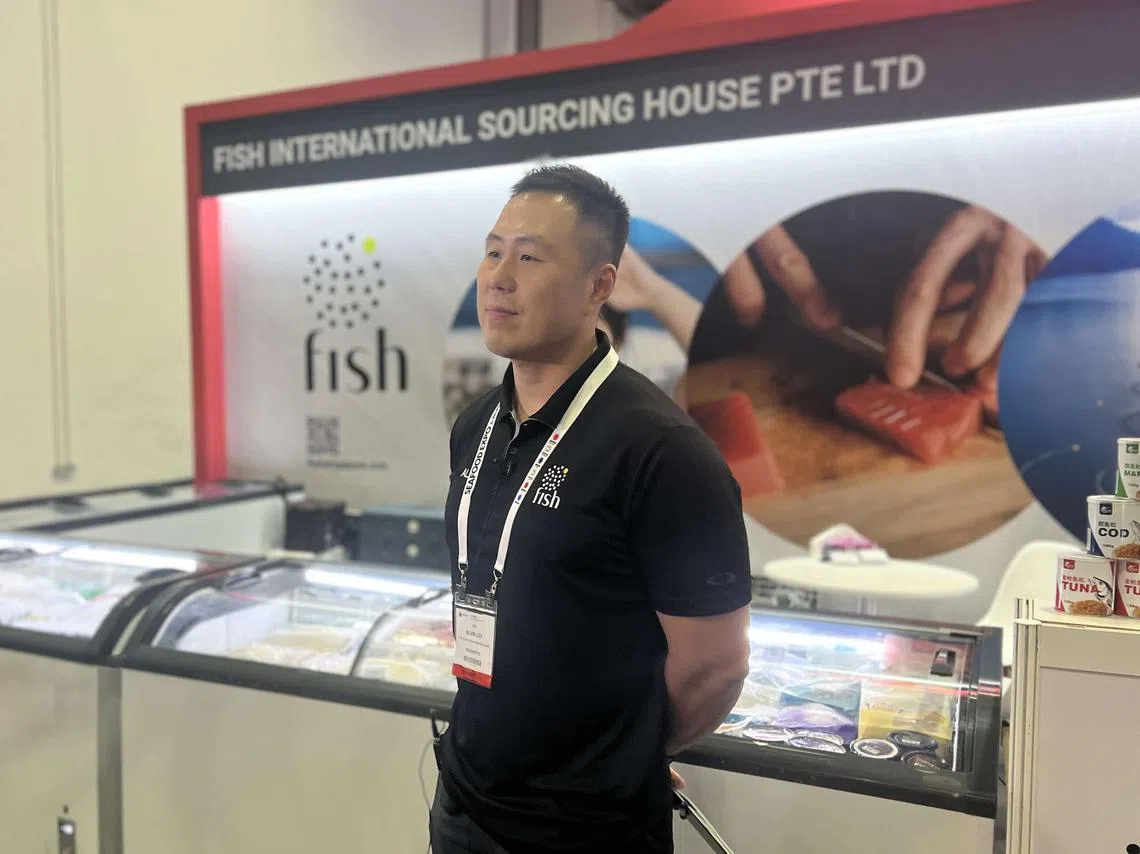
Sustainable seafood might be pricier, but demand for it has “outstripped supply” – and seafood trader Fish International Sourcing House (Fish) wants to cash in on this.
In the next three years, Fish intends for sustainable seafood to account for 50 per cent of its revenue, from about 20 per cent now.
This bullishness is partly because demand for its sustainable products has risen 50 per cent in the last three years, CEO Alvin Loy told BT.
This is even as consumers have to pay up to 20 per cent more for sustainable seafood, compared to traditionally sourced equivalents.
“They understand that there is a cost to sustainability,” Loy said. “I think in general, we see that people are willing to pay a premium.”
If anything, consumers actively seek such products, he added: “A lot of the markets we are in – especially in North America, Europe and Australia – our customers require products to be sustainable.”
Sustainable seafood is priced at a premium mainly because of the pricey certification process, he added. “We had to go through very stringent audits, ourselves and our suppliers. Every kilo has to be accounted for.”
Carried out by internationally recognised organisations such as the Aquaculture Stewardship Council and Marine Stewardship Council, the audits and accreditation are necessary for accessing green financing, which offers preferential terms.
Since 2022, Fish has been tapping a green trade facility from DBS to finance its purchases of sustainable seafood. This allows for lower interest rates and a longer loan tenure.
“It gives companies like us a boost, to buy more from suppliers who are more sustainable,” said Loy.
What sets sustainable seafood apart from traditional seafood is the way it is harvested. Environmentally destructive techniques, such as deep sea trawling, are not allowed.
There are also strict limits on the amount of bycatch – other marine animals that are not the target of fishing – that can be harvested by sustainable fishing companies.
Last year, Fish opened a S$20 million, 240,000-square-foot seafood processing and innovation facility in Boon Lay.
The company buys seafood directly from fishing companies, processes it and sells it on to wholesalers, both local and overseas.
Sales in Singapore account for about 30 per cent of overall revenue, with the remainder coming from abroad. The company trades with businesses across more than 90 countries. Popular products include tuna, Patagonian toothfish – also known as Chilean sea bass – and salmon.
Apart from sustainable sourcing, Fish has also embarked on other green initiatives. In the past three years, it has invested more than S$1 million in research and development efforts to upcycle waste material into products such as fish oil and pet food.
Waste material – which is usually thrown away – includes the head, skin and bones of the fishes it processes, and this can account for some 50 per cent of the fish’s weight.
“Sustainability is not only about sourcing from sustainable sources,” said Loy. “We also believe that we are responsible for the material that we handle.”
TRENDING NOW

He built the Vingroup empire. Now South-east Asia’s richest man is handing some key roles to his sons

Seatrium allocates S$200 million for new share buyback programme
32 companies, 6 individuals bag accolades at Singapore Corporate Awards 2026

Stocks to watch: Mapletree Logistics Trust, Seatrium, Keppel DC Reit, Food Empire

