


Moveon Technologies finds new uses for proven tech as it keeps moving on

Elysia Tan
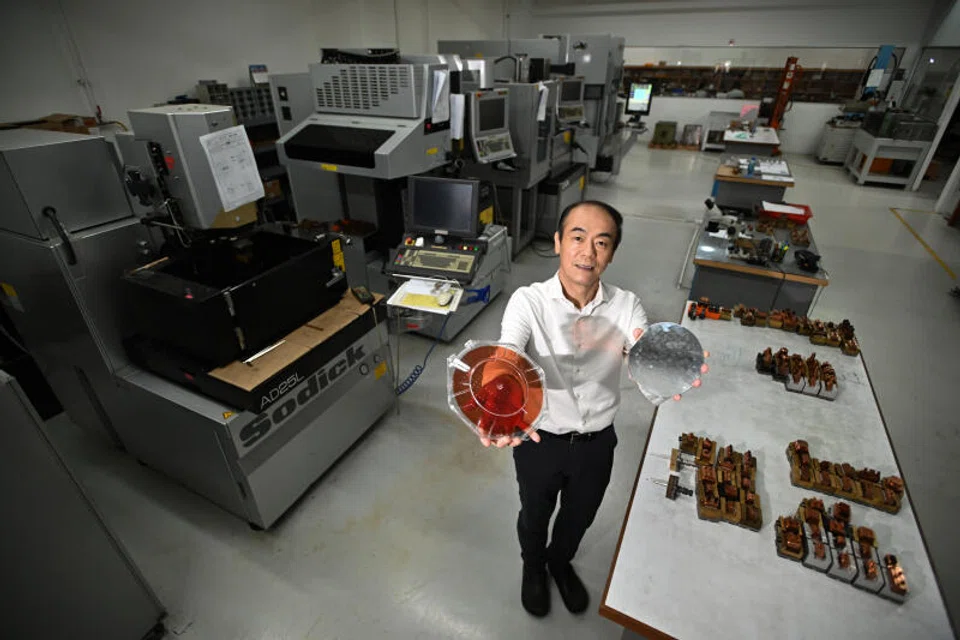
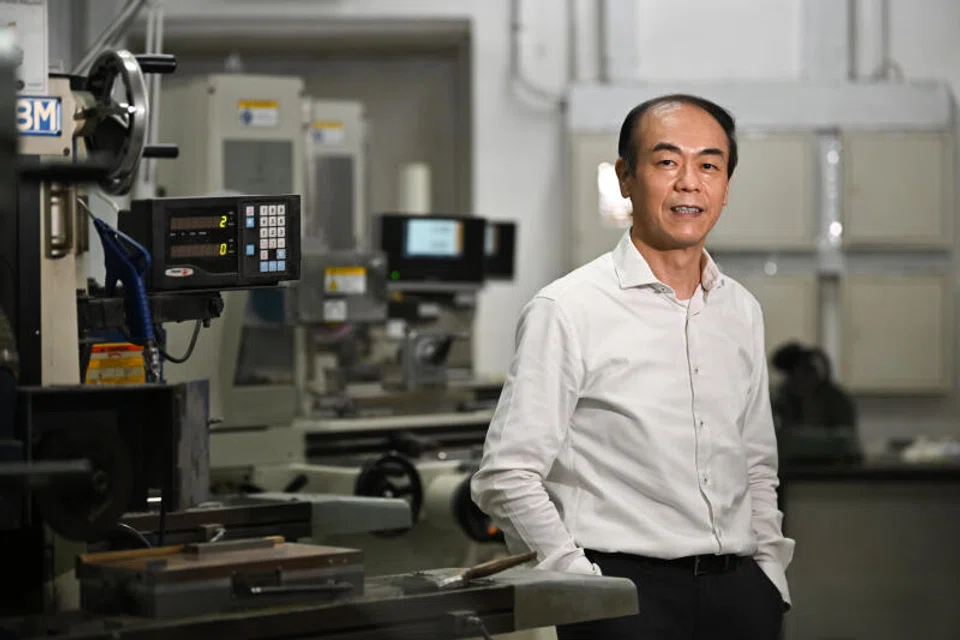
TRUE to its name, optoelectronics player Moveon Technologies is focused on staying ahead of the curve: finding fresh applications for its existing know-how while developing new technologies in anticipation of customer needs.
As a manufacturer of optical components for industries such as automotive and consumer electronics, the range of its products and services has grown over the years as the field evolves. “Optoelectronics has grown by leaps and bounds,” said chief executive officer Chee Teck Lee.
“You can imagine that from autonomous vehicles to AR (augmented reality), VR (virtual reality), the metaverse, anything that requires sensing would have to depend on some kind of optics (technology),” he added. Smart devices such as Dyson vacuum cleaners and Phillips irons, for instance, are also equipped with cameras made by Moveon.
The Best Innovation Award winner at the 2010 Emerging Enterprise Awards, Moveon makes the most of its past innovations even as it pursues new ones. For instance, technology used for the Blackberry TrackPad in 2009 was imported into Mercedes-Benz steering wheels, giving drivers easier control over their dashboard and lights.
Of course, the company does not rest on its laurels. To keep its capabilities up to date, Moveon is “splurging something like S$3 million a year” on research and development, said Chee. In particular, about S$5.5 million has gone into developing nanofabrication capabilities so far, yielding a production capacity of 200 million units each year, or sales of S$30 to S$40 million.
While fundamental optical principles remain the same, manufacturing today’s products might require new processes, materials and equipment. “In the tech space, things are very dynamic (and) evolve very quickly,” said Chee.
For instance, new technologies in micro-, sub-micro- and nanostructures have allowed Moveon to create flatter lenses, allowing light to be managed “in a way you could not before”, for use in 3D cameras, face recognition and light detection and ranging technology.
Keeping abreast of technological change is crucial for retaining customers, said Chee: “No matter how low your costs, no matter how well you control your quality – customers do not want you if your technology is already obsolete.”
But another part of their strategy is choosing customers who pay well, pay promptly and understand that Moveon is a partner, rather than a dispensable supplier, he added: “We decided that going after pedigreed customers is more important than growing dollars and cents.”
In 2021, Moveon recorded a revenue of about S$28 million, about 30 per cent of which was profit.
Now that the company is focused on squeezing more lenses into smaller pieces of hardware, production at competitive prices mainly relies on automation and skilled labour in Singapore – making the company less reliant on lower-cost labour overseas, such as in its Malaysian facility, said Chee.
Still, manpower constraints remain as the workforce’s expectations shift, he noted. In Moveon’s Singapore facility, about 60 per cent of employees work on the shop floor, operating the equipment. One particular challenge has been that potential employees prefer to work from home.
“Even if we innovate, we have customers, we have sales – we don’t have people that we can retain for long,” Chee said.
“Uncertainty baked into the current market” due to geopolitical tensions and customers’ tightly-managed inventories can also be “quite challenging to manage”, he added.
To regain some control, Moveon’s strategy is to spread out its risks by exploring new markets in the medical and industrial automation industries. Since 2015, it has also been investing in startups. Chee estimates that to date, the company has pumped more than S$5 million into about 14 optics-related startups to which it can “add value”.
The idea is to secure a place early. When customers are acquired by other organisations – which has happened before – Moveon’s place in their supply chain is threatened, noted Chee: “We could either benefit from this merger or we could be thrown out altogether.”
“If we can help our startup become the next unicorn... we have a greater chance of going into their supply chain. And that has a lot more loyalty.”
This article is part of a series on former winners of the Emerging Enterprise Awards. This year’s EE winners will be announced on Nov 22.
Decoding Asia newsletter: your guide to navigating Asia in a new global order. Sign up here to get Decoding Asia newsletter. Delivered to your inbox. Free.
Copyright SPH Media. All rights reserved.
TRENDING NOW

Once staunchly pro-China, Malaysian Chinese businesses are now distancing themselves from Beijing

Grab CEO’s wife Chloe Tong on life with Anthony Tan and finding her purpose

Could stablecoins be the future of money?
ST Engineering opens tech-focused aircraft maintenance facility in Changi; to create over 500 jobs

