
SGSME logo

New Asme chief targets better policy recommendations, collaboration and growth abroad

Renald Yeo
Renald Yeo

Published Wed, Feb 28, 2024 · 04:38 PM
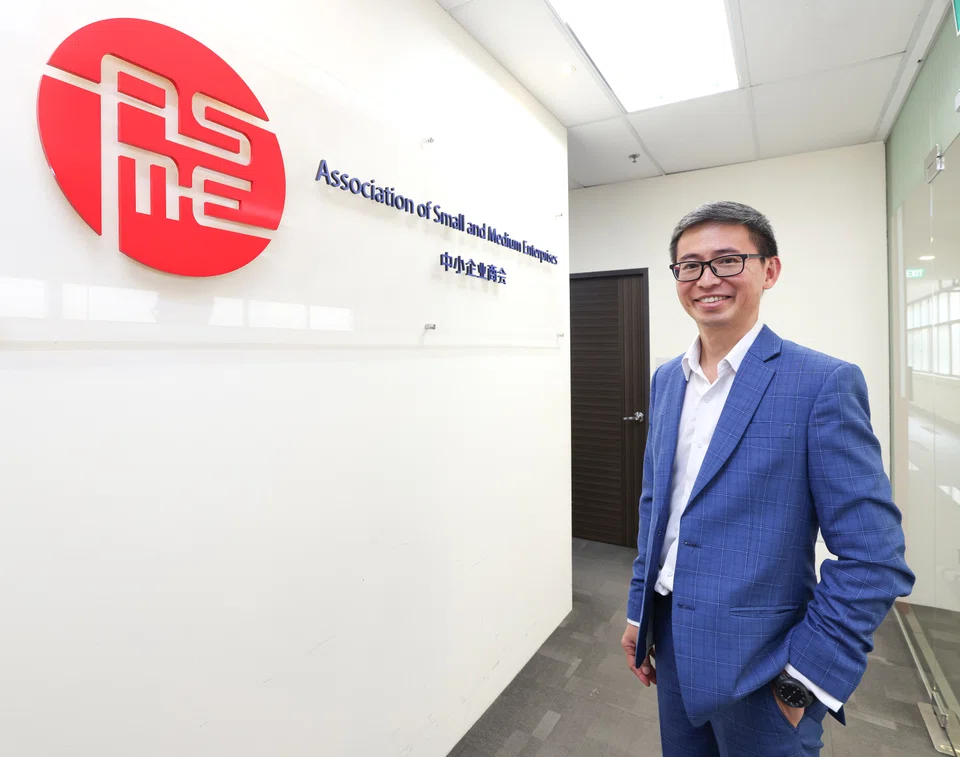
    • Ang Yuit has been elected unopposed to Asme’s top role for a two-year term last December.
    • Ang Yuit has been elected unopposed to Asme’s top role for a two-year term last December. PHOTO: YEN MENG JIIN, BT

    IN TODAY’S high-cost environment, Singapore’s small businesses can survive – and even thrive – by collaborating among themselves and looking for opportunities abroad, suggested Ang Yuit, president of the Association of Small and Medium Enterprises (Asme).

    That is why Asme will champion these two strategies in the year ahead, said Ang, who became president of the association last December.

    A mechanical engineer by training, he is founder and chief executive officer of Web consultancy The Adventus Consultants. He was elected unopposed to Asme’s top role for a two-year term, after having been vice-president for 12 years. His predecessor, Kurt Wee, had been Asme president since 2013.

    Founded in 1986, Asme counts more than 6,000 SMEs among its ranks. The association is largely funded through sponsorships, events management and voluntary membership dues.

    Proactive and coherent

    As president, Ang wants Asme to be more proactive and coherent in making policy recommendations to the government.

    To that end, Asme has – in the last three months – set up internal action groups or sub-committees on specific themes.

    They include developing human capital; harnessing artificial intelligence; and dealing with environmental, social and corporate governance matters.

    Each group starts with five to 10 members who are “passionate” about the particular theme.

    “They have started formulating and working with the rest of the SMEs and broader groups to come up with more coherent and more on-the-ground suggestions and ideas to the government,” Ang said.

    Less for SMEs in Budget 2024

    In Ang’s view, Budget 2024 did not seem to have “a lot of help” for Singapore’s SMEs, though he cheered the corporate income tax rebate and enhancements to the Enterprise Financing Scheme.

    “You have other things like PACT (Partnerships for Capability Transformation) and AI (artificial intelligence) investments, (but) all of these are very high level,” he said. “How it flows down to SMEs, we have no idea.”

    Apart from one-off pandemic-era support measures, the general observation is that “support and help for SMEs has been slowly tapering off” in the past decade, Ang said.

    This is despite the fact that government support can be crucial for companies in the “seedling” stage of growth, with revenue of S$250,000 and above, he added.

    In its Budget recommendations last December, Asme had suggested enhancements to broad-based, cash grants such as the long-running Productivity Solutions Grant and Enterprise Development Grant. But this did not materialise in Budget 2024.

    “Our concern is that if we do not have the right view about this, then your seedlings can no longer thrive, and that will impact us 20 years into the future,” Ang said.

    But he recognises that SMEs are just one part of the wider picture of government spending. “When we put forward our position on issues, it’s also very important to know that we are only one facet of the collective decision-making process,” he said.

    “With that kind of perspective, it allows us to look at issues and put forward our position in a good light, rather than being too adversarial, or unnecessarily antagonistic,” he added.

    Shift in conversation

    Therefore, apart from advocacy and feedback to the government, SMEs must “take action to make things better for ourselves”, Ang said.

    One way this can be done is through peer collaboration – though this requires SME bosses to let go of the “me and mine” mindset, and go beyond thinking of their contemporaries as potential competitors, he added.

    “I think the conversation has to shift towards value-building, and we talk about the value that you create when you collaborate.”

    To drive collaborations, Asme has expanded its annual Inter-Association Networking Night – held during Chinese New Year period – to more than 50 trade associations and chambers, up from about 20 in previous years.

    It has also seen promising results from a sub-group set up two years ago to encourage member collaborations. These include referring business deals to one another, or jointly pitching for larger deals.

    This January alone, there were over S$500,000 in deals inked within the sub-group.

    The association is also exploring how to drive collaborations between local and foreign companies.

    “A lot of these foreign businesses, like the Chinese and Japanese, want to come here because Singapore is a good springboard for them to the rest of the world,” said Ang.

    “We (want to) ensure that there’s better integration of our business owners amongst the new-age multinationals.”

    And even as Singapore’s SMEs work with foreign companies, they should look for overseas opportunities of their own, said Ang.

    Venturing abroad goes beyond generating revenue to cut costs through offshoring arrangements.

    “A lot of businesses now look at going overseas to not just open new markets, but also to bring costs of servicing down,” he noted.

    “One way that SMEs can look at the overall market is to see Singapore as the ‘capital’ of Asean – you keep all your core value-added generation activities here, but you look at where you can offshore activities to the other countries,” Ang said.



