New factory helps 133-year-old sauce maker Kwong Cheong Thye ramp up exports, sell more at home
The family-owned brand, now led by its fifth generation, is seeing rapidly growing overseas demand for its soya sauce

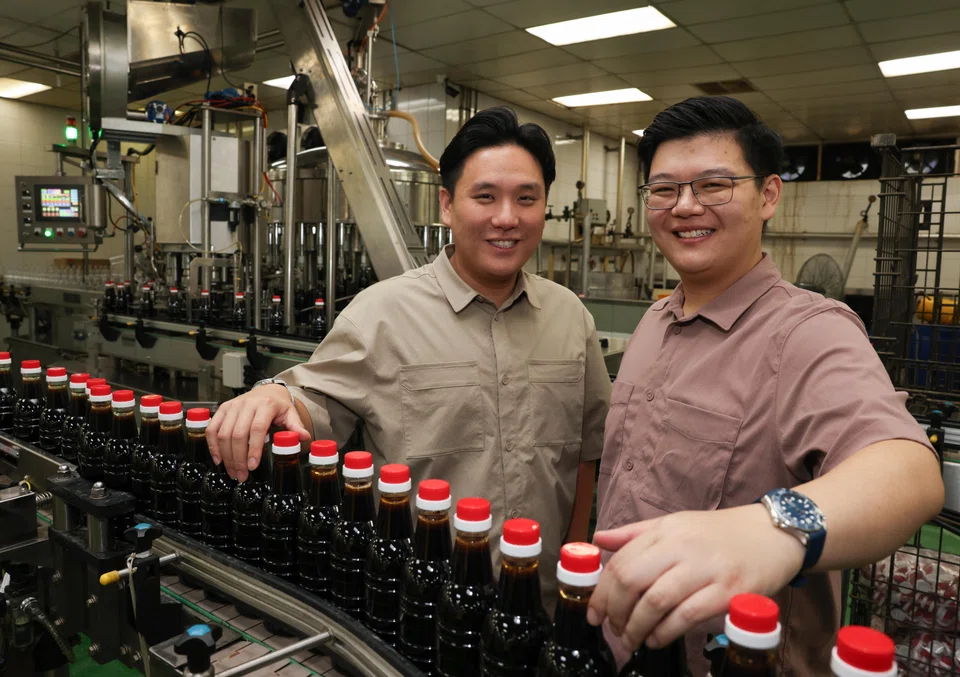
[SINGAPORE] With a new factory dedicated to soya sauce, home-grown sauce manufacturer Kwong Cheong Thye aims to ramp up both exports and local retail sales.
The company was founded in 1892 as a soya sauce maker. Over the decades, it expanded into other sauces, pastes, noodles, pastries and seasonal items.
But soya sauce remains its core product. In recent years, demand from key overseas markets – China, Vietnam, the United Arab Emirates and Japan – has consistently outstripped supply, said Alvin Choo, Kwong Cheong Thye’s fifth-generation owner and head of business development.
“We need to allocate our supply to different distributors, so our soya sauce always sells out before arriving at the port of other countries,” he said. “If we cannot meet demand… we’ll lose business from our customers.”
Soy sauce production requires a lengthy fermentation process of up to six months, he noted.
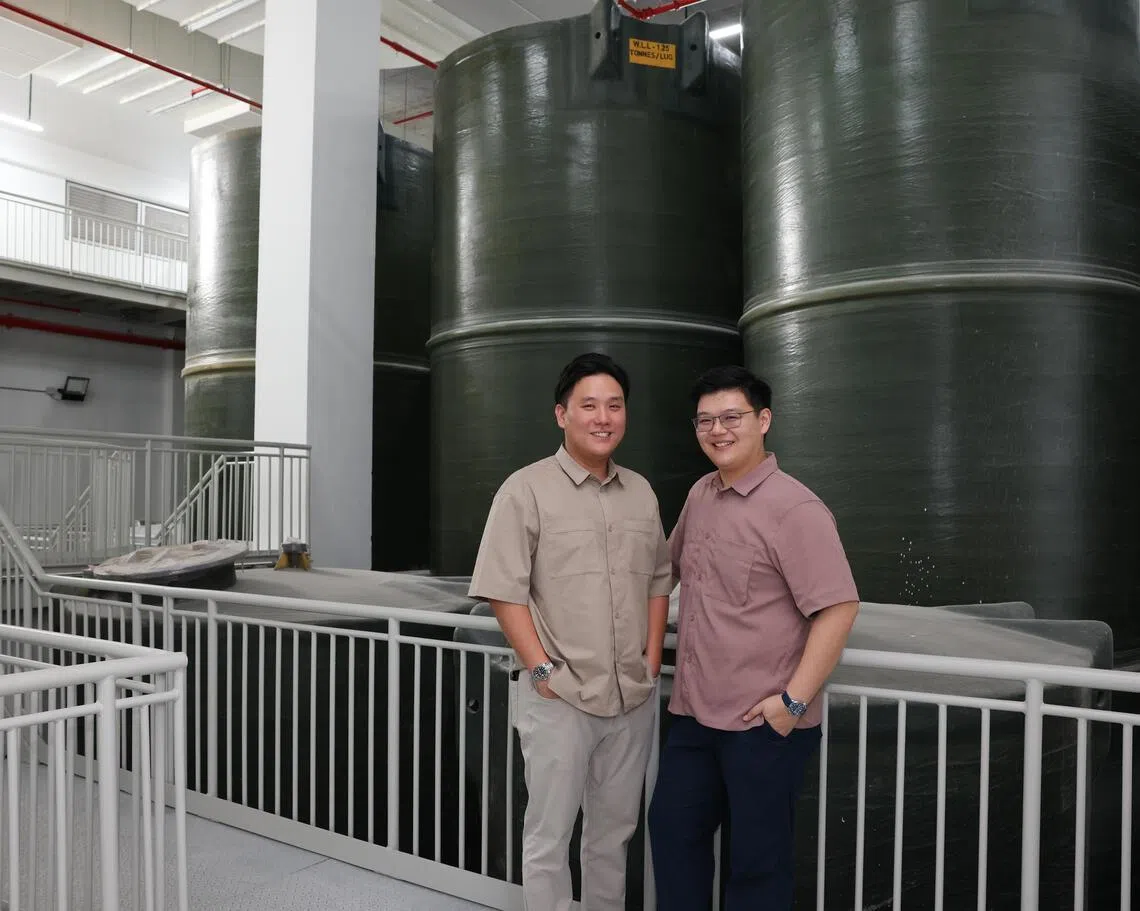
The need to meet demand prompted the company to invest an eight-figure sum in a new facility, which took four years to build. To be operational from February, the facility in Senoko Crescent will increase production capacity sixfold.
Spanning 18,000 square feet, it is twice the size of the company’s existing factory, which is also in Senoko.
The new site houses 39 fermentation tanks, up from 12 in the current factory. All soya sauce production will take place in the new facility, leaving the current site to continue manufacturing products such as chilli sauces, noodles and pastes.
Automation plays a much bigger role in the new facility, accounting for about 90 per cent of the production line, up from 60 per cent in the existing factory.
“There’s a tendency for people to think that heritage brands produce their products the same way they did many years ago,” said Choo. “But that’s not what we are doing. We move with the times; we want people to know us as a professional brand, too.”
Kwong Cheong Thye exports to 30 markets, with exports accounting for about half its overall revenue. Choo hopes to raise this to 80 per cent in the next five years.
Overall revenue has grown 10 per cent year on year since 2022. With increased production, Choo expects revenue to jump by 70 to 80 per cent by FY2027.
Deepening global footprint
Kwong Cheong Thye supplies its products to Singapore’s top hotels and restaurants, with business-to-business (B2B) sales accounting for 90 per cent of total revenue.
But with the brand already supplying key players here, B2B growth must come from abroad, said Choo.
He noted that overseas sales have been driven by longstanding distributors, many of which have expanded their own customer bases.
“A lot of our distributors have been with us from the very beginning and have grown with us over the years,” he said.
For instance, its sole importer in Dubai began supplying soya sauce to Saudi Arabia in 2022, while securing more airlines and hotels as customers at home.
Choo aims to enter more developing markets in South-east Asia, starting with Cambodia and Myanmar.
Such countries provide opportunities for Kwong Cheong Thye to gain a foothold as they have a limited range of soya sauce products, he said.
The United States is another target, with the brand now in talks with US-based importers.
While the US is dominated by many well-established Chinese soya sauce brands, higher tariffs on Chinese imports could give Kwong Cheong Thye a pricing advantage, said Choo.
He also aims to secure more distributors in London, which has a strong Chinese food scene. The brand’s sauces are already supplied to Chinese restaurants and stocked in Asian supermarkets there.
Said Choo: “We have a dream of being the largest soya sauce maker from South-east Asia.”
Its expansion strategy includes localisation. For example, its chicken rice paste sold in Japan uses young ginger instead of the usual old ginger. This gives it a lighter color to appeal to the Japanese, said Choo.
In the Philippines, its soya sauce and oyster sauce were adapted to be stronger in flavour.
Ramping up on retail
The new facility will also enable Kwong Cheong Thye to ramp up business-to-consumer (B2C) sales – previously deprioritised due to limited production capacity.
B2C sales make up about 10 per cent of overall revenue, and Choo hopes to double this in the next five years.
Consumers can buy Kwong Cheong Thye’s full range of products at its Geylang shophouse or through its website. Local supermarkets stock only its soya sauces,and its best-selling sauces are available only on third-party e-commerce platforms.
In early 2023, Kwong Cheong Thye had a golden opportunity to extend its retail footprint when it was offered a space in Jewel Changi Airport. That year, it opened a concept store there.
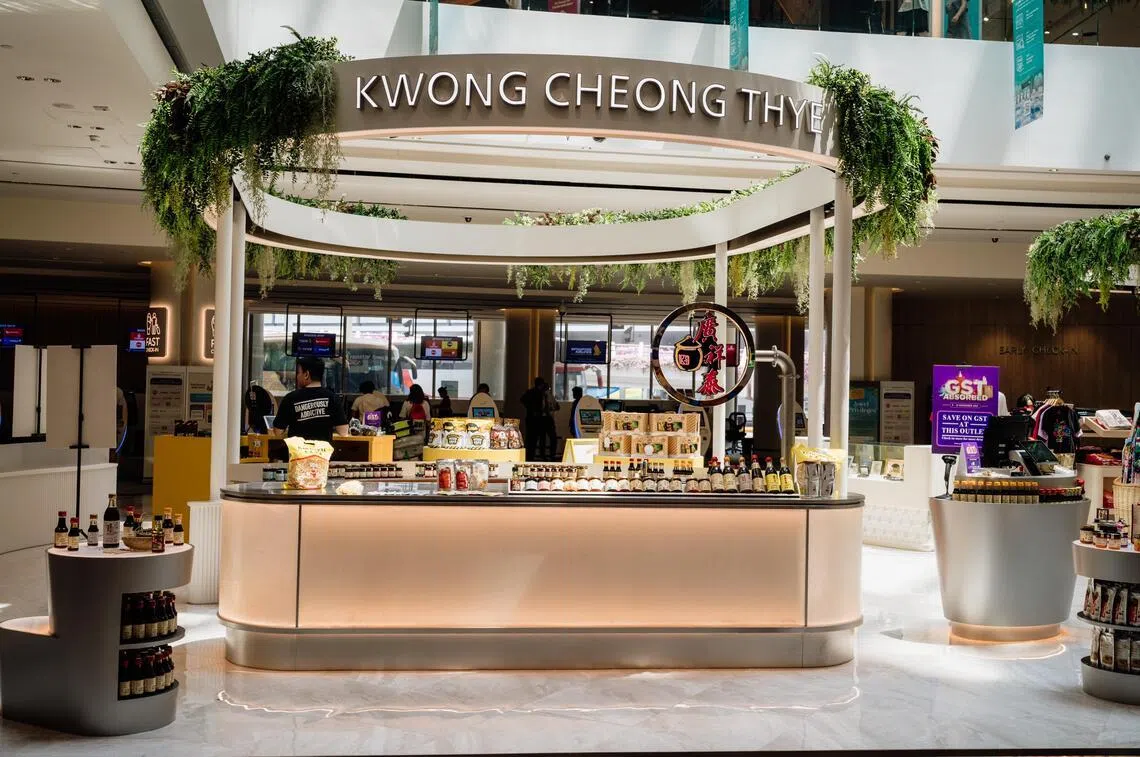
This is designed to function more as a visual showcase, said Choo. Products are displayed without prices and the staff are brand ambassadors rather than salespeople, sharing the Kwong Cheong Thye’s story and heritage with visitors.
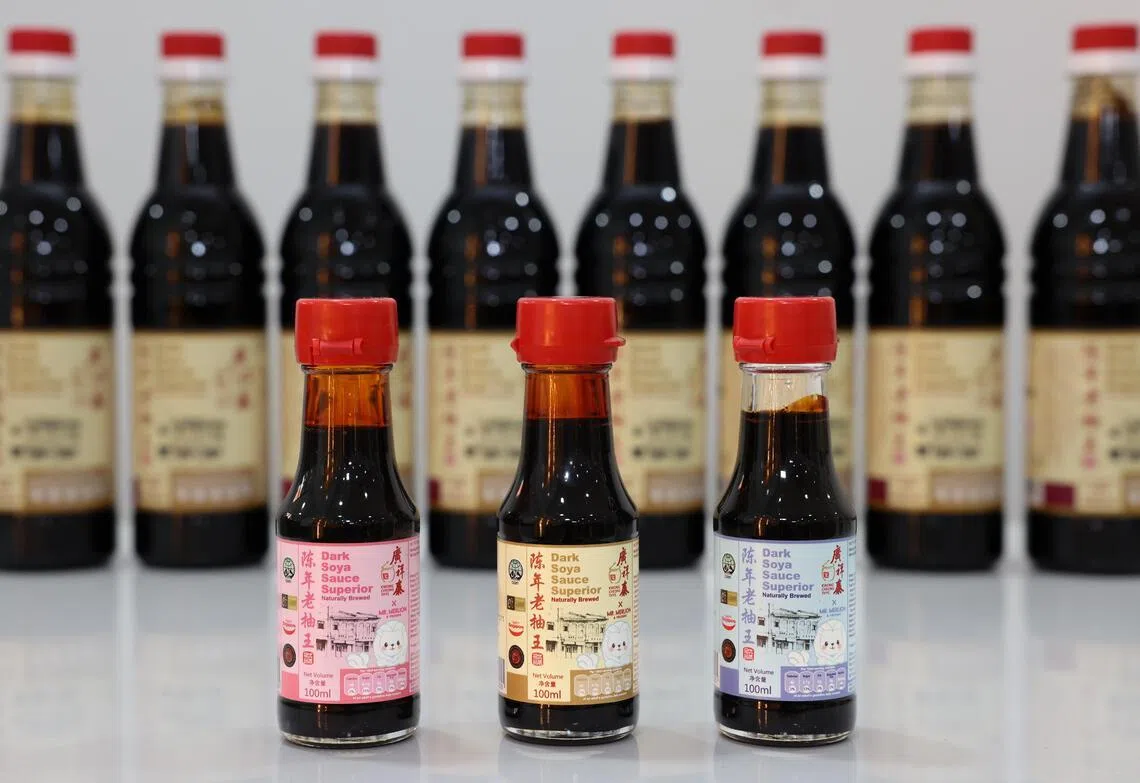
To cater to travellers, the store packages its condiments – including its signature soya and chilli sauces – in 100-gram bottles that can be carried on board flights.
The company also came up with Western condiments such as barbecue and aglio olio sauces in 100g and 200g bottles, as well as 100g bottles of aged soya sauce.
“We pitched our products by saying you can make your airplane food tastier – and people do actually buy that,” quipped Choo.
The Jewel concept store has had many returning local customers, which has encouraged Choo to extend its lease for two more years.
“The feedback from consumers is that they want us to be in more places, as online orders need a minimum basket size. That has given us the push to make our products more readily available,” he said.
There are no current plans to open another retail store, given high overhead costs and the relatively low price point of its products. Instead, Choo hopes to have more products – such as chilli sauces and noodles – stocked in local supermarkets.
More significantly, Kwong Cheong Thye’s presence at the Jewel has boosted its visibility among tourists, which Choo believes will plant the seeds for future overseas growth.
“If these same tourists see our products in their supermarkets in their home countries, I believe they’ll remember our brand and go, ‘Hey, we’ve seen this before in Singapore’.”
That may already be happening. The brand’s 100g bottles at Jewel caught the attention of its Japanese distributor, leading to a deal with high-end supermarket chain Seijo Ishii to stock these products.
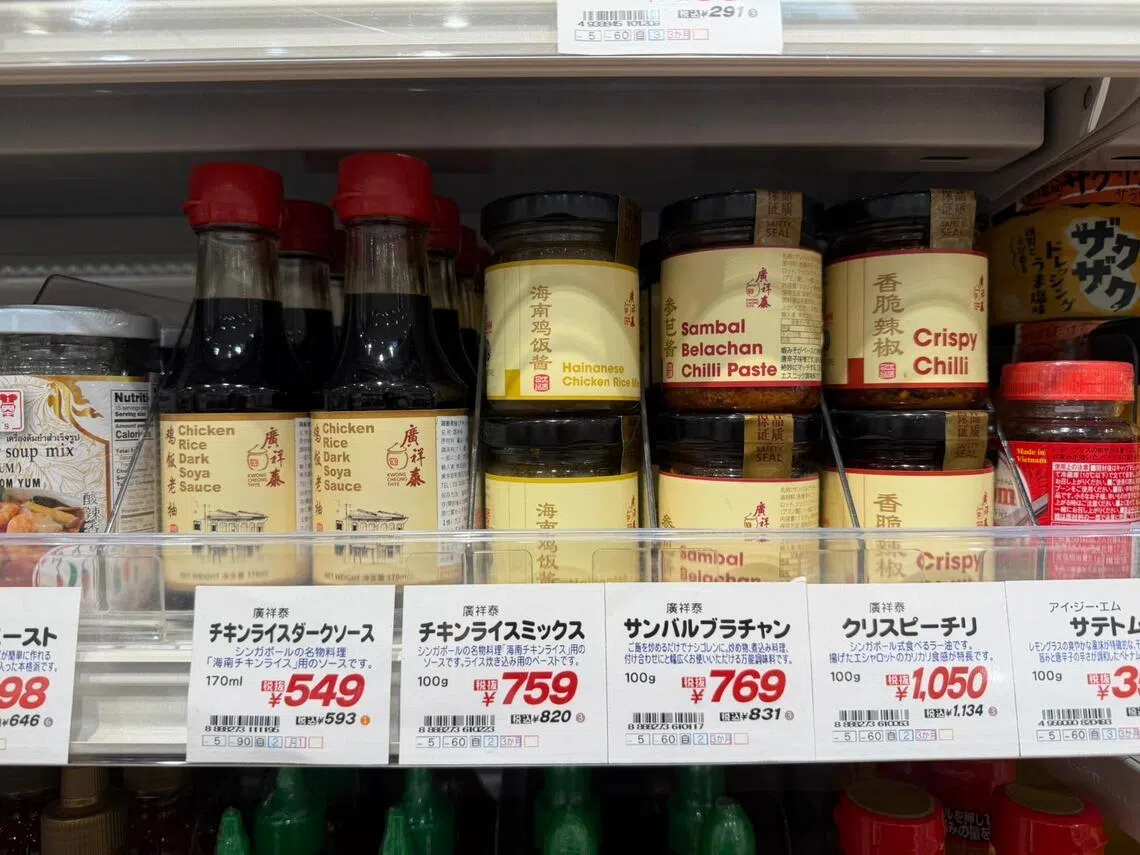
This is because Japanese consumers prefer products packaged in smaller quantities, as they perceive them to be fresher due to their shorter shelf life, he said.
Kwong Cheong Thye is now working to create more B2C offerings.
Choo sees demand for gluten-free soya sauce in Singapore, noting that no other manufacturer has introduced this yet. He is also looking at expanding the brand’s range of lower-sodium soya sauce and reducing prices.