SGSME logo

OSIM targets new pandemic pain points

It is also renewing its brand image and offerings to focus on a new generation of younger consumers.
Published Mon, Nov 2, 2020 · 09:50 PM

    IN a time when working in makeshift home offices and experiencing heightened stress are the norm due to the Covid-19 pandemic, a brand specialising in the relief of aches and pains could not be more relevant.

    It is now time to shine for OSIM International, a lifestyle and wellness brand known for its massage chairs but which has been busy renewing its brand image and offerings to focus on a new generation of consumers.

    Over the past few years, OSIM has noticed a trend of people in their 20s and 30s experiencing aches and pains stemming from causes such as technology use, exercise and prolonged sitting. It saw this as an opportunity to revamp its image while catering more to the needs of younger clients.


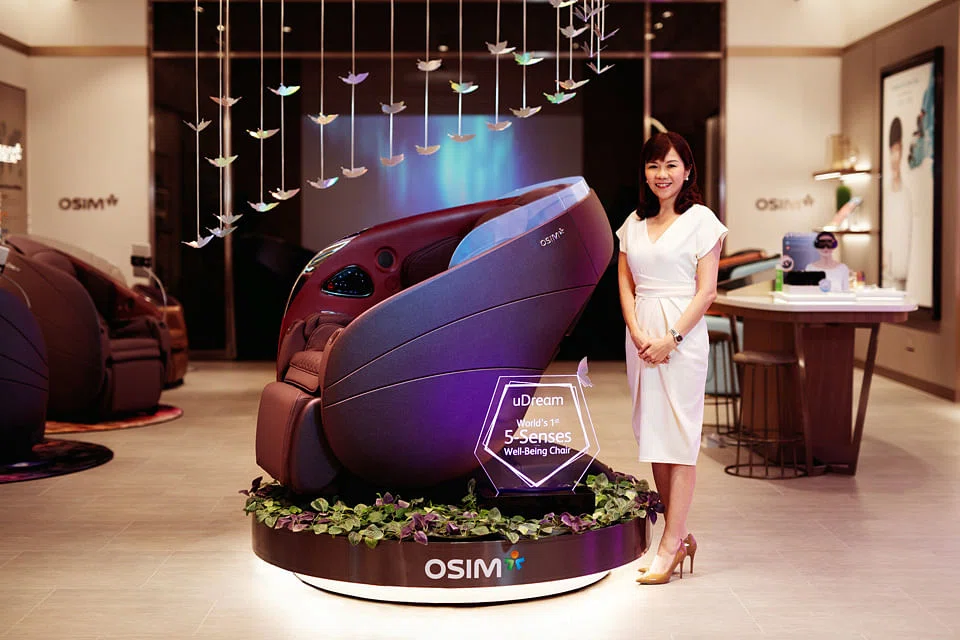
    Having embarked on a digital transformation and expanded its product offerings, OSIM is now targeting needs brought about by the pandemic, such as a rise in demand for ergonomic furniture and stress management solutions. Since August, it has launched two new products in these categories: a gaming chair in collaboration with Acer's gaming brand Predator, and a new "well-being chair" called the uDream, which uses biosensors to help customers measure and monitor body tension.

    Both products have been well-received, OSIM deputy CEO Lynn Tan told The Business Times.

    Affordability and space constraints in smaller homes

    "I don't want the OSIM brand to be my mother's brand," she said. "The young generation is one of our key target audiences, and that's why we have developed products to reach out to them and have the brand resonate with them."

    OSIM was founded in 1980 by Ron Sim, who listed it on the Singapore Exchange in 2000 and took it private in 2016. In 2017, he set up V3 Group to house luxury lifestyle and wellness brands such as OSIM and TWG Tea. (see amendment note)

    In recent years, OSIM has observed that younger people are getting less quality sleep, exercising more and spending longer hours using technology, which results in problems such as "text neck". Other factors influencing their interest in OSIM's products include affordability and space constraints in smaller homes.

    In addition, customers are expecting more efficient, seamless and personalised experiences, and are no longer satisfied with standard products and services that do not evolve with their needs or fit well into their lifestyles.

    Keeping these in mind, OSIM began its digital transformation journey about four years ago, with the goal of using digital tools to sell better, market better and serve customers better.

    For instance, customers would be unable to physically feel products and experience their functions when shopping online, so OSIM created video content that used three-dimensional graphics to give customers a better "feel" of how the rollers in the massagers work.

    Digital marketing allows it to personalise content based on customers' interests and needs, interact more with customers on platforms like Facebook and Instagram, and conduct A/B testing on marketing material.

    OSIM also leverages the downloadable massage programmes it started rolling out about 10 years ago, which provide an incentive for customers to use the massage chairs regularly. OSIM provides a new free programme to all customers each quarter, and monitors usage data to figure out what programmes a customer likes and which programmes are the most popular so it can create more similar offerings and cater to a customer's preference.

    "This whole digital journey allows us to leverage on AI (artificial intelligence), and lets our whole product experience be more comprehensive and more relevant to customers," Ms Tan said. "We can serve our customers better, rather than guessing."

    Ms Tan credits OSIM's digital transformation with helping it to maintain business continuity and keep innovating even while physical operations were suspended during the pandemic. Sales staff pivoted to telemarketing, live-streaming and creating product videos at home, and shop designers and visual merchandisers were redeployed to develop attractive online content.

    Online sales performed well for OSIM, though not well enough to make up for the offline sales lost while stores were closed. Still, OSIM did not have to retrench any staff, as it has always had a prudent manpower policy and ensured that all its staff can perform multiple roles, Ms Tan said.

    "During good times, we lament that we have not enough manpower, but in times like this, we appreciate that we don't need to cut away excess headcount. Everybody has a role to play and the KPIs are very clear."

    Broadening its product range

    Along with the digital transformation, OSIM has broadened its product range beyond massage chairs to items that meet a variety of needs, from fitness and health equipment such as treadmills and blood pressure monitors, to smaller beauty products such as scalp massagers and face massagers.

    The massage chairs have not been neglected in this makeover, as they remain a key part of OSIM's business and continue to win over customers who try them out in store. For example, Ms Tan said customers complaining of insomnia have tried out the chairs and fallen asleep in them, right in the store.

    "They are able to see the efficacy of the chair before they buy it, and a lot of customers bought the chair because they could fall asleep in it," she said. Still, OSIM is aware that its chairs can be out of reach financially for younger customers who may have just bought a house; its massage chair prices traditionally ranged from S$5,000 to S$7,000. For this reason, it has introduced entry-level massage chairs, priced around S$3,000 to S$4,000.

    The new designs include chairs with smaller footprints and retractable leg rests, and massage sofas that fit better into smaller homes and modern interior design themes. There is even a DIY massage chair option, made of two components that can be placed on any regular chair or sofa to turn it into a massage chair.

    This year, OSIM started pursuing more brand collaborations with companies that would appeal to the younger generation. Its first co-branded line of products was a limited edition series of massagers with Disney character designs launched in May, followed by the gaming chair collaboration with Predator.

    Earlier this year, before the pandemic, OSIM expanded into the Middle East through the United Arab Emirates and Saudi Arabia. It plans to continue seeking out franchise partners in South-east Asia and other regions, although this may take longer than usual since potential partners cannot travel to Singapore for discussions. OSIM currently has 415 outlets in 88 cities and 20 territories.

    Despite the tough conditions created by the pandemic, Ms Tan expects OSIM to improve on its 2019 performance, when profits fell 40 per cent to S$40 million from S$70 million. She attributed the drop to OSIM's investments in new concepts across its five key markets of Singapore, Hong Kong, Malaysia, Taiwan and China, and a focus on selling higher volumes of products.

    Relevant products to customers

    OSIM's strategy of reaching out to customers with the Mickey, Predator and uDream launches when shops reopened in Singapore, Malaysia and China has helped sales rebound in those three markets, while the other two were less affected since they did not experience significant lockdowns.

    "Year to date, we are positive compared to last year," Ms Tan said. "At the current traction, with our plans and strategies to deliver relevant products to customers, by end of the year we should be positive."

    Amendment note: An earlier version of this article incorrectly stated that OSIM listed on the Singapore Exchange in 2014. The year it listed was in fact 2000.