Preparing for electric growth
Besides expanding geographically, SCI also aims to broaden its franchised lines, particularly in LED division
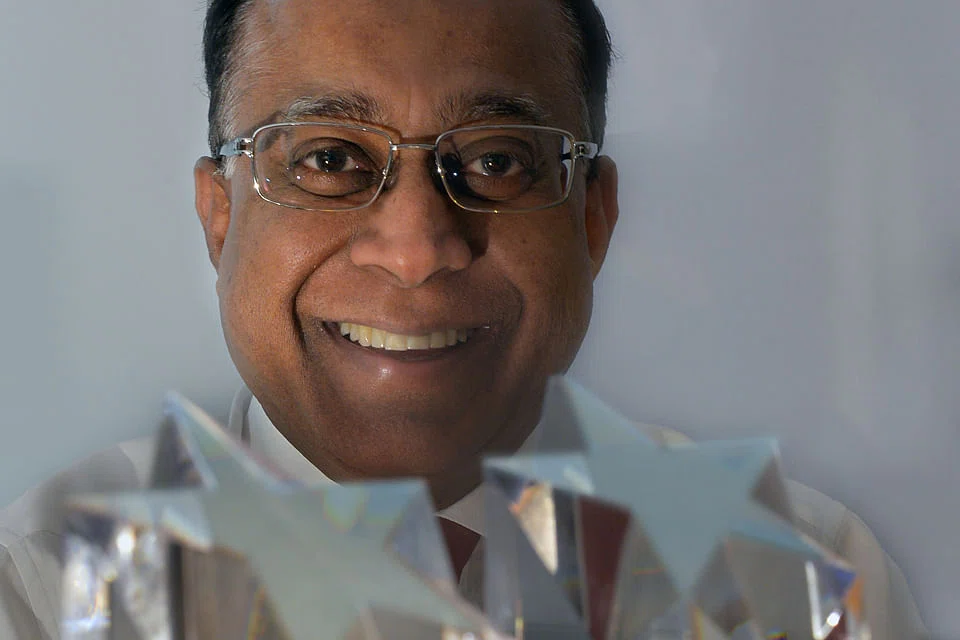
'WE ARE obsessed about adding value at the speed of thought," Vick Aggarwala, president and CEO of Supreme Components International (SCI) says, to describe his company's raison d'etre.
Indeed, high-tech electronic components distributor SCI has grown from strength to strength by constantly striving to provide outstanding and rapid service to its clientele, bagging three consecutive Enterprise 50 awards from 2011 to 2013, and the SME1000 award for the last five consecutive years.
Business was not always smooth sailing for SCI, which from 2001 was involved in the purchase of electronic components from other independent distributors for resale on an ad hoc basis. By 2005, it was clear that such an operating model was neither profitable nor sustainable, with the firm facing stiff competition from global distributors. In addition, SCI found it difficult to ensure that its components, which were acquired on the open market then, were of excellent quality.
Things changed when Mr Aggarwala took over the helm of SCI in that year. Besides shifting to a more sustainable franchise-based model that focused on building relationships with key manufacturers to ensure product quality, he also took steps to differentiate the company by offering free technical services which focuses on providing solutions to its clients.
In addition, the company constantly looks out for new niches that could fuel its growth. For example, its LED division, which was established in 2007, now brings in over 25 per cent of its total revenue.
Today, with more than 40 franchised contracts with suppliers, SCI prides itself on providing speedy and value-added service to its global clients through its team of highly qualified technically capable staff including Mr Aggarwala who is an electronics engineer by profession. To seek stronger sales growth however, Mr Aggarwala feels the need to expand its physical presence to deliver better and faster service to its customers.
SCI established a new office in Bangalore, India at the end of 2013, and is in the process of setting up its office in Shenzhen, China, which will be used as a springboard to tap the burgeoning Chinese market. Plans for offices in Australia and North America are in the works.
"It's important for us to be present in the local time zones, to be closer to our customers, utilising the supplier base we have already established here in Asia Pacific," Mr Aggarwala reasons when describing SCI's commitment to rapid service.
At the same time, Mr Aggarwala recognised that immersion and a thorough understanding of local norms are crucial to achieving success abroad: "You have to change, adapt your thinking to the thought process of the culture."
For example, the company encountered the unique Jugaad approach to innovative problem solving in India, and also found that India was a more price-sensitive market, which spurred changes in its selling tactics.
In order to fuse its local strategies and vision with a destination's customs and values, SCI exposed key employees hired from either location to the working environments of both. For instance, SCI sent a staff, who had already been with the Singapore company for three years, to set up its Indian office from scratch. In a similar vein, its product manager, who was hired in India, was brought to the Singapore office for five months before assuming duties in India. The Indian office has to navigate through bureaucratic procedures and the occasional hiccup in terms of delays of processes, but SCI is optimistic about the new economic policies under the new Indian prime minister.
"For us, our timing is good in terms of investing in India, the infrastructure is going to be improved and red tape in areas may be cut," Mr Aggarwala says.
Besides geographic expansion, SCI has also set its sights on broadening its franchised lines, particularly in its growing LED division. One such franchised manufacturer that SCI has secured in the second quarter of 2014 is Philips Lighting.
This opportune tie-up happened when SCI was sourcing for manufacturers who carry OLED components and products at the request of a customer in Australia. When the team at SCI got in touch with Philips' staff for OLEDs in Singapore, it was suggested that SCI could also collaborate to distribute its LED drivers and related products, on top of its OLED components.
Such a deal is clearly a morale booster for a relatively small company such as SCI. Mr Aggarwala believes that Philips saw value in the company as a distributor, noting that it is not a single dominant aspect that helps SCI to clinch more franchises, but rather a bundle of compelling selling points built upon a history of modest successes.
With Mr Aggarwala's reputation as an intrapreneur in the components industry prior to joining SCI, relating and connecting to potential suppliers such as Philips becomes easier. Concurrently, SCI's solid track record gives it a degree of credibility as well.
"It was the whole package - the experience, reputation, existing supplier profile, customer base and past services," he says.
Although Mr Aggarwala is upbeat on SCI's prospects, he stresses the importance of proper execution.
"SCI can aspire to have a great strategy, or secure plenty of franchised lines, but this has no meaning unless it is accompanied by fast and consistent execution on a daily basis to delight existing clients or to bring in new ones," he says.
The writers are students from NUS Business School