SGSME logo

Prospects for SME growth this year rest on success of China’s reopening: OCBC

Paige Lim
Paige Lim

Published Thu, Jan 19, 2023 · 05:50 AM
    • Goh says more time is needed to see greater take-up of the existing Enterprise Sustainability Programme and Energy Efficiency Grant, which were launched in October 2021 and September 2022 respectively.
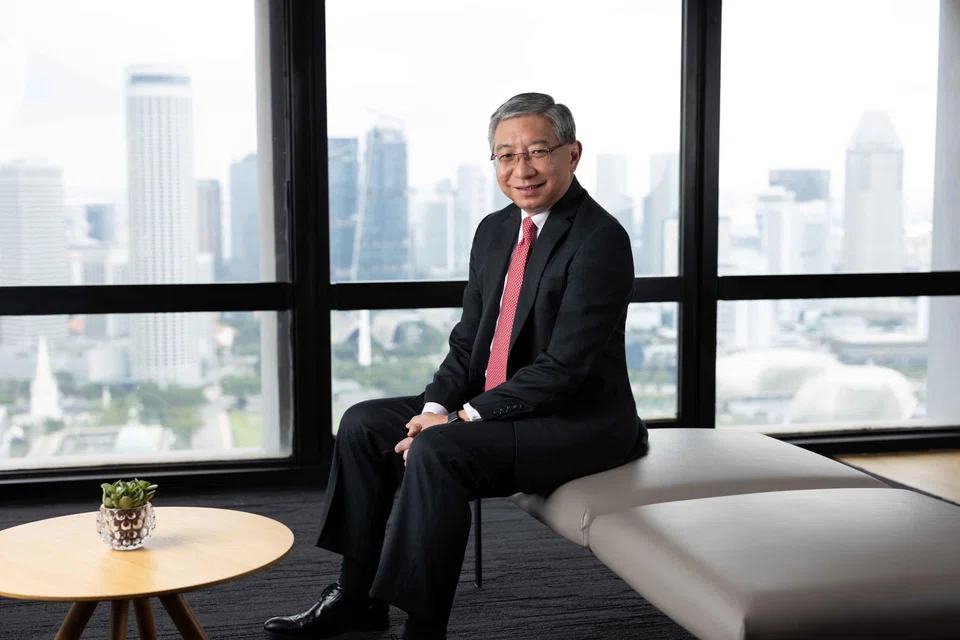
    • Goh says more time is needed to see greater take-up of the existing Enterprise Sustainability Programme and Energy Efficiency Grant, which were launched in October 2021 and September 2022 respectively. PHOTO: OCBC

    SINGAPORE’S small and medium-sized enterprises (SMEs) barely stayed in growth territory in OCBC’s latest quarterly index of their performance, and their prospects this year will depend on how China’s reopening pans out, said OCBC’s head of global commercial banking Linus Goh.

    “If China is all humming and clicking as it had been before, then it will be quite a significant influence on growth, not just for Singapore but also for the region,” said Goh in an interview with The Business Times.

    The OCBC SME Index declined to 50.2 in the fourth quarter of 2022, from 51.9 the previous quarter. But this was still the eighth straight quarter of year-on-year expansion, indicated by a reading of above 50.

    Despite the decline, the Q4 reading is a “strong result” given the high year-ago base, as well as the global recession risk and inflationary pressures faced by industries, said Goh.

    In its report, OCBC said the index is “likely to stay unchanged within a narrow range or ease slightly” in Q1 as global macro risks remain. But Goh added: “We have some reason to feel somewhat optimistic that there is a chance that the first quarter of 2023 will still remain in expansionary territory.”

    This is partly due to a lower base in the corresponding year-ago period, but also because Singapore’s domestic-facing and travel-related sectors could make up for a slowdown in trade-dependent industries.

    According to OCBC’s report, sales collections fell 3.5 per cent year on year but were still 17.1 per cent higher than in Q4 2019, “significantly” exceeding pre-pandemic levels.

    Growth was mixed across industries. Top performers were business services, building and construction, food and beverage (F&B) and manufacturing.

    But externally-oriented sectors such as transport and logistics, wholesale trade, and information and communications technology (ICT) were dragged down by weaker global demand.

    The worst performer, transport and logistics, tipped into contractionary territory with a reading of 46.9. Its reading has been falling since the start of 2021.

    SMEs in sea transport were hit by a weaker global shipping outlook and a decline in Singapore’s exports, while higher energy prices took a toll on logistics operators and freight forwarders.

    This year, Goh expects business services and F&B services to extend their gains, as Singapore sees a rebound in international visitors and the resumption of meetings, incentives, conventions and exhibitions (Mice) events.

    He expects that demand in these sectors “will be enough” to keep SMEs in expansionary territory for “a couple” of quarters, but added this depends on the extent to which tourist arrivals continue, including from China.

    Any impact from China’s reopening may be more obvious from Q2 onwards, and will have a positive effect on both Singapore’s domestic-facing and export-oriented sectors, he said.

    SMEs themselves seem optimistic. In an inaugural SME business outlook poll by OCBC, 47 per cent of respondents expect business to improve in the first half of 2023, while 38 per cent expect their performance to remain the same.

    Only 15 per cent expect a decline. The poll surveyed over 2,000 SME business owners from Nov 28, 2022 to Jan 4.

    Even players in externally-oriented sectors such as wholesale trade and ICT had “a high degree of optimism about improvements in the first six months of the year”, noted Goh. “I suspect some of that will be in anticipation of China opening up.”

    But with SMEs having had less access to China during the pandemic, the question is whether market conditions there – from pricing to demand – have changed, he said. His suggested approach for businesses which deal with China “is just to quickly get on the ground, get a sensing of things, and then work out the options”.

    Meeting the return of Chinese demand will also be a test for Singapore’s labour-strapped companies, Goh said.

    As the war for talent intensifies, he expects wage growth to be another pressure point amid rising costs. He added that inflationary pressures are unlikely to abate, while borrowing costs will remain high.

    While there is no silver bullet for the long-running labour crunch, businesses should not underestimate the importance of job redesign and the digitalisation of work processes, he said: “Whatever has been tried, is there. For those who have persisted with redesign, deployment of automation and data and digitalisation, they have benefitted, they have won.”

    Just as in past Budgets, Budget 2023 is likely to encourage the adoption of technology and digitalisation, as well as grooming local talent and giving them international exposure, said Goh.

    In addition to such moves, however, he hopes that there will be more incentives for SMEs to adopt sustainability solutions.

    He noted existing schemes that fund the development of green solutions or technology, such as the Enterprise Financing Scheme-Green for project developers, system integrators, and technology and solution enablers.

    But he added: “We would encourage more support for adopters, which are the SMEs who will take these solutions, embed them in their businesses and drive that change.”

    Goh said more time is needed to see greater take-up of the existing Enterprise Sustainability Programme (ESP) and Energy Efficiency Grant (EEG), which were launched in October 2021 and September 2022 respectively. The ESP supports SMEs on sustainability initiatives, including training workshops and capability development projects, while the EEG covers the adoption of energy-efficient equipment for SMEs in food and retail sectors.

    Many smaller firms still lack the resources to move their sustainability initiatives forward, he added. That is why the bank launched the OCBC SME Sustainable Finance Framework in 2020, to make it simpler and less costly for SMEs to access sustainable financing of up to S$20 million.

    For Budget 2023, tailored incentives – such as industry-specific grants or tax incentives – could be one way to help SMEs accelerate their adoption of green solutions and become sustainable enterprises, he said.

    Another idea is a “cluster” approach in which a trade chamber and association or leading company can take the lead, pulling together sustainability resources to help players in the industry “move together as a group”, he added.