


Purr-suasive growth: Rising pet numbers, doting owners fuel demand for fresh pet food
Instead of dry kibble or canned food, some pet food makers offer fresh raw or cooked meals

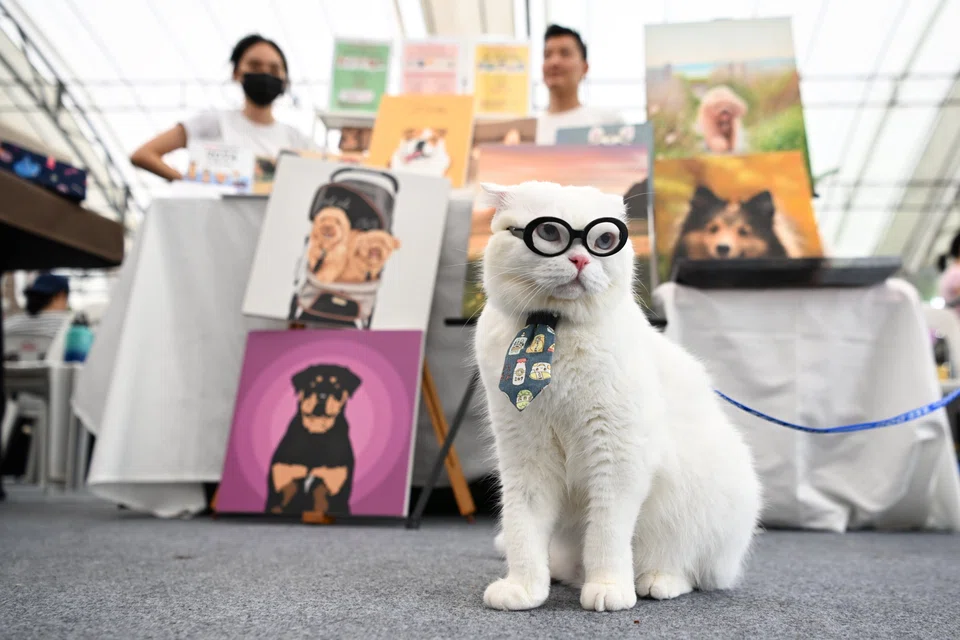
FRESH pet food – made from minimally processed ingredients and even resembling human meals – may come at a higher price, but that has not deterred pet owners from indulging their furry companions.
Driven by a growing concern for their pets’ health, more owners in Singapore are switching from kibble or canned food to fresh pet meals such as sous vide chicken or bone broth, industry players told The Business Times.
Singapore’s pet dog population reached about 114,000 in 2023, up 3 per cent from 2019’s figure, based on a report by Euromonitor International.
The pet cat population rose by nearly 10 per cent over the same period, to around 94,000.
“(Singapore is) a relatively small market, but it’s growing as well, because the pet population is growing and people are spending more on their pets,” said Hubert Wieser, Nestle Purina chief executive officer for Asia, Oceania, Middle-East and Africa.
Fresh pet food makers were among the roughly 100 startups that took part in a Nov 27 “pet innovation event” to meet potential investors and network.
Among them were these four local manufacturers, ranging from a newly launched business to one that has expanded beyond Singapore’s shores.
Lack of fridge space inspired freeze-dried meals for dogs
YoDoggo’s pet food offerings aim to be convenient, high-nutrition options

Despite a family tradition of dog breeding – his father and grandfather ran kennels in India – Rajiv Banerji originally chose to be a banker, then a freelance consultant.
But an unlikely Covid-era problem set him on a canine-related path after all: not breeding dogs, but feeding them.
During the pandemic, Banerji – who is himself a dog owner – encountered an unusual problem. With everyone eating at home, the refrigerator quickly ran out of space for both human and dog food.
Banerji was accustomed to formulating his own fresh food for his pets. But the lack of refrigerator space prompted him to seek commercial options – only to come up empty-handed.
“I couldn’t find a local manufacturer which fit my requirements, in terms of the amount of protein, the quality, and the nutritional content,” he recalled.
This led him to experiment at home with different food preservation techniques, eventually landing on freeze-drying.
He began sharing his homemade freeze-dried meals with other dog-owning friends.
“Their dogs loved it – and that’s when we decided, look, I think there’s an opportunity for us to spread this to other dogs and other people,” he said.
In 2021, he founded YoDoggo to produce freeze-dried meals for dogs. Made of 90 per cent protein from meat and seafood, with some vegetables for fibre, these meals aim to combine the convenience of packaged foods with the nutritional quality of fresh meals.
Freeze-drying involves flash-freezing food in a vacuum, producing a shelf-stable product that does not require refrigeration. At mealtime, pet owners rehydrate the food with hot water to restore the texture and flavour.
“What happens with (freeze-drying) is you get almost the same amount of nutrition, so there’s hardly any nutritional loss – all other drying methods have a nutritional loss,” Banerji said.
While he declined to provide sales figures, Banerji said that YoDoggo is setting up a second production facility in Singapore – expected to be operational early this year – to meet growing demand.
Prevention over cure through pet nutrition
A philosophy of preventive care lies behind The Grateful Pet’s meal options
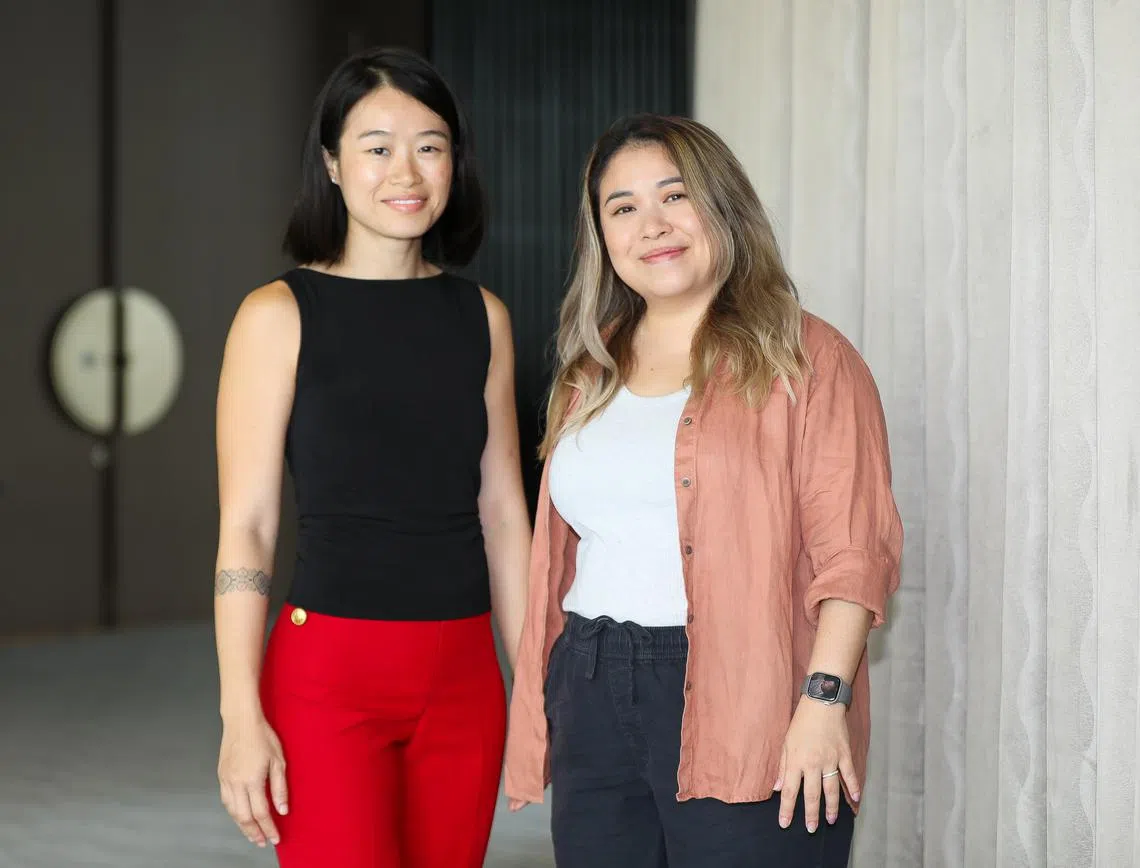
In line with the adage that prevention is better than cure, The Grateful Pet designs meals to help pet owners ward off potential health issues for their four-legged companions.
The idea arose in 2016, after co-founders Sandee Goh and Rachel Pereira each got their own dogs. The two friends began experimenting with preparing meals for their pets, using daily diets to prevent conditions such as skin irritation and digestive problems.
“We realised that… looking at pet treatment and pet care from a post-diagnosis point of view was just one angle... and maybe it wasn’t enough,” Pereira said.
Encouraged by noticeable improvements in their dogs’ health, Goh and Pereira launched The Grateful Dog in 2017. It was one of Singapore’s first fresh pet food companies, they said.
The company expanded to include meals for cats and was renamed The Grateful Pet in 2021.
It offers chilled, pre-portioned meals for dogs and cats through both subscription and ad-hoc sales models. Recipes are developed in consultation with veterinarians to ensure they meet essential nutritional standards, Goh said.
Apart from meat and vegetables, ingredients include seaweed fermented with prebiotics for gut bacteria support, and dandelion for vitamins and minerals.
Cooked meals account for about 70 per cent of the company’s sales and remain its flagship offering, though raw meals have gained traction in recent years.
Sales were initially slow, but a surge in pet ownership during the Covid-19 pandemic boosted the business as more pet owners turned to The Grateful Pet’s products.
Since 2019, the company has averaged annual growth of about 150 per cent, with annual sales now in the millions. Despite tougher market conditions, the company hopes to sustain this growth in 2025.
“The (fresh pet) food market is getting quite competitive; Singapore is quite a small market as well,” Goh said.
Having been entirely funded by the founders and bootstrapped from past profits, the company is now open to external financing to support its plans for overseas expansion, though no timeline has been set.
“It’s definitely not just money that we’re looking at; it’s also an investor with the (shared) understanding that pets are not dollar signs,” Pereira said.
New player enters crowded market with more affordable fresh pet food
Four-month-old startup Zoomy’s wants to make this option more accessible

Zoomy’s is pawing its way into Singapore’s competitive fresh pet food scene with affordability as its main differentiator.
The four-month-old startup offers 200 g meal packs for dogs, specifically formulated by a pet nutritionist. These come in five options – chicken, pork, beef, lamb and duck – and include a mix of organ meat, vegetables and supplements such as salmon oil.
Each pack costs S$4.70 to S$5.90 – deliberately priced to be in a “more affordable” range, said founder John Tan. “I want the food to be accessible to more dogs.”
Zoomy’s is Tan’s second pet food venture, but his first as a sole founder.
He co-founded a different fresh pet food startup in 2021, but left in March 2024 and launched Zoomy’s in September that same year.
Tan said that striking out on his own allows him greater control over the company’s direction, but noted that this independence comes with challenges.
“I’m starting everything again from scratch, so all the things that I’ve done these past few years, I have to restart,” he said.
This includes setting up production and operation facilities, building the brand’s presence, and regaining social media followers. To connect with potential customers, Tan has been attending trade shows and pet events.
His message to pet owners is one of accessibility: that even those on a budget can allow their pets to benefit from fresh food.
“Even if you feed a small portion of fresh food with whatever (is) in your dog’s current diet, it will make quite a big difference,” he said.
From solving a pet’s health struggles to helping others do the same
Originating as a solution for its founder’s sick shiba inu, Bom Bom’s pet meals are now available in South Korea

Jason Wang’s shiba inu Kyubi used to have digestive issues as well as joint and skin problems. Visits to five veterinarians yielded no solutions.
After doing his own research, Wang replaced Kyubi’s dry kibble with fresh food – a move that became the foundation for his pet food company, Bom Bom.
“The light bulb went off my head, and I asked myself: ‘What if it’s me that’s doing it to him? What if it’s the food?’ And I started changing out his very well-respected (brand of) kibble,” he said.
The change brought dramatic results. Kyubi gained weight, his coat shone, and his overall health improved.
At regular meetups of shiba inu owners, Wang’s success drew attention, with other owners seeking his advice when their pets experienced similar problems.
“Those two people I helped became five people, then 10 people, then dozens of people, then hundreds of people,” he said.
In 2017, Wang – formerly from the finance industry – decided to formalise his pet food efforts by founding Bom Bom. Today, the company operates in a 5,000-square-foot facility in Tiong Bahru.
Bom Bom primarily sells raw meals for dogs and cats, grouped into three categories: bones, offal and meat, for which the company’s name is an acronym. Since 2019, it has also offered sous vide meals, to cater to customers who “are not ready” to make the jump to raw feeding.
Having raised US$4 million in various pre-Series A funding rounds, Bom Bom plans to launch its Series A round in early 2025.
In 2024, the company expanded into South Korea following a capital injection from a family office based there and linked to a South Korean chaebol.
“It’s quite funny – in Singapore, the majority of our sales are from raw (meals), but in South Korea, it’s the opposite,” said Wang, explaining that South Koreans are comfortable with feeding processed foods to their pets.

