


Pursuing sustainability in commodity trading
Khaitan International prides itself on a strong network of loyal suppliers and customers
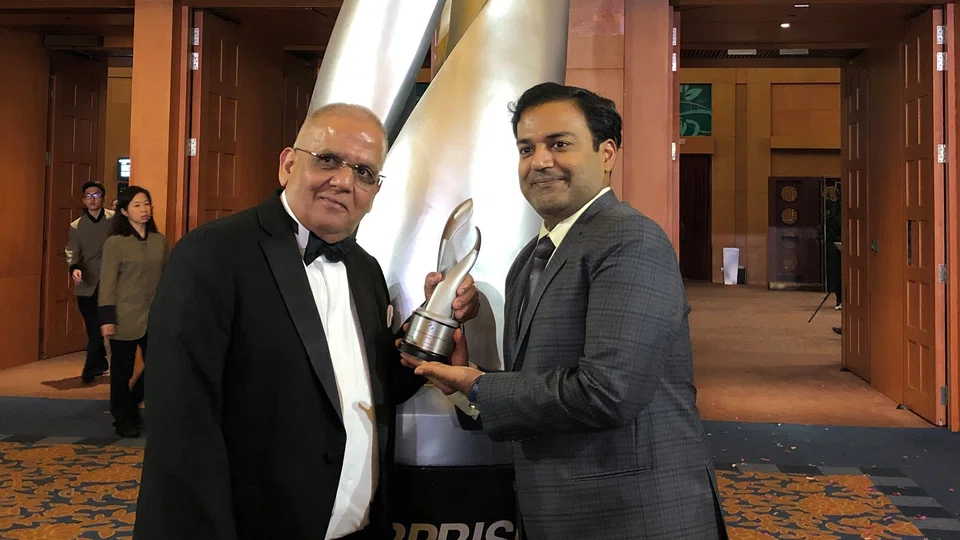
THE rise of sustainability bodes well for international commodity trading house Khaitan International, which aspires to build sustainable business models that support its goal of recycling, and promote the transition to a waste-free circular economy.
Of the three main categories of commodities in which Khaitan is involved, the largest is the metals and scraps category. This accounts for about half of its business, with lead as the top metal.
Through its subsidiary Maptrasco, the company buys scrap metal from scrapyards and sells it to customers who smelt, reuse or convert it to other forms. For example, car batteries are taken apart for the lead they contain, which is smelted and refined to be reused in new car batteries; the plastic casing is recycled to make granules.
The two other categories of commodities are agro-produce and industrial raw materials. By being in these two areas, Khaitan champions sustainable farming and the use of environmentally-friendly packaging like jute bags.
Overcoming early challenges
Khaitan has come a long way since it was founded in 1985 by Pawan Khaitan, who cut his teeth in the import-export business in his birthplace, India. He decided to use Singapore as his base after a visit in 1982. Singapore’s efficient banking system and competitive borrowing rates, its strategic geopolitical location which provided easy access to larger markets such as China and Europe, and its reputation as a regional trading centre were key factors in his decision.
It was a steep learning curve for the young company, which had to deal with quality issues with suppliers and non-payment problems from buyers.
To tackle this, Khaitan established a system of checks, with comprehensive due diligence to ferret out potential high-risk customers and suppliers. To spread the risks, the company diversified its customer and supplier base. It also leveraged trade finance products such as letters of credit and trust receipts to facilitate trade and mitigate payment risks.
Today, with Khaitan still at the helm but supported by his son, senior executive Manish Khaitan, the family business trades with companies in more than 90 countries from Australia to South America, racking up US$150 million in annual revenue. In 2018, the company won its first Enterprise 50 Award.
Just-in-time shipping, long-term relationships
Khaitan’s business model entails buying commodities and transforming them into customised, consumable products. Its inventory is managed on a just-in-time basis, which reduces inventory costs. The company further improves its efficiency by arranging for direct shipments from suppliers to customers.

Most of its products are sourced from India. Among them are raw cashew nuts, black pepper, chemicals, lead and copper scrap. To ensure its suppliers have sufficient inventory to meet its requirements, Khaitan has agreements to purchase a minimum fixed amount every month. Similarly, it has agreements with its customers to purchase a minimum fixed amount from it. This business model has allowed it to remain inventory-light while maintaining good client and supplier relationships.
Said the founder: “We are here not only to make money but make a difference. ‘Flawless execution’ isn’t just a phrase, it’s our raison de etre.”
First, Khaitan has a commitment to perform. It maintains its delivery commitments despite the uncertainties of sea freight, where delays and container shortages are fairly normal. This can be tough, especially with inventory managed on a just-in-time basis, but Khaitan mitigates this with a wide base of suppliers from different countries. Whenever there is a shortage in one country, the company requests more inventory from other suppliers, enabling it to keep its commitment.
Second, Khaitan takes pride in its strong network of customers and suppliers. About 80 per cent have been with the company since it was established, with a high level of trust having been forged. Even though buyers and sellers can deal directly with each other, they have continued to use Khaitan as an intermediary.
Third, like many businesses, Khaitan has adopted digitalisation to streamline its processes. This became even more important when restrictions were imposed during the Covid-19 pandemic. The company uses an end-user computerised accounting system, which gives it a real-time view of inventory levels and enables it to keep track of payments and deliveries.
As chairman, the elder Khaitan oversees the overall operations, making decisions about the commodity positions to hold, and what to buy and sell. He is also the company’s financial planner and controller, heading the risk assessment and credit control of counterparties.
The younger Khaitan focuses on the company’s day-to-day operations. He monitors banking and credit lines, tracks payments from customers, and identifies and resolves all issues related to shipping. He also plays a key role in managing the procurement and sale of inventory, to ensure that the just-in-time model runs smoothly.
Khaitan’s 10-man management team is split over other functions: documentation, liaison, accounts, procurement and sales.
The company is exploring new commodities and expanding into new markets. This will create business opportunities and strengthen its network, bringing even more value to its customers.
This series is part of the Enterprise 50 Educational Project between the E50 partners and the NUS Business School. Khaitan International was among the winners in 2021. The annual E50 ranking is co-organised by The Business Times and KPMG, sponsored by OCBC Bank, and supported by Enterprise Singapore, Singapore Exchange and Singapore Business Federation.
Decoding Asia newsletter: your guide to navigating Asia in a new global order. Sign up here to get Decoding Asia newsletter. Delivered to your inbox. Free.
Share with us your feedback on BT's products and services
TRENDING NOW

Singapore identifies 7 firms responsible for haze fires, notices issued urging action: Grace Fu

Philippine power giant First Gen rebuffs foreign offers, plans up to US$2.6 billion in expansion
DBS remains analysts’ pick ahead of Q3 earnings after Singapore banks’ share slump
Indonesia imposes US$116 million in fines over manipulation of Sinar Mas, Prajogo-linked stocks

