Retailers need to serve not just customers, but their workforce
Tailoring training to workers’ needs will help to retain and attract talent, and build a better workforce
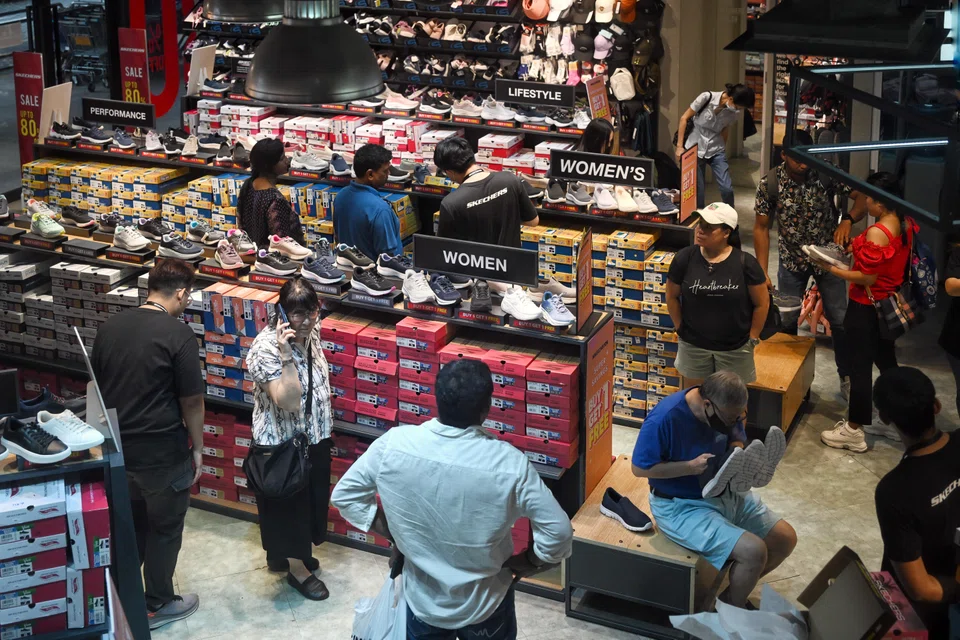
RETAILERS routinely curate stock based on customer demand, trends and availability. They leverage data and insights on preferences, and even tune into customer sentiment on social media to meet diverse expectations. So why do they struggle with managing their workforce the same way?
Singapore’s retailers face harsh realities, the top of these being a high level of churn. Two in five retail workers consider jumping ship within a year of joining, citing low pay, long hours and a lack of prospects, according to a 2022 NTUC LearningHub study on the sector.
This has a number of implications. There is a significant cost to constant recruitment and onboarding. Knowledge gaps also take time to bridge, resulting in a hit to productivity.
If employees are repeatedly replaced, this can undermine the service and success levels to which retailers aspire.
The ongoing digital revolution piles on the pressure. Covid-19 pushed the needle on e-commerce, and automation changed the face of warehousing and merchandising. Workers have had to keep up.
Singapore’s latest Industry Transformation Map for retail further prioritised digitalisation and automation technology, while stressing the need for unique in-store experiences and customer engagement.
Yet when workers try to navigate these shifts, their skill sets often fall short – and they know it.
In the NTUC survey, 73 per cent of retail workers said their workplaces had seen rapid digitalisation since the pandemic – but a third felt they had not received “the proper training for new technologies”.
Alarmingly, half said they had not received career development support, whether in finding possibilities for upward progression or identifying skills gaps.
With no way up, most look for a way out.
Meeting workers’ needs
Reskilling and upskilling is a critical way to stem the flow of workers. Just as retailers scan shelves for gaps, they need to do the same for the skills demanded by the changing retail landscape.
They also need to recognise that – much like for customers – one size doesn’t fit all. The retail workforce is diverse: a fifth are part-timers, while two-thirds are aged 40 and over.
Employees need to understand how the retail landscape is changing, and thus how they can stay relevant and progress in their careers. Companies can then align workers’ ambitions with business transformation, empowering them with skills such as digital literacy, placemaking and service innovation.
But as every worker is different, retailers may need to adapt to their varied learning needs and invest in training to bridge the digital-literacy divide across generations.
Consultants or industry associations can help identify gaps and reimagine roles. The Jobs Transformation Map for retail was launched in June 2023 to help retail companies anticipate future needs and equip their workforce with the necessary skills to meet these.
The Jobs-Skills Integrator for Retail (JSIT-R), launched the same month, brings in partners such as the Singapore National Employers Federation and the National Trades Union Congress to support firms in redesigning jobs, developing their workforce and facilitating placements into quality jobs.
The JSIT-R also equips employers to conduct structured career planning, developing personalised pathways and identifying training opportunities to help workers achieve their aspirations.
Redesigning for efficiency
For Skechers Singapore, workforce transformation has been key to staying competitive. The footwear and apparel retailer’s warehouse initially supported just a few stores, relying on manual and labour-intensive processes. But as sales grew and more branches opened, Skechers needed to upgrade to more efficient systems.
Service and operational gaps were identified, leading to system upgrades that improved order management, transportation, and warehousing.
For employees, their jobs were redesigned to adapt to new technologies – resulting in a 50 per cent cut in manual processes – and improve efficiency.
Through Workforce Singapore’s (WSG) Career Conversion Programmes (CCP), employees were reskilled for higher-value roles in supply chain management – the backbone of any retail operation.
Similarly, lifestyle department store BHG has adapted to evolving retail demands by enrolling sales, marketing and merchandising staff in WSG’s CCP for the retail industry. Some roles were expanded to include data analysis, customer journey optimisation, and omnichannel strategies, for example.
Through one-on-one discussions, BHG identified workers’ aspirations and skills, leading to new customer engagement ideas and omnichannel role assignments.
These efforts strengthened its talent pool, empowered employees, and ensured better prospects for employees who received wage increases with their redesigned roles.
Ultimately, investing in employees is a strategic choice. Employers that support their workers’ career health will be able to better attract and retain talent.
Existing staff have an incentive to stay, and jobseekers know you take their future seriously, enhancing your company’s reputation.
Most critically, training fosters a flexible workforce that can help companies pivot swiftly to new opportunities in a more complex and uncertain economic environment.
Such workers are better positioned to navigate the ever-changing retail landscape, and deliver a level of service that leads to better customer interactions and improved loyalty.
Satisfied customers might be the common goal in retail, but high-performing and engaged employees are critical to making that happen.
The writer is director of the trade and lifestyle division at Workforce Singapore