


SICCI ready to tackle SME issues
The Singapore Indian Chamber of Commerce and Industry is also looking at developing closer ties with other trade groups.

Mindy Tan
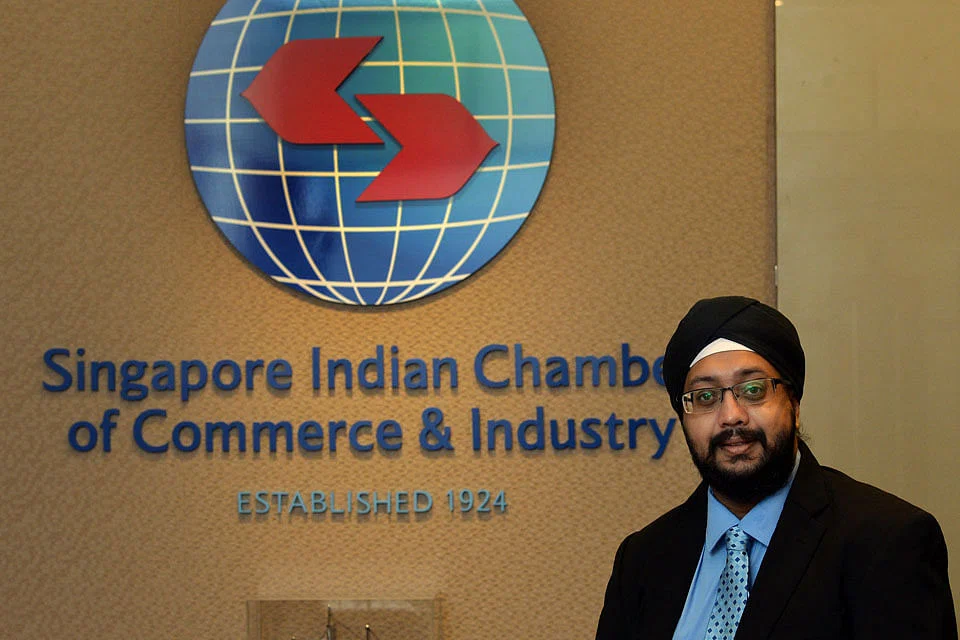
THE Singapore Indian Chamber of Commerce and Industry (SICCI) is no stranger to fighting fires and managing a shoestring budget. Which makes their point that costs remains an issue for small and medium-sized enterprises (SMEs) particularly poignant.
"I think that the government needs to really look closely at costs, fundamentally, as a problem. And look at how cost competitiveness can be addressed," says its newly appointed executive director, Malminderjit Singh.
With rents and high labour costs continuing to exert pressure on businesses, companies that are going overseas might be doing so not so much for reasons of expansion, but to escape the high cost of operation here.
"That is something I think is a concern because what if it hollows out the SME sector here? If more SMEs are forced to move out of Singapore because of costs, then we will be faced with an issue."
Wrestling with costs is something that SICCI is familiar with. It has, however, since installing its new leadership, succeeded in taming that monster by actively cutting costs and expanding its revenue streams.
Recognising that one of the most important aspects of strengthening its financial resources is ensuring that efficient processes are in place, the chamber embarked on ISO 9001 certification in May last year and attained it by July.
The board also expanded its advertising and sponsorship platforms by allowing businesses to leverage the SICCI branding through its publications, electronic direct-mailing services, as well as through trade match opportunities. SICCI's revenue for the year ended 2014 rose by 58.5 per cent to S$2.54 million, making it the highest surplus accumulated in the chamber's history. Separately, its consolidated group income increased by 48.8 per cent from the previous year to S$3.81 million.
A large chunk of the revenue was from trade documentation and membership fees, says Mr Singh, adding that the chamber aims to boost its membership base from where it currently stands at slightly above 960 members to 1,200 members by the end of this year.
But taking on new members also means that the chamber needs to change the way that it has been doing things. Already, there is a distinct shift in its member profile, with a lot of newer members in areas such as technology, IT, and even service industries.
"It's good because it also allows us, as a chamber, to refocus, or take a step back and say, okay, do we need to realign ourselves with the kinds of companies that are coming in? Primarily, in the past, it has been brick and mortar trading companies - and those companies have certain needs, like they want to find matching business suppliers in countries where resources are rich. So we tended, in the past, to do a lot of those matching kinds of services. But now, some of those needs will have changed."
Going forward, being more aggressive in its profiling of members is one of the key means through which the chamber intends to be of service.
"Because SMEs, by virtue of being small and medium, don't have the luxury of resources to profile themselves or even create awareness. So, as a chamber, we think that's one area where we can add value because we can collectively harness their resources and try and give them a better profile, sector-wise or even industry-wise. And at the same time, also help them use SICCI as a platform to market themselves through our publications, events and services (trade missions, trade seminars etc)."
It is also looking at developing closer ties with other trade associations and chambers both locally and overseas. Under its new Venture India drive for instance, SICCI not only works with its own members, but also the Singapore Chinese Chamber of Commerce and other business associations. SICCI will also work closely with the Singapore Indian High Commission to facilitate Singapore companies venturing into India.
Based on its trade documentation services, one of the most popular countries where companies are looking to do business is the United Arab Emirates (UAE) and Dubai.
"In the UAE, chamber-wise, we don't have any agreements with them. But some of our members have been there for a while so they have their long-standing relationships with them. So that's something that, as we look further, we want to deepen. And, there are other countries as well."
But these plans hinge on certain fundamentals being in place. With, as Mr Singh puts it, the house now in order (on the chamber front), the next large issue that needs to be tackled is costs and how SMEs are negotiating this issue.
"Until cost is properly addressed - and the whole labour issue adds to this as well so it's like a double whammy - it's very difficult for businesses to step back and say okay, I want to take a look at the bigger picture, I want to go overseas."
Alluding to the cost competitiveness committee that was set up in the 1980s, Mr Singh suggests that revisiting such a committee would help take stock of problems faced by businesses today.
"Because what's happening now is a lot of the budgetary incentives, although designed to ease the cash flow and cost pressure, are either one-off, or they are very superficial. They are not going deep," he says.
"It is not a bad idea now to revisit something like that where a proper committee is set up to explore and investigate where the cost pressures are and come up with a series of solutions and recommendations."
TRENDING NOW
Simba admits exceeding spectrum limits amid failed M1 deal; full-year profits surge 277%

Temasek’s Wan Chee Foong to helm PIL, Lars Kastrup to be board adviser

He built the Vingroup empire. Now South-east Asia’s richest man is handing some key roles to his sons

One-third of Singapore-listed firms at risk in severe AI downturn: MAS

