Singapore foodtech startup Prefer tackles rising coffee costs with bean-free fermentation
The company plans to launch its pilot factory in Q3
Jermaine Fok
[SINGAPORE] Coffee in Singapore can mean anything from a S$2 kopi-o at a neighbourhood coffee shop to an S$8 cuppa from one of the many upmarket cafes across the island.
But as rising bean prices begin to hit both cafes and consumers, the popular beverage is becoming more expensive and less predictable.
For local foodtech startup Prefer, the answer lies not in farms, but in fermentation: creating flavours and ingredients that are increasingly threatened by climate change and supply chain shocks.
The company produces sustainable, bean-free coffee using fermented food by-products ranging from bread to rice.
With its first pilot factory slated to launch in the third quarter of 2026, the company expects an annual production capacity of 500 tonnes of its bean-free coffee, PreferRoast.
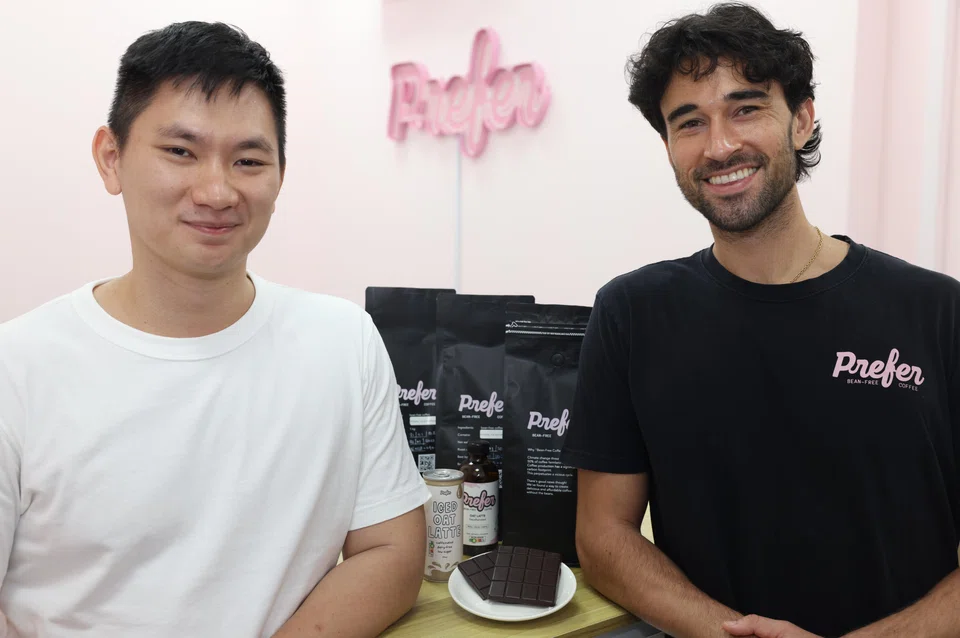
Prefer’s founders – chief executive officer Jake Berber and chief technology officer Tan Ding Jie – met in 2022 at Entrepreneur First, a global talent investor and accelerator that supports individuals in building technology companies.
They both shared the belief that fermentation could be used to recreate flavours, Berber told The Business Times in an interview. That led them to coffee and cocoa, two industries plagued by climate change, supply chain instability and price volatility.
“Our local kopi coffee culture is threatened by rising prices, particularly with the robusta harvest in Indonesia and Vietnam,” said Tan.
According to the USDA Foreign Agricultural Service, average export prices for green bean robusta coffee in Vietnam reached US$5,642 per tonne in the 2024/2025 marketing year – a 143 per cent increase from the previous 12 months.

This marked a record high in coffee transaction history, pushing Vietnam’s coffee export value to US$8.3 billion.
Supply chain disruptions continue to affect coffee yields. In 2025, Typhoon Kalmaegi and extreme heavy rainfall damaged harvests in Vietnam, particularly in the Central Highlands region.
Recreating coffee through fermentation
Both avid coffee drinkers, Prefer’s founders said they want to ensure coffee remains accessible even amid price fluctuations.
“We try to create the experience of coffee that everyone can continue to afford and love”, said Berber.
Using fermentation, Prefer produces coffee and cocoa flavour compounds that can be blended into products at scale, reducing reliance on traditional crops.
“We decided to focus on building solutions to solve the problem of rising cost and volatility of coffee and cocoa supply chains, using fermentation as a technology to recreate these flavours in a different way from traditional agriculture,” Berber said.
As a business-to-business company, Prefer supplies its bean-free coffee and cocoa powders to fast-moving consumer goods brands in Singapore and abroad, including food manufacturers, private-label retailers and flavour houses.
The company also works with local food manufacturing partners, sourcing food by-products to ferment from brands such as Gardenia and Mr Bean, Tan said.
“Singaporeans, as you know, are deeply nationalistic and defensive about coffee and food,” said Tan. “We have encountered a healthy dose of scepticism (when entering the market).”
However, he added that the company demonstrated a clear value proposition by helping businesses reduce costs while maintaining the flavour of coffee and cocoa.
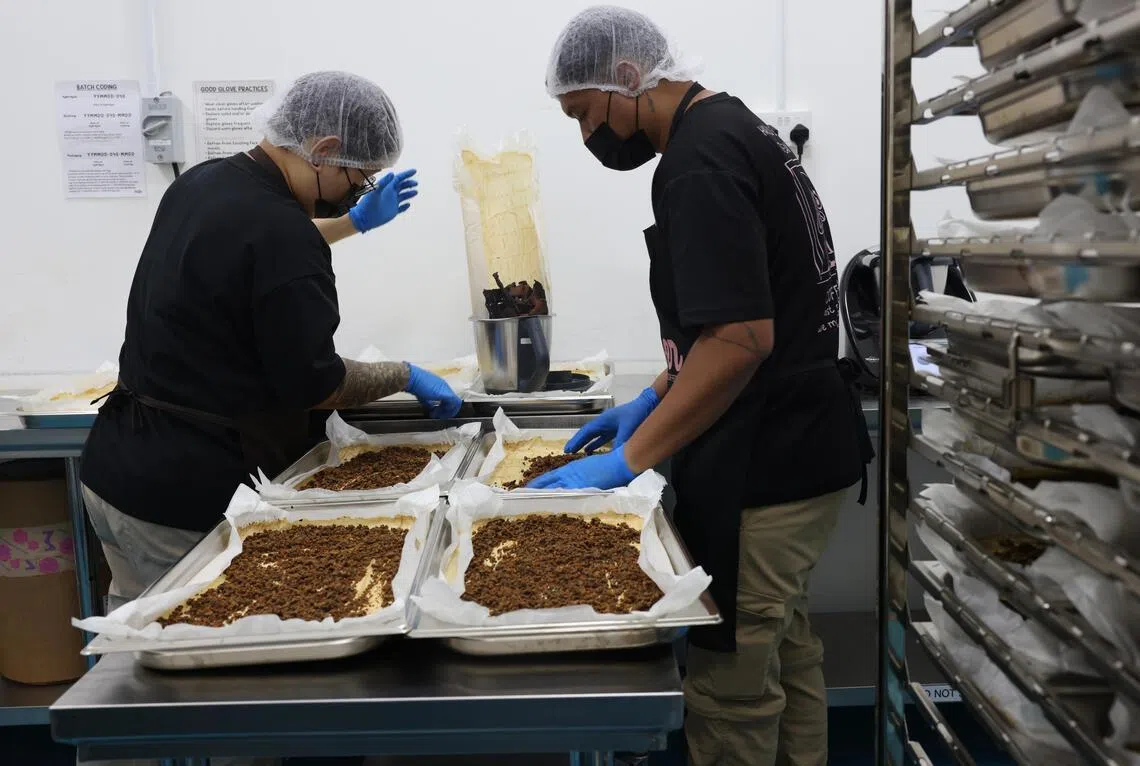
“We really want to show how we can work together with the industry, creating these hybrid blends, working with our favourite and most trusted business-to-business brands to create products that everyone can afford and enjoy,” Berber said.
Prefer’s ingredients can be used in hybrid blends of up to 40 per cent inclusion, delivering a similar flavour profile to conventional coffee or cocoa at a lower cost.
The company also has its own ready-to-drink canned coffee, first introduced in early 2024 with a single iced oat latte flavour.
It has since expanded its line-up with two new products under a rebranding – iced black and iced white coffee – catering to drinkers who prefer dairy-free options, as well as those who prefer regular milk.

Prefer’s canned products are now available at more than 100 locations across the island, including vending machines and RedMart. Each can of coffee is priced between S$2 and S$3, depending on the location.
Scaling up production and global footprint
According to Berber’s LinkedIn, Prefer raised US$4.2 million in pre-Series A funding last year, bringing its total equity raised to US$6.2 million after a US$2 million seed round in 2024.
This was co-led by At One Ventures and Chancery Hill Capital with participation from Analog Ventures.
Berber said the funding will support the construction and commercialisation of Prefer’s pilot factory. “This will allow us to achieve milestones to raise a Series A (funding round) next year”, he added.
While Prefer plans to expand to more locations in Singapore, Berber noted that “larger markets are abroad, so we are spending a lot more time in other markets”.
Beyond Singapore, Prefer has begun expanding its international footprint through partnerships, including with Ajinomoto in Thailand and The Coffee Ferm in Australia.
Japanese multinational food and biotechnology corporation Ajinomoto is also a leading player in Thailand’s ready-to-drink coffee market.
Recently, it signed a partnership with a Japanese coffee company to develop a new blend using PreferRoast, with further details expected to be announced later.
Decoding Asia newsletter: your guide to navigating Asia in a new global order. Sign up here to get Decoding Asia newsletter. Delivered to your inbox. Free.
Share with us your feedback on BT's products and services