


Singapore’s ‘trust premium’ gives SMEs the edge overseas
Speakers at the BT Budget Roundtable say that companies must take a deliberate approach to overseas expansion

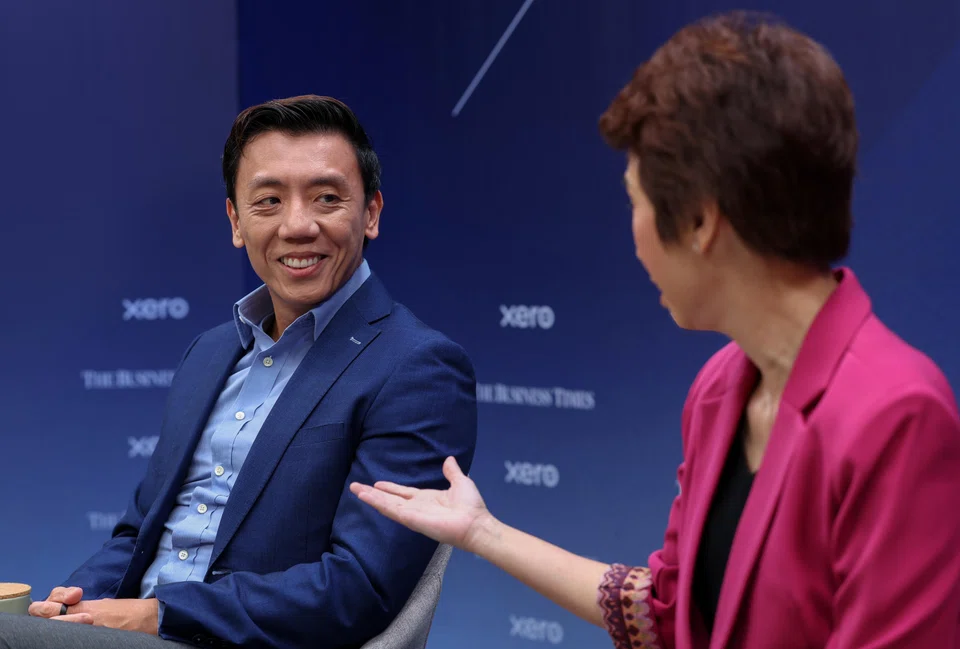
[SINGAPORE] Firms in the Republic looking to expand overseas may have one advantage even as global trade becomes more fragmented: the “trust and reliability premium” associated with being a Singapore company.
Speaking at The Business Times Budget Roundtable 2026: Levelling Up SMEs for Global Competition, Senior Minister of State for Trade and Industry Low Yen Ling said this premium was built over more than six decades of stable governance, respect for the rule of law, pro-business policies, and long-term partnerships between the government and companies.
Drawing on feedback from small and medium-sized enterprises (SMEs), she said international businesses value the stability Singapore offers.
“When a company decides to plunk S$1 billion here, they don’t have to worry about the stability for the next 10 years or 20 years,” said Low, who is also senior minister of state for culture, community and youth.
“They know that we mean what we say and we say what we do. And I think that counts for something.”
Presented by global cloud accounting platform Xero Asia, the dialogue brought together policymakers and industry leaders to discuss how Singapore’s SMEs can strengthen their capabilities and expand internationally amid rapid economic and technological change.
On the panel with Low was her fellow Economic Strategy Review committee on global competitiveness co-chair Jeffrey Siow, acting minister for transport and senior minister of state for finance; Xero Asia managing director Koren Wines; and manufacturer Nandina REM’s co-founder and chief commercial officer Allison Nam.
During the discussion, moderated by BT editor Chen Huifen, Siow added that the trust premium does not just apply to companies in Singapore, but also to firms operating internationally.
“So when you do business and you tell (global business partners) you’re a Singapore company, you share that net trust premium on internationalisation,” he said.
SEE ALSO



This matters because Singapore companies often have to venture abroad earlier than firms in larger economies due to the city-state’s limited domestic market.
He likened the situation to “a plane taking off from a (short) runway”, where businesses must compete internationally sooner with companies that have grown within much larger home markets.
Aside from the trust premium, Siow said Singapore also benefits from its role as a connector for flows of capital, goods, intellectual property and knowledge. Companies that position themselves within these global flows stand to benefit, he added.
In future, he said, new types of flows – including data and energy – will become increasingly important.
“We have to continue to position Singapore at the centre of these flows,” he said.
“The key is what our companies do – whether they can seize enough business in these sectors, locate in Singapore, and make sure that these flows pass through Singapore.”
Government as a partner
To help SMEs seize these opportunities, Low said the government has strengthened support for companies looking to expand overseas through various internationalisation schemes.
Under the Business Refresh Package announced during the Ministry of Trade and Industry’s Committee of Supply debate on Mar 2, support levels for internationalisation initiatives have been raised from 50 per cent to 70 per cent, reducing the upfront costs companies face when entering foreign markets.
That package includes enhancements to the Market Readiness Assistance Grant, which helps firms defray costs related to overseas expansion. Previously limited to companies entering new markets, the scheme can now also be used by businesses seeking to deepen their presence in existing overseas markets.
Low highlighted other schemes firms can tap, including the Business Adaptation Grant, which provides assistance for companies affected by US tariffs to adapt business operations and strengthen supply chain resilience, and the Global Innovation Alliance programmes, which aim to connect Singapore-based startups and tech SMEs with global innovation hubs.
These internationalisation schemes, said Low, mean there is less cash and capital outlay for SMEs.
“It also means that the government is seriously your business partner when you go overseas. We, in a way, de-risk the process a little bit,” said Low.
Be deliberate about global expansion
While support is available for firms to tap, the two business leaders on the panel said SMEs must also be deliberate in how they approach overseas expansion.
Nam said: “To go global, you have to be very intentional and purposeful about who you want to work with from day one. You also need to have a team that is very clear about the corporate culture you want.”
But intention alone is not enough, Wines said, adding that firms also need strong visibility over their business performance before committing to overseas expansion, particularly as markets become more volatile and complex.
Businesses should ensure their systems and tools give them a clear view of their operations so they can respond quickly to changes and scale effectively, she said.
To do so, companies have to use data as a “strategic advantage”, Wines added. Businesses must first ensure their data is digitalised and accessible so it can inform decisions on expansion, investment and new opportunities.
“You can’t make those decisions (to go global) based on what’s in your bank account. You have to know what your business is doing at a deep level, and that all sits in the data,” she said.

Decoding Asia newsletter: your guide to navigating Asia in a new global order. Sign up here to get Decoding Asia newsletter. Delivered to your inbox. Free.
Copyright SPH Media. All rights reserved.
TRENDING NOW

DBS, OCBC, UOB rout lops billions off STI as inflation, rate concerns spook investors

Grab CEO’s wife Chloe Tong on life with Anthony Tan and finding her purpose

OCBC sheds S$8 billion in value as shares close nearly 6% down; analysts cautious on banks

Deal between tycoon friends sparks scrutiny of Philippine power sector

