


SMEs offer their know-how to help in fight against pandemic
They are offering their innovations, or are working with government agencies to put existing know-how to new use
Singapore
USING their existing know-how and capabilities, local firms are stepping up to supply needed products and services in Singapore's fight to contain the novel coronavirus outbreak.
Some of these small and medium-sized enterprises (SMEs) have developed their own innovations; others are working closely with government agencies to apply their technology in new areas.
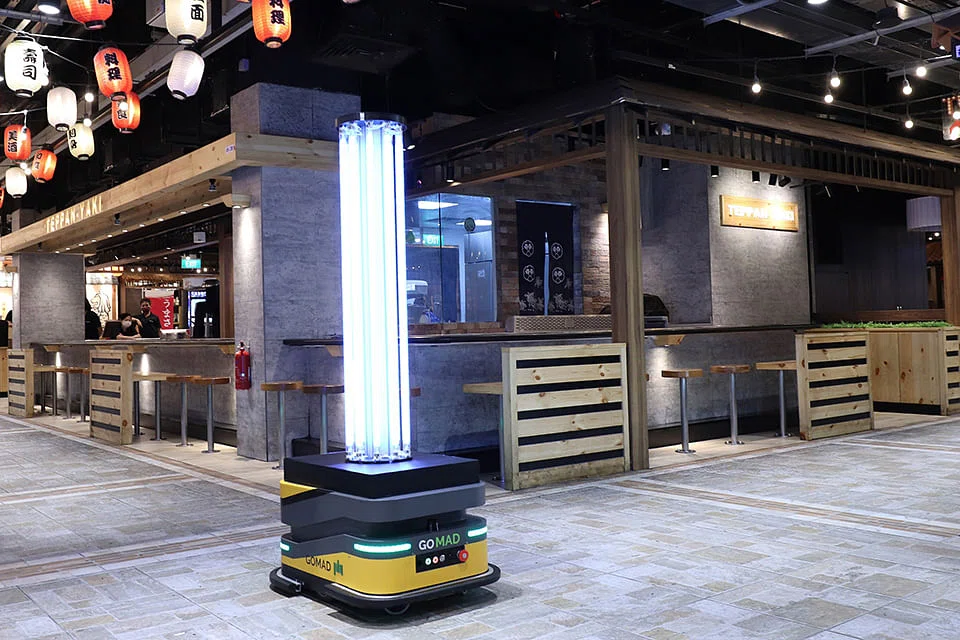
One such innovation comes from robotics and automation company PBA Group. Reports that ultraviolet (UV) light was being used to disinfect buses in China gave the Singapore company the idea of mounting UV lamps on autonomous mobile robots (AMRs), which it designs and manufactures in Singapore.
Said PBA chief executive Derrick Yap: "Robots are ideal for situations that are dangerous, dull and dirty. We did some research and our engineers found that UV light cannot be deployed around humans, because it is very strong and is not good for the skin and eyes. But if we can put UV lights on our AMRs, we'll be able to automate disinfection without involving humans."
PBA programmed its Sunburst UV Bots to navigate within buildings and disinfect rooms automatically, which will reduce the workload of cleaning staff and also their exposure to harmful chemicals and the virus.
The company plans to roll out more than 200 of the robots in Singapore and over 500 in the region, across sectors such as retail, healthcare and transport, essential services and critical areas where infection clusters have formed.
On Thursday, PBA announced a partnership with Frasers Property to deploy the Sunburst UV Bots at Northpoint City in May, followed by a progressive rollout at Frasers' other malls; the robots are also being tested in some local hospitals.
PBA plans to make the robots more affordable to use, and to subsidise the usage cost for frontline institutions such as hospitals.
It costs between S$1,000 and S$3,000 to rent one of these machines; PBA is working at obtaining government grants to help it keep the cost down for users.
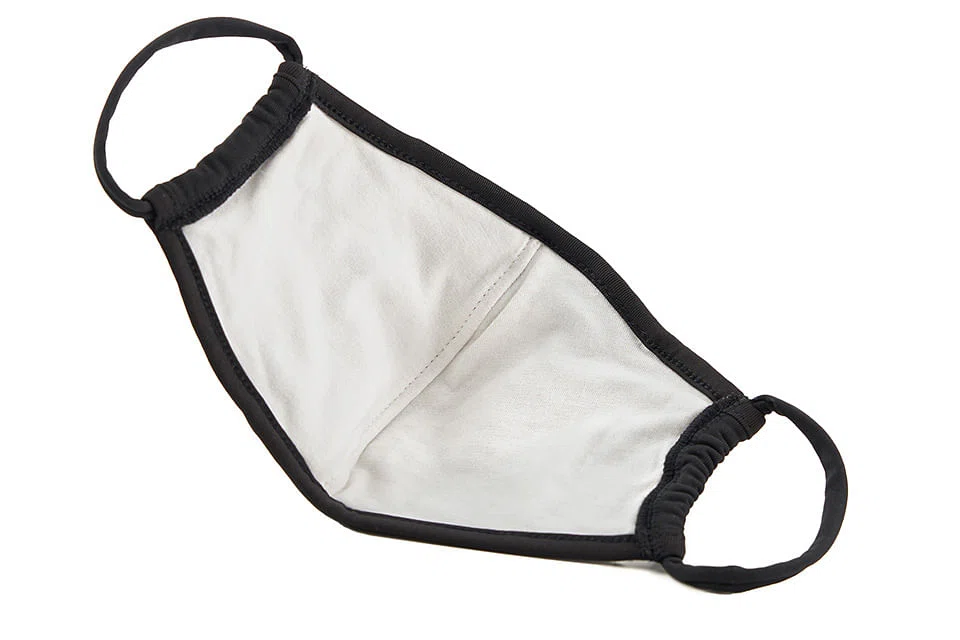
Another local innovation is a reusable face mask by 1929 Mask, a startup founded by the family behind textile manufacturer Rengitex Trading. In just a week, husband and wife team Steven Lee and Ng Cheng Choon used their knowledge of chemicals and textiles respectively to experiment with designs, materials and chemical treatments, eventually developing a water-repellent and anti-microbial fabric mask.
They took another month to further develop and test the masks with the Agency for Science, Technology and Research (A*Star) and international testing centres TUV SUD and Bureau Veritas.
Said Madam Ng: "We wanted to heed the call of Minister Lawrence Wong, who said Singapore should have its own mask-making capabilities. I had the idea that since we have a lot of fabric in our factory, we could look into this ourselves so people don't need to keep buying surgical masks and throwing them away."
Their son Keenon Lee is now overseeing 1929 Mask, which was launched in March and manufactures the cloth masks in Rengitex's Malaysian factory.
The business used to produce 7,000 masks a day, but can now churn out 20,000 because it has obtained official exemption from Malaysia's ongoing movement restrictions.
Separately, gaming firm Razer has been using its manufacturing facilities in China to produce surgical masks since March.
On April 1, it announced that it will set up a fully automated mask production and packing line in Singapore, which it said would be able to produce up to two million masks a month.
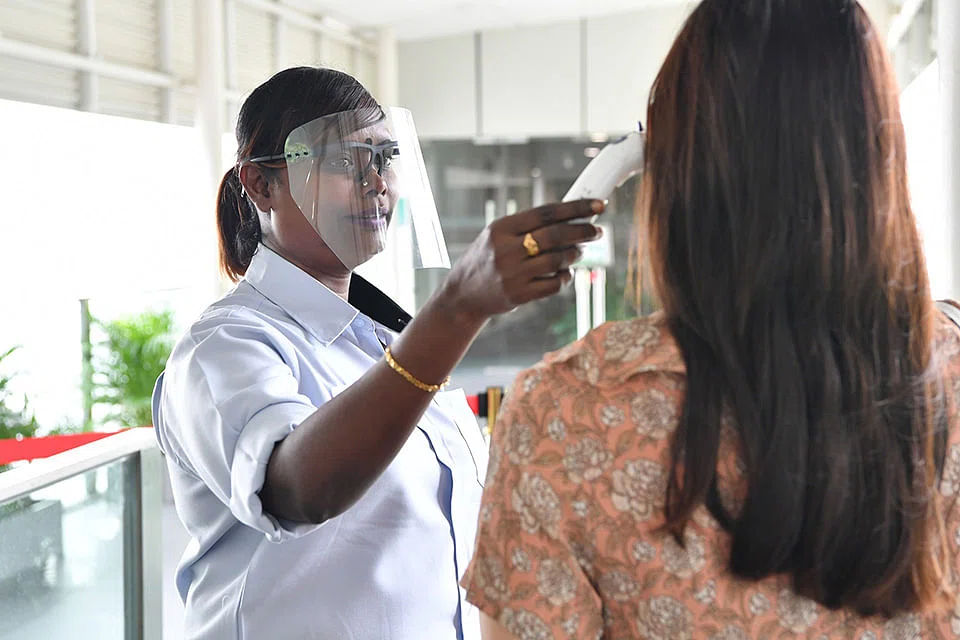
Other firms are partnering government agencies in the fight against the virus. Medical device manufacturer Racer Technology has dedicated about 40 per cent of its manufacturing capacity to producing epidemic-related supplies, such as ventilators, test kits and a reusable face shield designed by the Defence Science and Technology Agency (DSTA).
The FaceProtect+ shields are meant for use by frontline staff in public agencies such as the Ministry of Defence and the Singapore Armed Forces, the Ministry of Manpower and the Land Transport Authority.
Racer Technology chief executive Willy Koh said the company has eight facilities in Asia that can be activated if more capacity is needed, but the Singapore facility is coping fine for now.
He said his supply chain is robust and that DSTA had "worked aggressively" before the start of the "circuit- breaker" period to ensure that local suppliers would not face shortages of screws, nuts and essential parts.
Geospatial solutions provider Esri Singapore has worked for many years with government agencies like Urban Redevelopment Authority and the National Parks Board (NParks) to use the geographic information system (GIS) software it distributes here, called ArcGIS. This is the same software that powers the widely used Johns Hopkins online dashboard of global coronavirus infections.
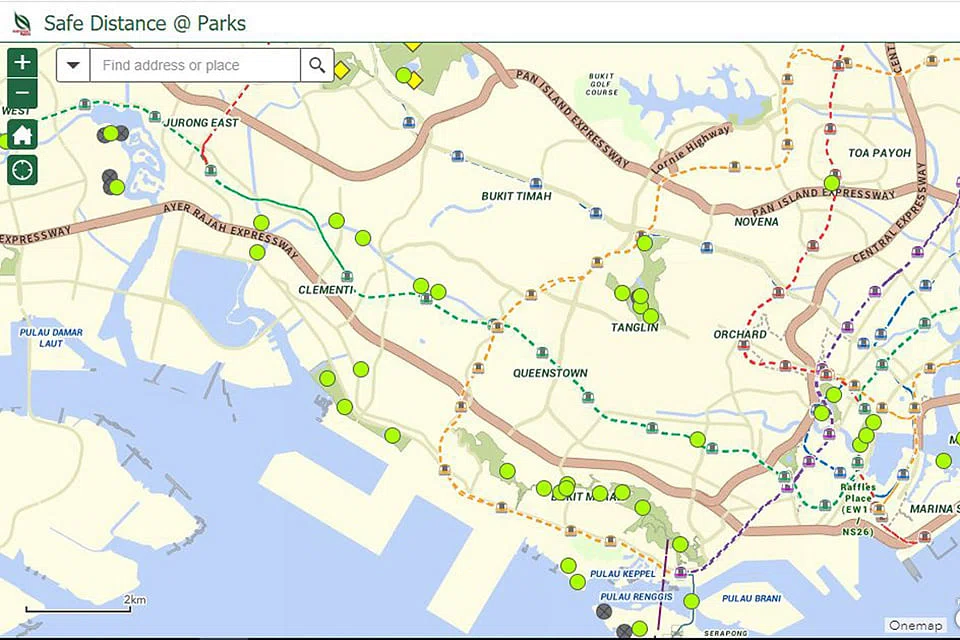
The agencies normally use it to analyse and visualise assets for planning, maintenance and operations, but recently started using it to manage information for Covid-19 applications, such as NParks' real-time map showing crowd levels at parks.
Esri Singapore chief executive Thomas Pramotedham said the ability of geospatial technology to layer diverse types of information (such as text, visual and spatial data), and combine that into easily understood visuals makes it ideal for disseminating actionable information to the community.
He added: "We are very lucky because Singapore has been at the forefront of embracing geospatial tech. So when the government took steps (to broaden its use of this software), we were ready with data and civil servants who are skilled in applying geospatial applications."






