


Sofa so good in HTL’s India push

Renald Yeo
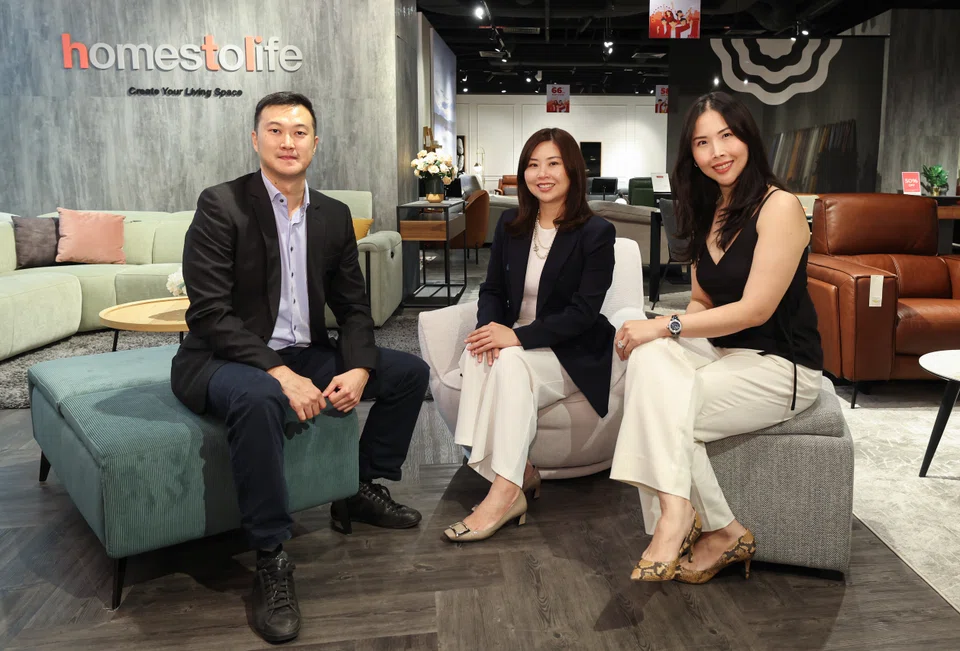
[CHENNAI] For sofa manufacturer HTL International, going into judicial management in 2020 did not mark the end, but paved the way for a return to its roots – or rather, to its founders.
Formerly listed on the Singapore Exchange mainboard since 1993, HTL International was bought over and delisted by Chinese furniture player Yihua Lifestyle Technology in 2016. The founders, brothers Phua Yong Tat and Phua Yong Pin, stayed on as management.
But when the Covid-19 pandemic hit, the company found itself unable to repay some US$46 million owed to various banks, due to a pandemic-induced cash flow crunch.
“At the time, orders were still coming in – it’s just that we were not able to (fulfil them) because of the lockdowns,” HTL chief executive officer Phua Mei Ming told The Business Times.
“It was a double whammy where a lot of our key customers said, ‘HTL, I can’t pay you for a few months because of the lockdowns’, which caused the cash flow issue,” she added.
In July, the company entered judicial management. Coming to its rescue were the Phua brothers themselves, via their vehicle Golden Hill Capital.
That September, the court-appointed judicial manager accepted an offer from Golden Hill Capital to acquire all subsidiaries of the company for US$100 million.
As part of the deal, Golden Hill Capital would also provide US$20 million in additional working capital to HTL, and allow the company to draw on the final tranche of a US$10 million bridge loan from Phua Yong Tat.
In less than a year, HTL had reversed its fortunes and embarked on an ambitious S$80 million expansion plan to India.
Push to India
“We decided to focus on India mainly because of the potential of the domestic market,” said CEO Phua.
“It also made a lot of sense, especially for a labour-intensive industry like ours, to tap into India’s labour market, which has a plentiful workforce and where most people are able to speak English,” she added.
In mid-2021, HTL entered India by setting up factories in Chennai and Pune, covering a total of 800,000 square feet (sq ft).
The sofa maker also opened a 25,000 sq ft “experiential centre” in Bangalore – essentially a giant showroom, making it more convenient for wholesale buyers from around the region to visit and view its selection.
The factories employ more than 600 workers. By year’s end, they are expected to produce enough sofas each month to fill 120 40-foot shipping containers, with each container holding about 38 sofas.
About 60 per cent of the output will be sold domestically, and the other 40 per cent exported, said CEO Phua.
For comparison, HTL’s other factories – it has four in China and one in Italy, at a combined 2.4 million sq ft – produce some 2,500 containers per month.
But it is early days yet for India. In the next three to five years, HTL intends for its India production to increase tenfold to 1,200 containers per month, representing 30 per cent of its global output.
Made in India
Manufacturing in India has various benefits. For the domestic market, HTL’s sofas can be priced more competitively as customs duties on imported furniture – of up to 25 per cent – do not apply.
For export, the ‘Made in India’ label means fewer risks when exporting to North America, said Celeste Phua, general manager of the company’s flagship HomesToLife brand.
North America accounts for some 20 per cent of HTL’s sales, with the remainder going to Europe (50 per cent) and the rest of Asia (30 per cent).
Frosty relations between the US and China could spell further tit-for-tat trade tariffs, which would be disruptive to HTL’s operations due to its largely China-based production, she added.
Relations between the US and India are decidedly warmer: during Indian Prime Minister Narendra Modi’s visit to the White House this June, US President Joe Biden had feted the partnership as “stronger, closer and more dynamic than at any time in history”.
India’s geographical location also means reduced shipping times to key affluent markets in the Middle East – which the company is targeting as a source of future growth – compared to shipping from China.
Not without challenges
Granted, the India market has also posed challenges. As some key steps in the sofa production process – such as coaxing its signature cowhide leathers to fit over wood and foam – cannot be automated, much of the work falls to skilled workers.
The problem, however, was a lack of local skilled workers with prior experience in furniture assembly, said Phua Mei Ming. Workers faced a steep learning curve, which meant lower productivity in the short to medium term.
Another issue was in workforce motivation, she added: “In China, we are used to things like overtime to hit production targets, (but) in India the work culture is very different.”
“In China, if you don’t give them enough overtime (hours), the workers will actually leave your company (due to the lower pay),” explained Phua Jing Yuh, head of central procurement for HTL’s leather business unit. “In India, it’s not like that.”
HTL also had to navigate local rules and regulations during its initial foray, though it managed to get help by tapping the network and local know-how of Enterprise Singapore’s India office.
Said Celeste Phua: “What they did was to provide us with different avenues to reach out to, where we could get help and support. That is something that is even beyond (monetary) grants itself, because these are networks that we could not have on our own.”
With the company back in the Phua family’s hands, attention has turned to succession planning.
Phua Mei Ming and Celeste Phua are Phua Yong Tat’s daughters, while Phua Jing Yuh is the son of Phua Yong Pin.
But the trio of younger Phuas, who describe themselves as the second-generation management team, are in no hurry to take over.
Said Phua Mei Ming: “Our fathers are in their seventies, but they worked on the business model of going into new markets like India. I don’t think anyone else (in their seventies) would even talk about going into another country, (and) setting up production – that’s the kind of passion that is driving us, the second generation.”
TRENDING NOW

First Resources blames El Nino, outside fires for Kalimantan hotspots amid haze scrutiny

High Court rules against Julius Baer’s Singapore trust arm in US$50 million family trust dispute

Singapore key exports jump by higher-than-expected 68.4% in September, led by non-electronics

MSCI proposes downgrading Indonesia to standalone market status

