


From sourdough bao to pet first aid: Heartland SMEs in Ang Mo Kio reimagine tradition
They are participants in Sprout@AMK, a 12-month pilot designed to help enterprises test new concepts before scaling up
 Add BT as a preferred source
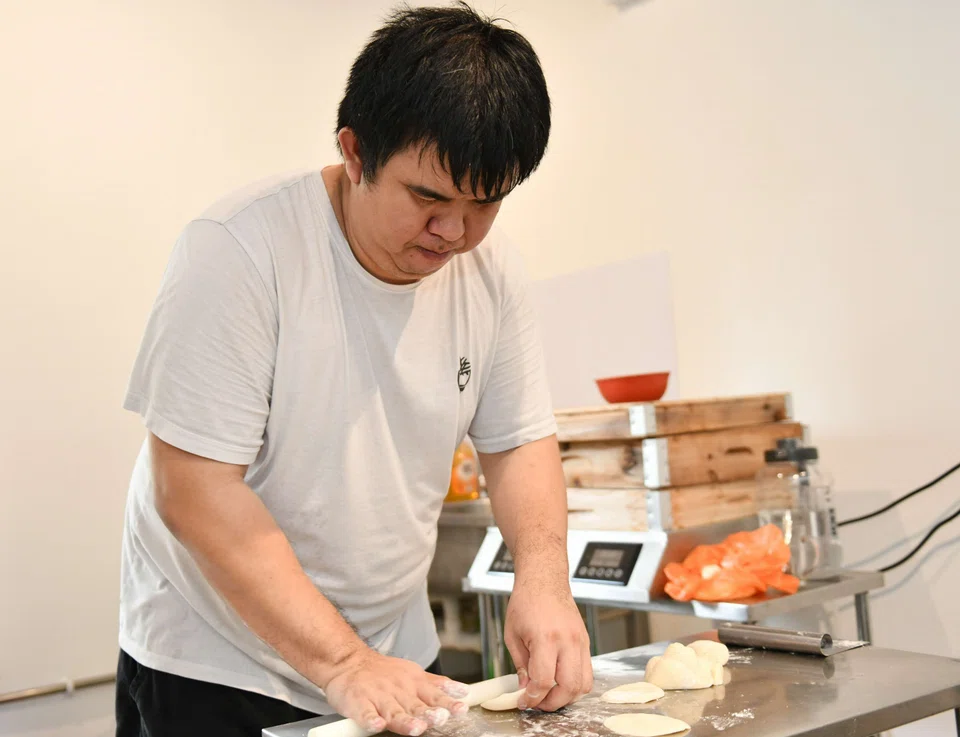
[SINGAPORE] In the bustling heart of Ang Mo Kio, business owners are reinventing their trades.
Sprout@AMK, launched in September by Enterprise Singapore (EnterpriseSG), serves as a sandbox for the Heartland Innovation and Transformation (HIT) programme, a 12-month pilot designed to help enterprises test new concepts before scaling up.
The Business Times spoke to three of 15 participating SMEs – Her Feng Xiang, Blooms and Superpets – to understand how they are bridging the gap between traditional industries and modern needs and tastes.
Her Feng Xiang: Where sourdough meets dim sum
While sourdough creations often evoke images of trendy, modern cafes, Her Feng Xiang’s second-generation owner Pierre Lim is quick to clarify that the dim sum eatery is not chasing hipster trends.
They are, in fact, a return to the real traditional method of bun-making – what he called a “lost heritage”.
Her Feng Xiang has been using the sourdough method since the store’s inception, when Lim’s parents were making dim sum in a kampung 50 or so years ago, he told BT.
“Not only does the sourdough retain a soft pillowy texture in the bun, it also breaks down gluten more effectively than commercial yeast,” Lim explained.
This makes the buns significantly easier to digest for the elderly and prevents flatulence, often associated with modern, mass-produced bread – a crucial consideration for its ageing customer base, he said.
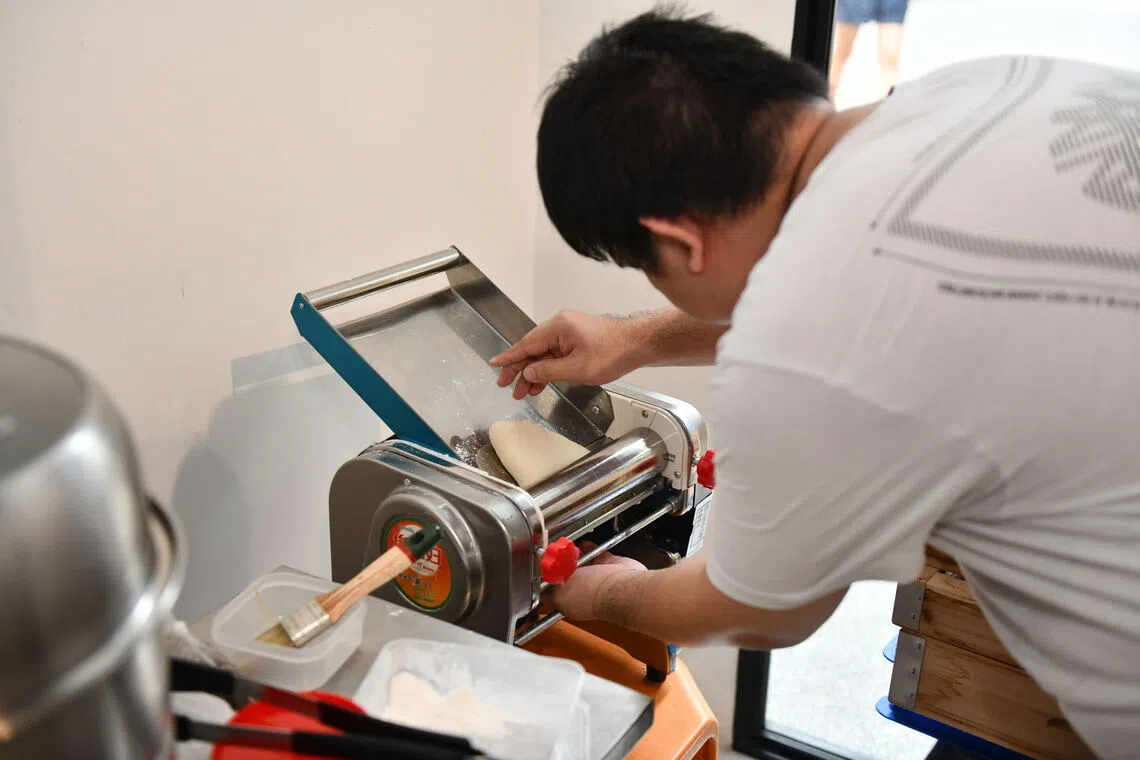
Her Feng Xiang’s first outlet near Clementi has done much heavy lifting in building a loyal customer base, and has been especially popular with the elderly, who are reminded of the authentic flavours of their childhood.

While the most popular items on their menu are still traditional ones, such as the braised pork belly bun (kong ba bao), Lim often comes up with new creations using the sourdough bao base for a younger crowd. One recent example is a lemon milk butter bun creation (lemon nai su), he said.
Since opening the outlet in Ang Mo Kio, Lim has also started to pilot a frozen, pre-packaged retail model, aimed at diversifying its customer base.
“We are trying to better understand this generation. Some youngsters have told me they can work from home for months on end. Because of that, frozen food and microwaves are many people’s best friend,” he said.
“We freeze it the day it’s made. You just steam it at home, and it tastes exactly like it does at the shop,” he said. He plans to turn it into a product that can be produced in large quantities.
Blooms: The “Uber” for home services
In an industry often plagued by over-pricing and unreliable service, Blooms positions itself as a tech-forward solution for home maintenance.
The company operates a smart mobile app platform that connects homeowners with vetted service providers – painters, plumbers and handymen.
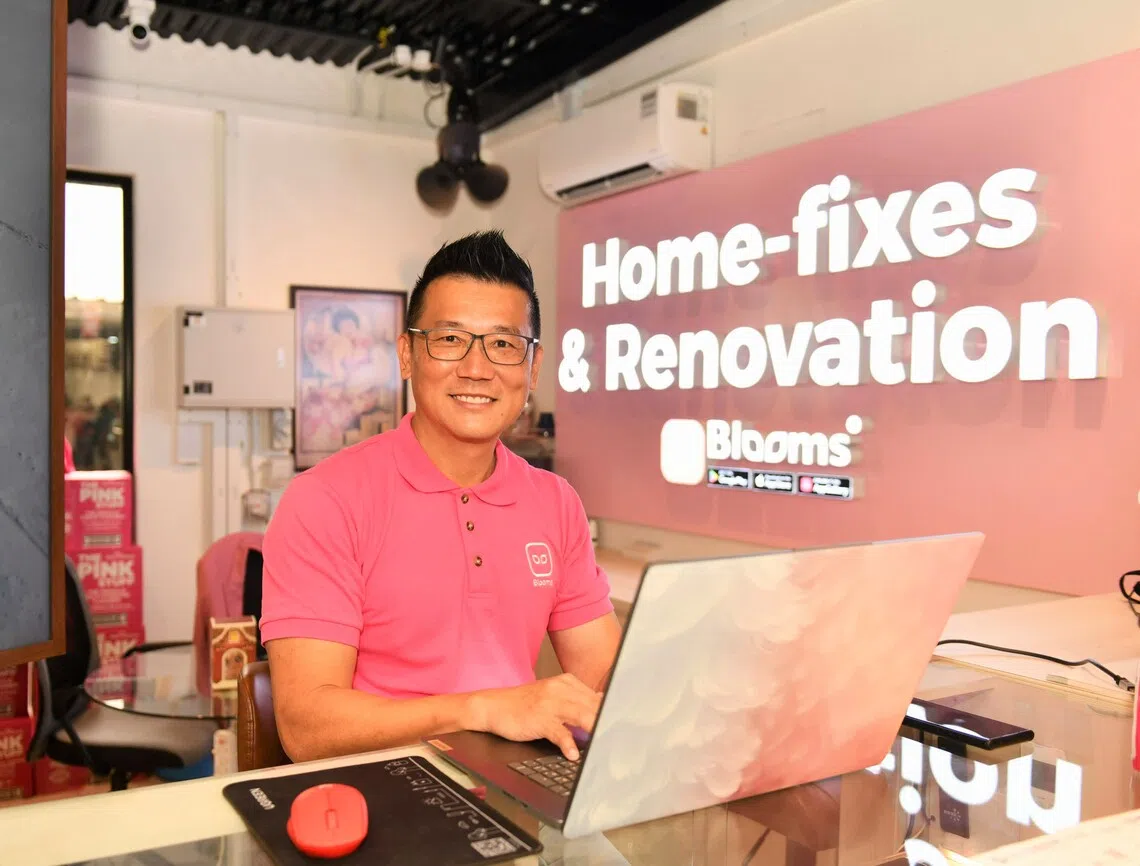
Owner Wilicks Nger, an engineer by training, told BT that there is a critical gap in the home services market: a lack of standardised pricing and trust.
He cited a common grievance among homeowners, where prices fluctuate for reasons unknown to them. “The price depends on whether or not you know your stuff… and if you have a Mercedes parked outside your house, the price changes,” he quipped.
Blooms aims to eliminate this arbitrariness, Nger said. Its algorithm functions similarly to ride-hailing apps, matching customers with the nearest available Blooms tradesman to ensure efficiency and transparent, fixed pricing.
Nger said that despite it operating as a tech platform, a physical space is vital in establishing trust.
The team uses the shopfront not just as an office, but also as an educational hub to teach residents how to use the app, using the physical space to onboard users onto the digital ecosystem.
Yet, challenges remain.
“The most difficult thing is funding… and getting people to try,” he said, noting the challenges of bootstrapping a tech solution in a blue-collar industry.
Through training workshops conducted via the HIT programme, the Blooms team has been able to hone its skills in areas such as visual merchandising, moving a step closer to cementing its place as a go-to service provider among residents.
Superpets: Experienced groomers notice the safety gaps
Superpets has been in the pet retail scene since 2015, and traces its roots back to when founder Brian Go and his wife ran a humble grooming studio for pets 14 years ago.
Despite what seems to be a saturated market for pet products, conversations with their clients revealed that many pet owners were often left without adequate solutions for more specific needs.
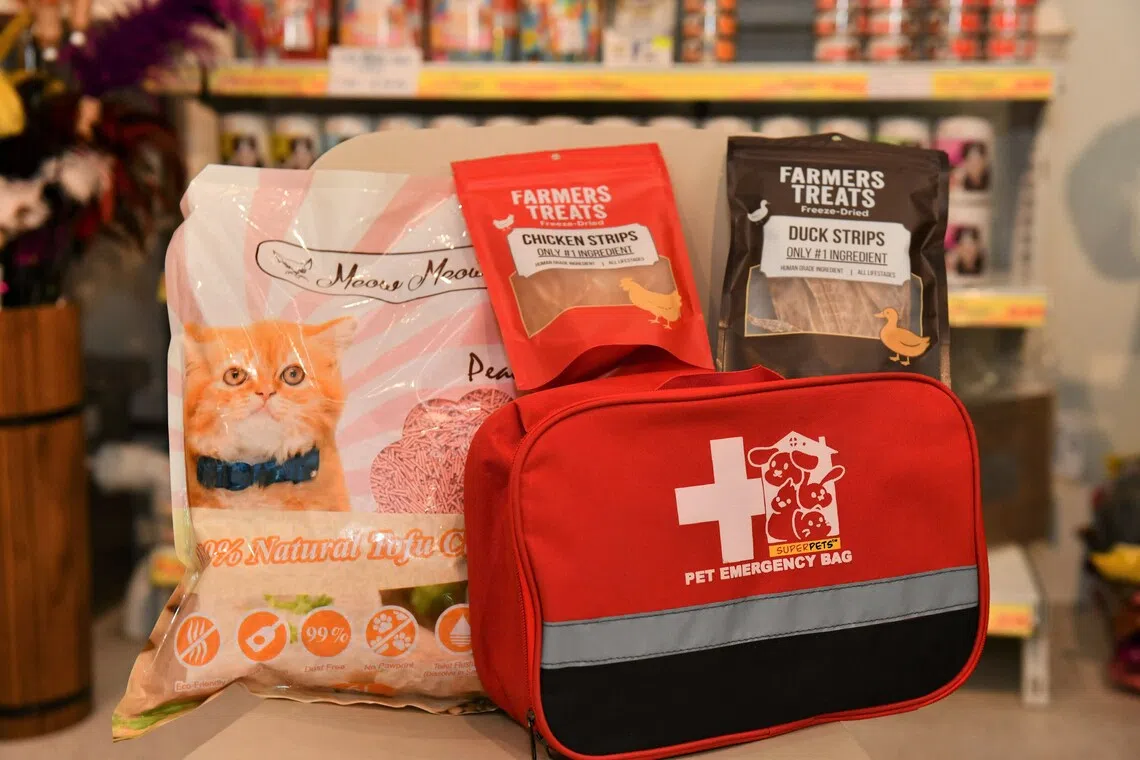
One such glaring gap was emergency preparedness. “We realised that when a dog gets a cut or has an emergency at 2 am, owners panic. There is no standard kit available for them,” Go said.
To bridge this, they developed pet emergency first aid kits, curated specifically for animals and with simple instructions, so that owners with no medical training can administer basic care.
Beyond emergencies, the business had long adopted a strategy of bypassing middlemen to address quality issues in everyday essentials.
Dissatisfied with standard market offerings, the founders pivoted early on to working directly with factories. This allowed them to engineer solutions to problems they discovered through experience, such as dust-free litter for sensitive owners, or edible tofu litter to prevent choking hazards.
Building on this established foundation, Go’s son, Shaun, who joined the business immediately after National Service, has focused on modernising the brand’s reach.
“I had two choices… continue studying or join the business,” he shared.
He chose the latter, taking charge of the company’s digital transformation and strategic partnerships. Utilising the direct supply chain his parents established, he spearheaded the development of new in-house product lines, such as freeze-dried treats at affordable prices.
A future permanent foothold
For EnterpriseSG, success for this 12-month pilot is defined by businesses commercially validating their models and innovative products.
Jason Lim, the agency’s director of food services and heartland enterprises, said: “EnterpriseSG is honing this drive through training, mentorship, and a real-world test-bed environment that enables them to remain competitive and scale.”
Upon graduation, these businesses may apply for direct allocation of vacant Housing & Development Board (HDB) shop spaces under the HDB Enhanced Entrepreneur Scheme, to establish a permanent foothold in the heartlands.
A new cohort of participants will be welcomed into Sprout@AMK in 2026.
Decoding Asia newsletter: your guide to navigating Asia in a new global order. Sign up here to get Decoding Asia newsletter. Delivered to your inbox. Free.
Copyright SPH Media. All rights reserved.
TRENDING NOW

Firm loses wrongful dismissal case despite following termination clause

Vietnam seeks US$76 billion a year from capital markets to ease reliance on banks

Citi, OCBC downgrade UOB post-Q2 results; RHB upgrades on valuation

Soilbuild’s Lim Chap Huat sues Brookfield, claims it reneged on joint venture: WSJ

