


Specialist centre Royal Healthcare to open in Tokyo or Osaka, after Japan’s Sojitz takes control
This will be its first overseas medical centre, following its existing concierge centres in Cambodia and Hong Kong

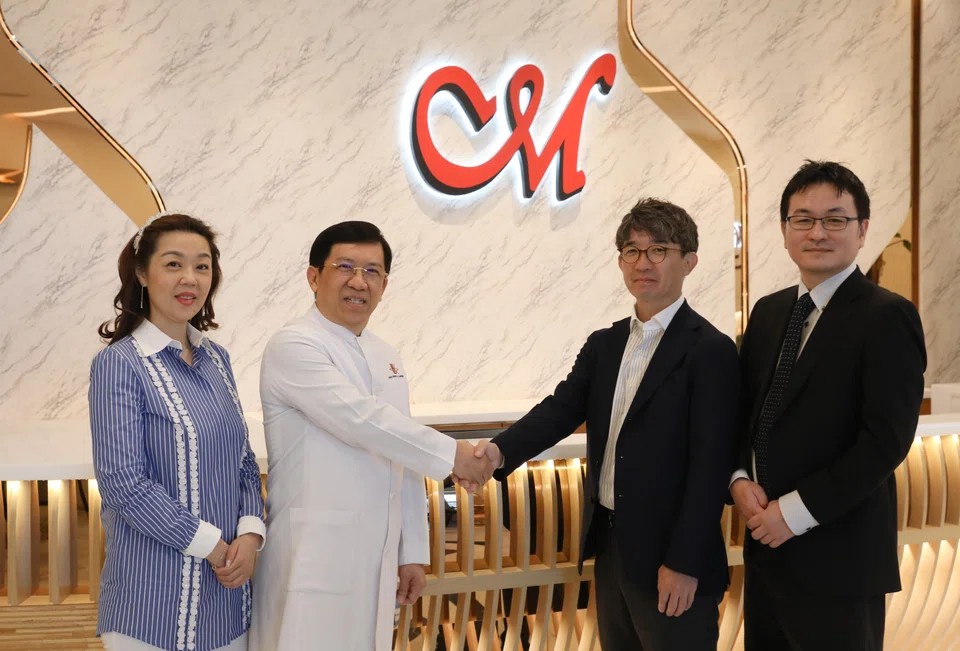
[SINGAPORE] Specialist chain Royal Healthcare aims to open its first overseas medical centre in Tokyo or Osaka by 2028, after being acquired by Japanese trading firm Sojitz Corporation.
In May, Sojitz announced that it had taken a majority stake in Royal Healthcare for an undisclosed sum. While the group has other healthcare investments, this was its first investment in speciality care.
“As Sojitz is familiar with Japan’s business landscape, this will aid our market entry there,” said Royal Healthcare co-founder and chief executive officer Wendy Huang in an interview with The Business Times.
Royal Healthcare has existing medical concierge centres in Cambodia and Hong Kong, but these do not offer medical services. Instead, they recommend the company’s services in Singapore and facilitate the necessary travel arrangements.
Huang and her husband, cardiologist Michael Lim, founded Royal Healthcare in 2002 as a heart clinic in Mount Elizabeth Hospital, with just four employees.
The company has since evolved into a multi-speciality medical group – though still based in a single location – with a wide range of premium specialist care services. Beyond cardiology, its services include oncology, orthopaedics, advanced imaging, health screening and aesthetics.
The group positions itself as a “one day, one stop” centre, where patients can receive consultations, diagnostic tests and treatment plans in a single visit.
Revenue was S$33 million for FY2024, marginally up from S$32 million the year before, with Royal Healthcare aiming for 10 per cent growth in FY2025.
Asia’s growing healthcare demand
Headquartered in Tokyo, Sojitz is a global trading and investment group with a range of businesses, including manufacturing, selling, importing and exporting various products.
It invests and operates across sectors such as cars, chemicals, consumer goods and energy, both in Japan and overseas.
It entered the healthcare industry as a distributor of medical equipment, and then ventured into public-private partnerships for hospitals. The first was in Turkey in 2017, followed by one in Australia in 2021, and a memorandum of understanding for another in Uzbekistan in July 2024.
In these partnerships, Sojitz builds the hospital and runs the non-medical operations – such as infrastructure maintenance – while the government oversees the provision of medical services, including hiring and training of staff.
The group then saw an opportunity to expand its healthcare portfolio in South-east Asia, said Masaki Ishiguro, assistant general manager of Sojitz’s healthcare department.
The region’s ageing population means a growing demand for healthcare services, he noted.
Sojitz looked at more than 100 healthcare companies before identifying Royal Healthcare as a possible target, sometime in early 2024.
Royal Healthcare’s size – with just a single centre – appealed to Sojitz. As the group had only a preliminary understanding of medical operations, said Ishiguro, it wanted to start smaller and then scale up, rather than manage many assets from the start.
Seeking a strategic partner
Prior to Sojitz’s acquisition, Huang and Dr Lim fully owned Royal Healthcare.
The company has been courted by various investors over the years. In 2017, Singapore-based healthcare-focused private equity firm Quadria Capital took a significant investment.
But some time later, Quadria exited and the couple bought back their shares. They could not share details, as they had signed non-disclosure agreements.
“When Sojitz came along, they reassured us that they were not looking at a short or medium-term exit… they wanted the business to continue and grow for a long time,” said Dr Lim.
This fit what the couple wanted: a strategic partner that was willing to commit resources and work with them to grow the company for the long haul.
“We were happy with the state of the company as it was,” Dr Lim said. “But whether we would let go of (part of) our stake would depend on the right partner and the value they could add.
“It’s not just about putting money into the company, which a lot of private equity funds can do.”
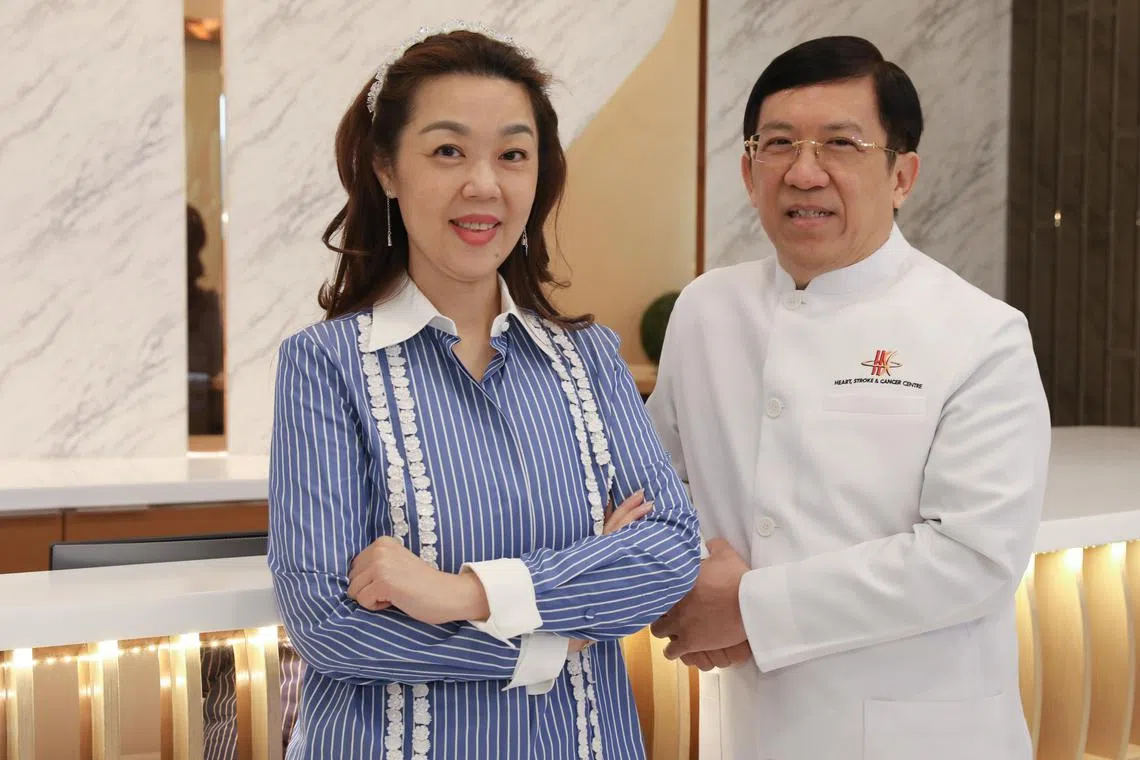
Sojitz’s long-term view also fit the couple’s wish to ensure that Royal Healthcare’s legacy would be preserved, even after they retire.
With Sojitz onboard, they were reassured that their 80 employees – some of whom have been with the company for a long time – would be taken care of. This includes one of their children, Steph, who joined as an operations and business development manager in 2024.
Following the acquisition, Huang and Dr Lim continue to oversee Royal Healthcare’s operations as CEO and medical director, respectively.
Sojitz will send three staff from its Tokyo headquarters to join Royal Healthcare’s management in Singapore on a permanent basis: a chief administrative officer, a business development head and a corporate governance head. Two will join in August, and one in September.
Leveraging each other’s strengths
With Royal Healthcare, Sojitz can acquire experience in managing and operating speciality healthcare services, said Ishiguro.
The company can also help Sojitz evaluate the feasibility of other healthcare projects, such as investing in specialised hospital and clinic groups in Asia.
Said Dr Lim: “We have deep knowledge and understanding of the healthcare market, and constantly keep pace with research and development across the whole spectrum of medicine.”
On its part, Royal Healthcare can benefit from Sojitz’s network of partners, such as Japanese medical service equipment providers, noted Huang.
For instance, Sojitz is looking at bringing new medical technology from Japan to Singapore, to increase Royal Healthcare’s repertoire of services.
Royal Healthcare is currently evaluating the use case for a major Japanese manufacturer’s cancer risk assessment tool.
As for going overseas, Royal Healthcare intends to expand in Asia in the next three to five years, starting with Japan. Other possible markets include the Philippines and Indonesia.
It also intends to set up overseas medical concierge centres in other Japanese cities, the Philippines, Indonesia and Dubai.
TRENDING NOW

Philippine power giant First Gen rebuffs foreign offers, plans up to US$2.6 billion in expansion

Once staunchly pro-China, Malaysian Chinese businesses are now distancing themselves from Beijing

Nearly half of Singapore workers put in at least six unpaid hours a week: survey

Vietnam’s data-centre investment rush faces reality check on power and site constraints

