


Sun rising for Singapore businesses breaking into Japan market
From on-demand transport to fresh-juice vending machines, home-grown players bring their innovations to this traditionally tricky market
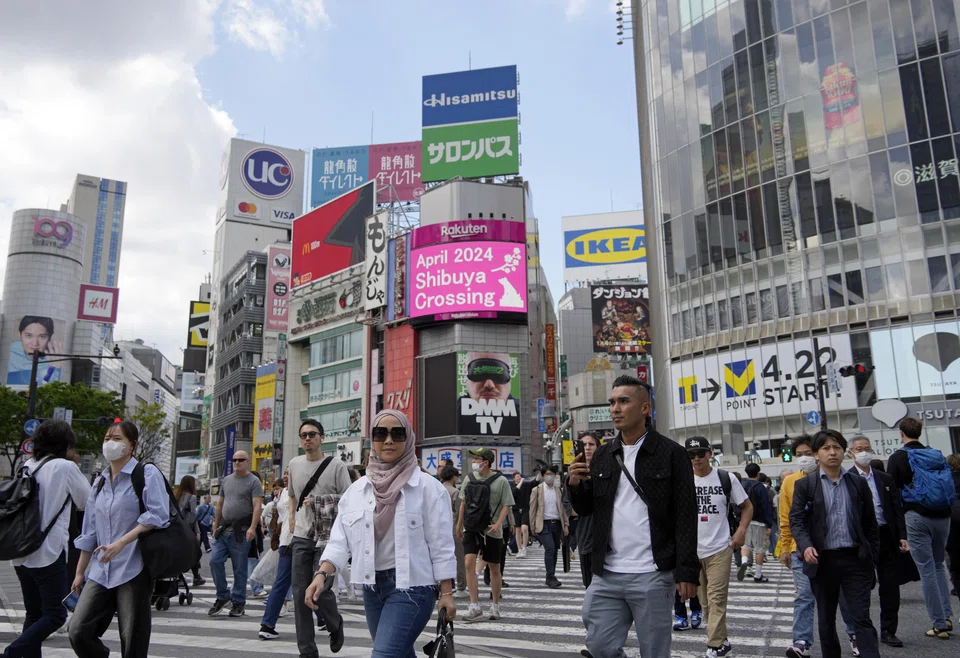
JAPAN has traditionally been a tough market to enter – but that has not put off some Singapore firms.
“Singapore companies are increasingly drawn to Japan and keen to leverage its established business ecosystem to collaborate with other multinational firms there,” said Yeoh Mei Ling, director of North-east Asia and Oceania at Enterprise Singapore (EnterpriseSG).
This is as Japan has grown more open to foreign investment, and its business environment has improved in recent years, she added.
Despite being a developed market, Japan has “immense potential” for growth, especially in the digital and green economy, noted Yeoh.
The country is tapping technologies such as artificial intelligence (AI) and blockchain to revitalise traditional sectors from manufacturing to healthcare. Singapore companies can work with Japanese players to co-develop solutions, she said.
Japanese corporates are also seeking solution providers for decarbonisation, as the country accelerates efforts to become carbon-neutral by 2050.
Still, market entry remains tricky, with cultural differences being the greatest barrier, said Yeoh. She urged Singapore companies to heed Japanese business etiquette, adding: “They must also be patient and cultivate a good relationship with their Japanese counterparts, before diving straight into business agreements and deals.”
Even in such a developed economy, some Singapore companies have found niches of their own.
Swat Mobility: On-demand transport in a ski village
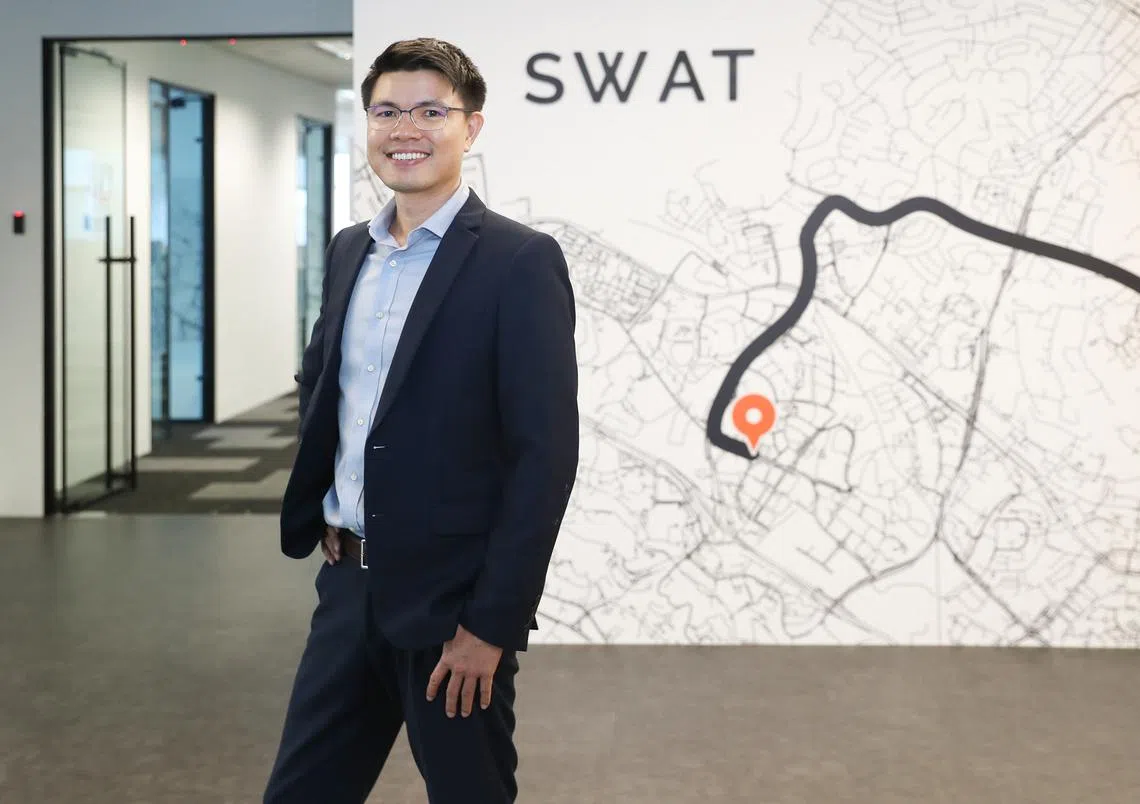
Mobility tech startup Swat Mobility entered Japan to serve ageing passengers, but its latest inroads are for ski tourists instead.
Established in 2016, the startup offers on-demand ride-sharing, using AI-driven route optimisation technology to pool passengers.
This can help in ageing societies such as Japan, not least in rural areas which lack drivers due to urban migration, said Jarrold Ong, Swat’s chief executive and co-founder.
“This has resulted in very poor service levels for the elderly living there – they don’t have many mobility options to even go to the supermarket, hospitals or clinics,” he noted.
But the mountain village of Hakuba – known for its ski resorts – faced a different problem altogether.
With Japan’s post-pandemic reopening in late 2022, Hakuba needed to improve its public transport services to handle an anticipated influx of foreign tourists.
It put out a call in an open innovation initiative held by its prefecture, Nagano, which matches corporates to municipalities to solve local issues.
Swat answered the call, leading to a three-month pilot of an on-demand minibus ride-sharing service in December 2022.
“Previously, most people had to ask the hotel (staff) to manually arrange the transport for them... there were not many options to get around,” said Ong.
Using Swat’s app, tourists can book rides between designated points around Hakuba. More than 4,800 bookings were made during the trial, with over 12,000 passengers.

From big cities to rural areas
The Hakuba project adds to Swat’s deepening footprint in Japan, with the company providing on-demand transport services in over 40 cities in the country.
Swat first tried to enter Japan in 2018, but struggled to make headway. Besides the language barrier, Japanese companies tend to be more traditional and “very cautious in trying something new”, said Ong.
While rural areas were the original target, Swat’s first operations ended up being in big cities.
It partnered Willer – one of Japan’s largest bus operators – to provide on-demand ride-sharing in the Shibuya area of Tokyo in 2019. Its next partnership was with Japanese cable operator J:Com, providing on-demand work transport for its employees in Nerima, Tokyo, and Sakai, Osaka.
Swat’s solutions have since been selected for both proof-of-concept trials and full-scale launches in smaller towns and cities such as Toyono, Osaka, and Kaga, Ishikawa.
This has given the company greater visibility, allowing it to venture into further-flung places such as Hakuba, noted Ong. EnterpriseSG has also linked the company up with the Japan External Trade Organization (Jetro) and local governments.
“Rural areas typically require you to work with the city government, and with a much smaller, traditional bus company,” he said. “So... you need to have some sort of track record to play in that segment.”
Following the pilot in Hakuba, Swat’s minibus sharing service was extended to the summer to serve residents and domestic tourists during the off-season.
The service was renewed last December for a second winter and has since been extended to run throughout the year, till March 2025.
Improvements have also been made after feedback. Tourists can now specify if they need larger vehicles to transport luggage or wheelchairs, and the service’s route now has 108 pickup points, up from 29 previously.
Less & Co: Upcycling bread and vegetables into artisanal beverages
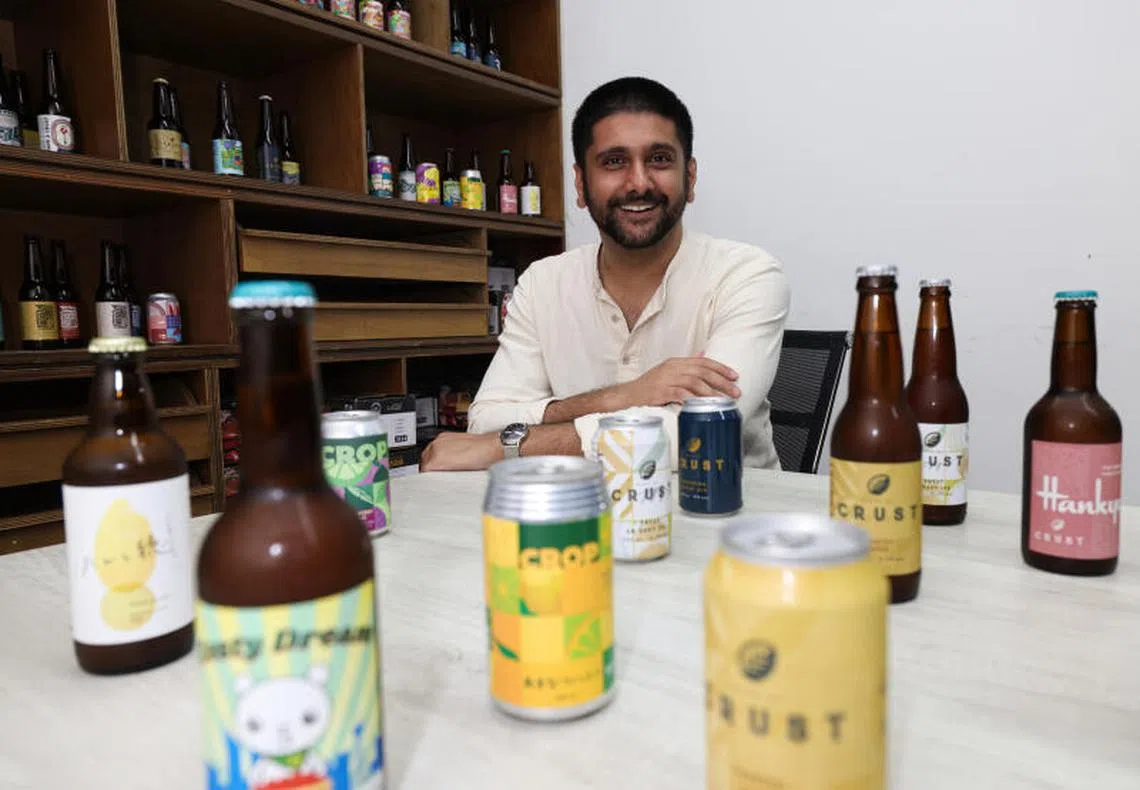
In late 2020, after more than a year of turning surplus bread into artisan beer, Travinder Singh was deciding where to make his first overseas foray. For reasons of both demand and production, he decided upon Japan.
On the demand side, as Singh put it: “Culturally, (the Japanese) love beer.”
Japan accounts for about 10 per cent of Asia-Pacific’s S$220 billion beer market, and has a large consumer market with a population of over 120 million.
As for production, Singh said: “Policy-wise, the Japanese were also trying to look for more solutions on reducing food waste.”
“In more mature markets, (where) they have a really good farming and manufacturing culture, they will understand what we do a lot faster, because they have an affinity to the food that is produced or grown,” noted Singh.
“Therefore they will want to not waste it, and maximise it as much as possible.”
Upcycled brews
Singh founded Crust, a line of artisan beers made from surplus bread and other ingredients, in 2019.
After deciding to enter Japan, he took part in various programmes there in early 2021, such as the Global Innovation Alliance Tokyo, Hack Osaka and Startupbootcamp Osaka. With the aid of EnterpriseSG, he also connected with Japan’s agriculture ministry and Jetro.
“From very early on, Japan was quite receptive to what we were doing, and the idea behind it. We then started doing a lot of proof of concepts,” said Singh.
Using unsold bread from a Japanese bakery chain, he created his first products there: a lager in 2021 and a pale ale in the third quarter of 2022.
In 2022, Singh decided to expand into non-alcoholic beverages, which were growing popular with millennials and Gen Z consumers.
He created Crop, a line of sodas made with fruit peels and pulp, with the first proof-of-concept beverage launched in December 2022. This was a sparkling water drink made from the peels of a Japanese citrus fruit known as amanatsu, sourced from cutting and processing factories.
Crop’s first beverage in Singapore was launched in March 2023: Mulberry Lime soda, upcycled from waste lime peels and pulp from a juice manufacturer.
Singh also explored using vegetables to brew beer. In 2023, the company launched a beer made from surplus tomatoes from farms in Kyushu.
Up till early 2023, Singh’s beverages were available in Tokyo, Osaka and Kyushu, in convenience stores such as Natural Lawson, food and beverage outlets and hotels. They were also available on Japanese e-commerce site Oisix.
Licence to brew
Previously, Singh worked with a third-party manufacturer in Japan. But in early 2023, he stopped production – and therefore, sales – in the country, because he wanted the company to obtain its own alcohol beverage wholesaler licence instead of relying on its manufacturing partner.
Crust’s Japan subsidiary acquired this licence in May 2023. In July, Singh created Less & Co, a group for both the Crust and Crop brands.
The startup aims to raise S$2 million in a pre-Series A funding round – which Singh hopes to close in end-May – before relaunching production in Japan.
The aim is to launch Crust beers and break even within six to nine months, before launching Crop drinks.
Beyond Japan, the company wants to build a presence in the Asia-Pacific region.
Said Singh: “At least for the next three to five years, we want to focus on Apac, because one-third of all the food which is usually produced or manufactured for human consumption is wasted, and 50 per cent of the amount is actually in Asia.”
iJooz: Making a splash with fresh juice
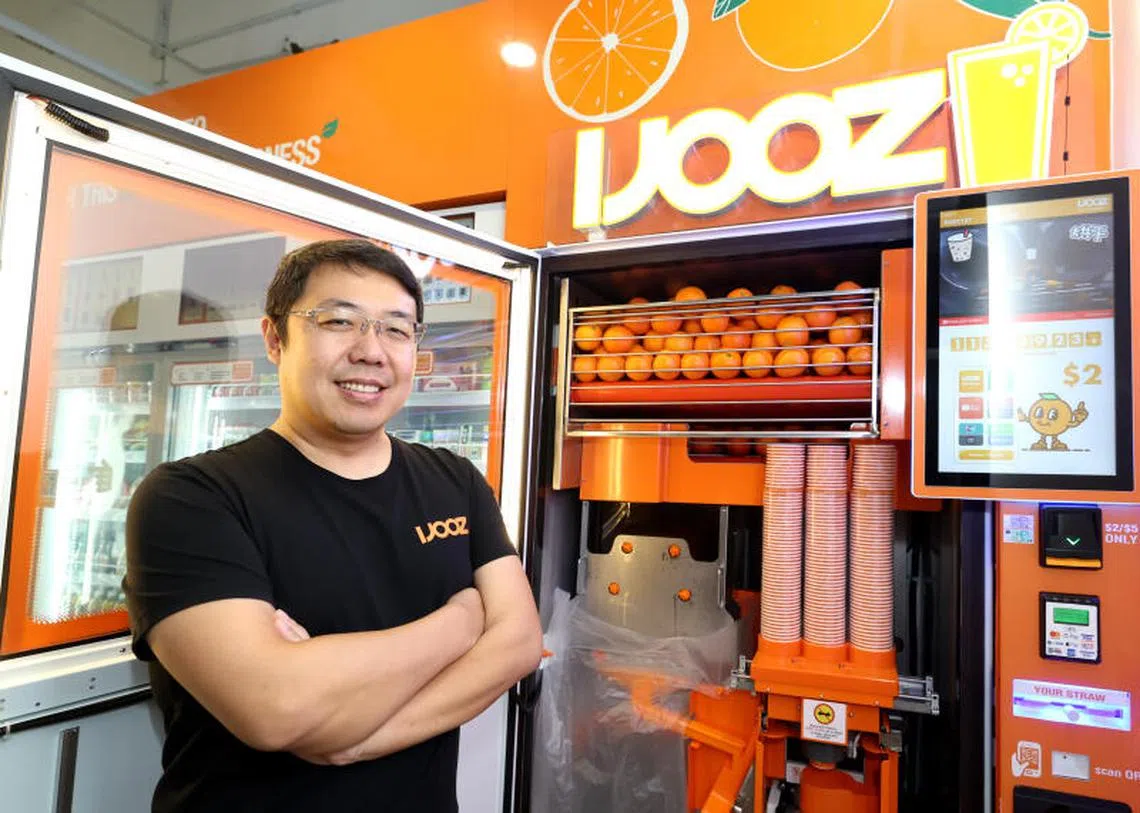
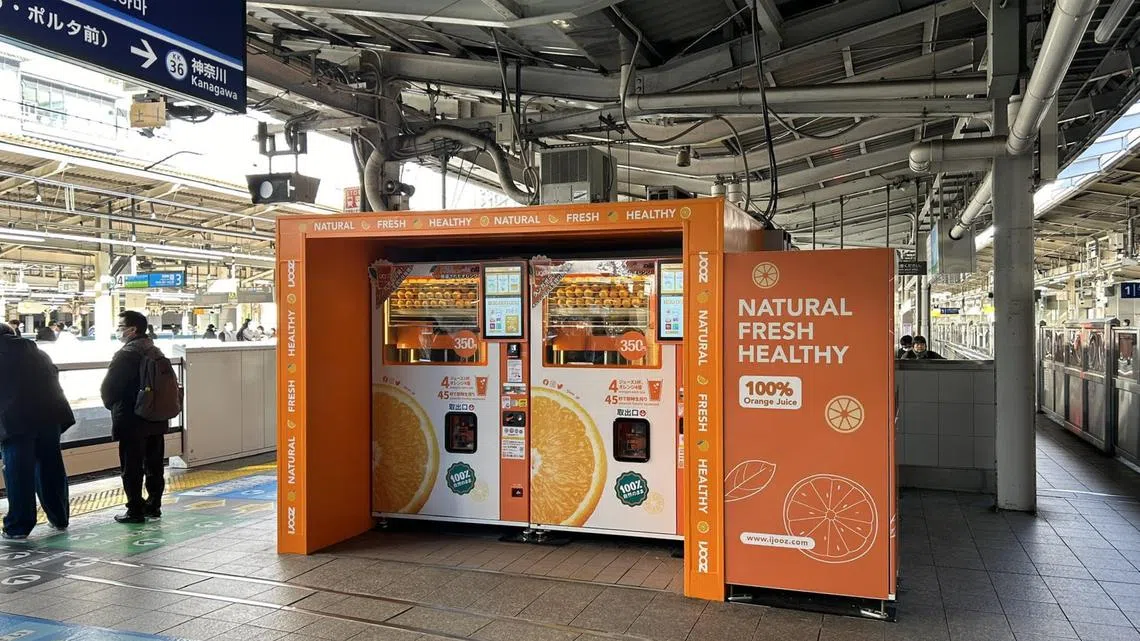
Beverage vending machines are ubiquitous in Japan – yet fresh fruit juice is rare, as iJooz CEO Bruce Zhang noticed during a trip in 2022.
Said Zhang: “There were almost no fresh juice shops in Tokyo. I saw only one shop in Osaka, and the price for a cup was 690 yen (S$6.10).”
This spurred him to take iJooz to Japan last April, with its machines providing freshly squeezed cups of orange juice for just 350 yen.
iJooz’s machines have a storage capacity of 600 oranges, with stock levels being tracked digitally.
Since the launch of its first vending machine in 2016, the company has expanded via franchises in over 30 countries. Japan marks its first attempt at direct sales abroad, with warehouses in nine cities and a 70-strong team there.
There are just under 500 iJooz machines in Japan now, with the company hoping to treble this by end-2024.
The company has been looking to expand abroad as its Singapore business has reached saturation, with over 1,100 machines.
iJooz’s overseas franchises generally have 100 to 200 machines. Yet Japan “is a very big market”, said Zhang – which is why iJooz decided to have direct operations there.
Japan’s ubiquitous drink vending machines – about five million, compared with Singapore’s 30,000 – also mean that its consumers are familiar with the concept, and thus more receptive to iJooz’s machines, compared with Singaporeans.
Existing vending machines are not in direct competition, since iJooz offers freshly squeezed juice instead of packaged drinks, added Zhang.
Reaping economies of scale
Since 2019, iJooz has been working with EnterpriseSG in its overseas expansion efforts. In 2022, when EnterpriseSG learnt of iJooz’s Japan plans, it connected the company with partners and government authorities there.
With such support, iJooz formed tie-ups to place its machines in Haneda Airport, Japan Rail train stations, shopping malls, hotels, car parks and Don Quijote supermarket outlets.
Over the past year, sales in Japan have grown 10 to 20 per cent each month, said Zhang. He added that iJooz’s Japan operations turned profitable in April.
Sales in Japan are almost equal to Singapore levels, and Zhang hopes to treble the amount next year.
The large market means that more machines are needed to reap sufficient economies of scale. Zhang estimates it takes 200 to 300 machines in Singapore to lower operational costs, but it could take 1,000 in Japan.
In the next five to six years, he hopes to have 100,000 machines in Japan. iJooz is setting up machines in another city, Fukuoka, with operations to start in May.
The company’s success in Japan has also given it confidence to venture into other large markets – with the United States being its next planned destination for direct operations. Currently, iJooz has only a franchise in Silicon Valley, with more than 20 machines.
“People said we could do operations only in a small country,” said Zhang. “But now that we (are in) Japan, they see us as a big company. We proved that we can do operations in Japan, so they believe we can do (operations) in the US and other big countries.”
iJooz is looking for partners in the US to break into the market next January.
TRENDING NOW
Government to bring forward raising of retirement age, give employers more financial support to create flexi-load jobs

Indonesia stocks suffer worst plunge in nearly 30 years as MSCI proposes standalone status

If Europe goes to war, the fallout will be felt in East Asia
Natural gas to stay for the long haul beyond 2050: Singapore International Energy Week panellists

