


Standing strong in an overcrowded fitness industry
Home-grown yoga brand Yoga Movement recently opened its 10th studio in Singapore and is now gearing up for overseas expansion

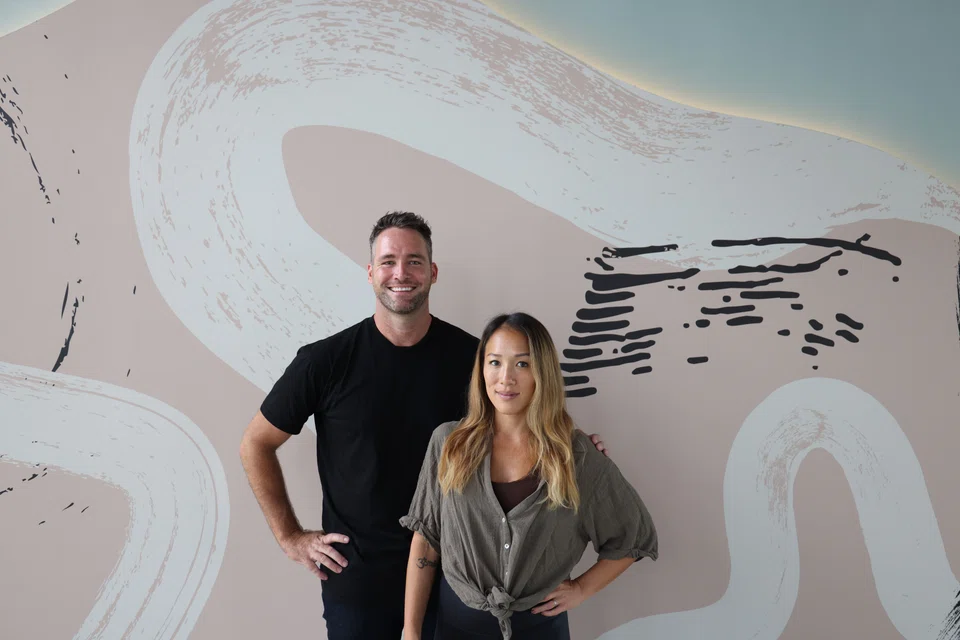
AMID a recent spate of gym closures in Singapore, home-grown fitness boutique chain Yoga Movement has been busy expanding its footprint.
In September, the brand opened a studio in Alexandra, bringing its total number of branches in the city-state to 10.
It is also gearing up for its first foray overseas, having received a significant capital investment under new parent company Move Repeat.
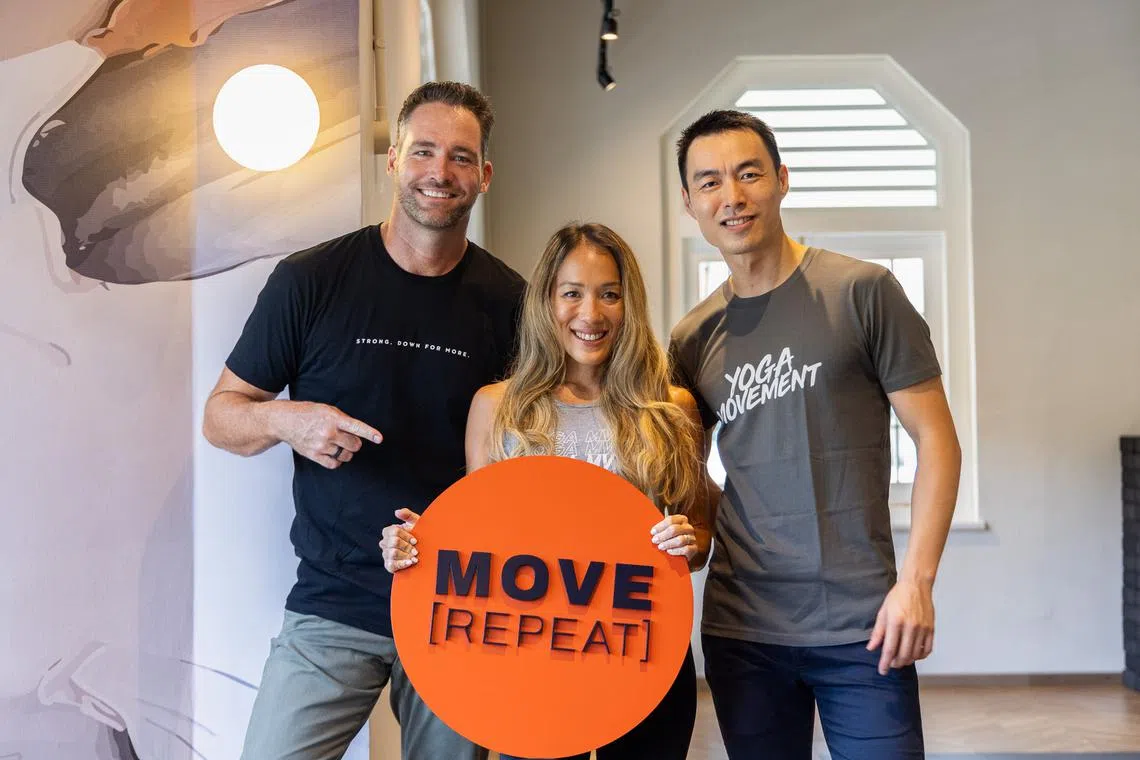
Move Repeat is a fitness lifestyle collective set up in March 2023 by Yoga Movement’s founders Peter Thew and Alicia Pan, as well as Hong Kong-born businessman Allen Law. Yoga Movement was founded in 2012, and has since grown to become one of the largest boutique yoga chains in Singapore today.
The establishment of Move Repeat alongside Law marks a new phase of growth for the Yoga Movement brand as it seeks to expand in Asia, said Thew in an interview with The Business Times. He is married to Pan.
The couple had previously rejected investment offers from venture capital and private equity firms – including Law himself – as they wanted to retain complete ownership of the brand.
Downtime during the Covid-19 pandemic, however, gave them the opportunity to reconsider the merits of taking on an external investor. “We realised that (our family ownership) was the limiting factor to the growth of the business,” said Thew.
“So we thought it was a really good time to bring in a trusted partner to give us some confidence to go into those markets, to invest into the group, without risking our family position each and every time we did so.”
That led to the decision to rope in Law – who is the chief executive officer of hospitality firm Park Hotel Group – and establish parent company Move Repeat, which Yoga Movement is parked under.
With Law on board as an investor, Move Repeat has an eight-figure reserve which will be used to develop, acquire and distribute fitness brands. Both Thew and Pan collectively hold a 60 per cent stake in Move Repeat, while Law owns the rest.
Staying profitable throughout the pandemic
Like other gyms and fitness studios, Yoga Movement took a hit during the Covid-19 pandemic, with its revenue dipping by 90 per cent in 2020.
Despite this, the brand managed to remain “cash positive and profitable” every year since 2020, said Thew.
He attributes this to maintaining a sound and consistent pricing strategy. During flash sales for instance, discounts for Yoga Movement’s packages never go beyond 20 per cent off original prices on a per class basis.
“Very rarely do we go out and say that we’re (offering classes) at 50 per cent or 30 per cent off…we never blowout our discounts,” he added. This comes as more players are pushed to engage in price wars to attract members amid an increasingly oversaturated fitness landscape.
The brand also continued to price its virtual yoga classes at the same rate as its in-person studio classes during the circuit breaker period, a time when it was forced to pivot to digital platforms.
“You cannot compete on price; it’s a race to the bottom,” said Thew, pointing out that such heavy undercutting by other players has a “compounding effect” on the fitness industry.
“We implore our industry to maintain their value especially in the current world, where health and wellness is as much of an asset to anyone in their personal balance sheet.”
With the gradual rebound of the fitness sector, Yoga Movement’s total revenue has since recovered to surpass pre-pandemic levels. It recorded about S$7.9 million in revenue for FY2023, up from S$7 million in FY2019, with part of this growth derived from the opening of six new branches from 2020 to 2023.
Not overcommitting to rent has also been pivotal to keeping the brand in the black, said Thew, adding that rents across Yoga Movement’s 10 studio locations are currently “manageable”.
This includes its flagship outlet at Orchard and three others at Tanjong Pagar, Circular Road and Robertson Quay – central areas which have seen a higher incidence of gym and fitness studio casualties of late.
“We understand the ceilings of our business; we work to a very clear per-square-footage cap on rent. If it’s a high rent, we just don’t accept it,” he added.
In October, Pure Fitness and Pure Yoga shut its Suntec branches due to insufficient members; in August, personal training gym Fenix Fitness at Raffles Place was placed under provisional liquidation after owing S$5 million to 400 creditors.
Diversifying its fitness portfolio
Even as new fitness brands continue to gun for a slice of the fitness pie in Singapore, Thew is confident of Yoga Movement’s place here in the long run – and has next set his sights abroad.
He hopes to open Yoga Movement’s first overseas outlet in Hong Kong by the second quarter of 2024, given the market’s existing fitness culture and ecosystem of “quality big-box gyms and decent smaller-sized boutiques”.
Malaysia, Thailand and Indonesia are also possible future targets, he added.
Beyond growing the Yoga Movement brand, Move Repeat is looking to diversify its fitness portfolio further.
In March 2023, the group signed an exclusive franchise agreement to bring Australian fitness chain Strong Pilates to Singapore. Two Strong Pilates studios have since opened at OUE Downtown and Orchard; a third will open in Holland Village in January.
There are plans to have 11 Strong Pilates branches across Singapore by 2027, said Thew.
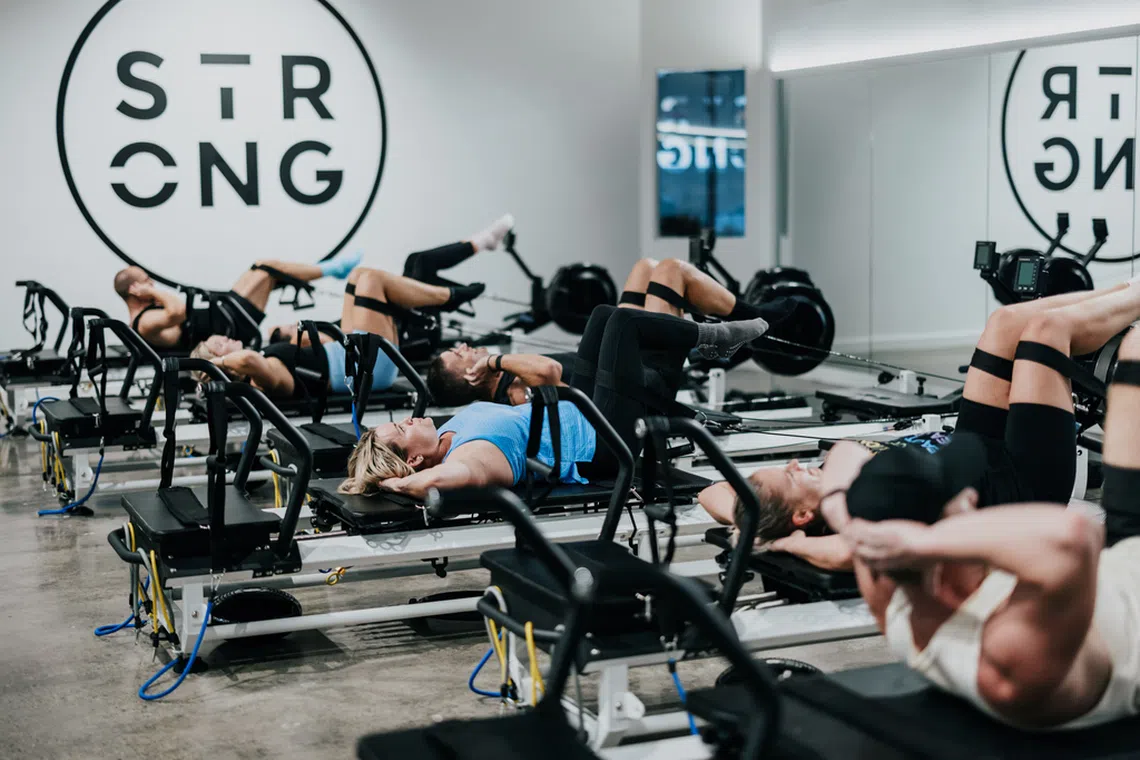
The group also intends to expand its range of fitness offerings in 2024 to rhythmic cycling and strength conditioning.
This will be done either by acquiring existing home-grown brands with a foothold in the market, or partnering with an international brand via a franchise agreement.
Such an approach would be preferable to developing a new brand in-house, said Thew.
“Anecdotally, if you look at the market, boutique brands that have tried to (offer) multiple modalities have really struggled to do so…the spin space, for instance, is quite saturated in Singapore, and we don’t believe Singapore necessarily needs another spin brand.
“Our priority would be to pick up really good home-grown Singapore brands or operators.”
TRENDING NOW
ComfortDelGro appoints two new independent directors

Once staunchly pro-China, Malaysian Chinese businesses are now distancing themselves from Beijing

NoonTalk needs continued financial support from CEO Dasmond Koh, auditors warn
DP Architects sets the benchmark for sustainability disclosure and design

