


T-Up scales up SMEs with the minds of scientists, researchers

SINCE its launch nearly two decades ago in 2003, the Technology for Enterprise Capability Upgrading (T-Up) programme has seen more than 1,000 scientists seconded to over 1,000 small and medium-sized enterprises (SMEs).
Through this scheme, research scientists and engineers from the Agency for Science, Technology and Research (A*Star) are seconded to SMEs, where they share their expertise in research and development (R&D) and innovation projects.
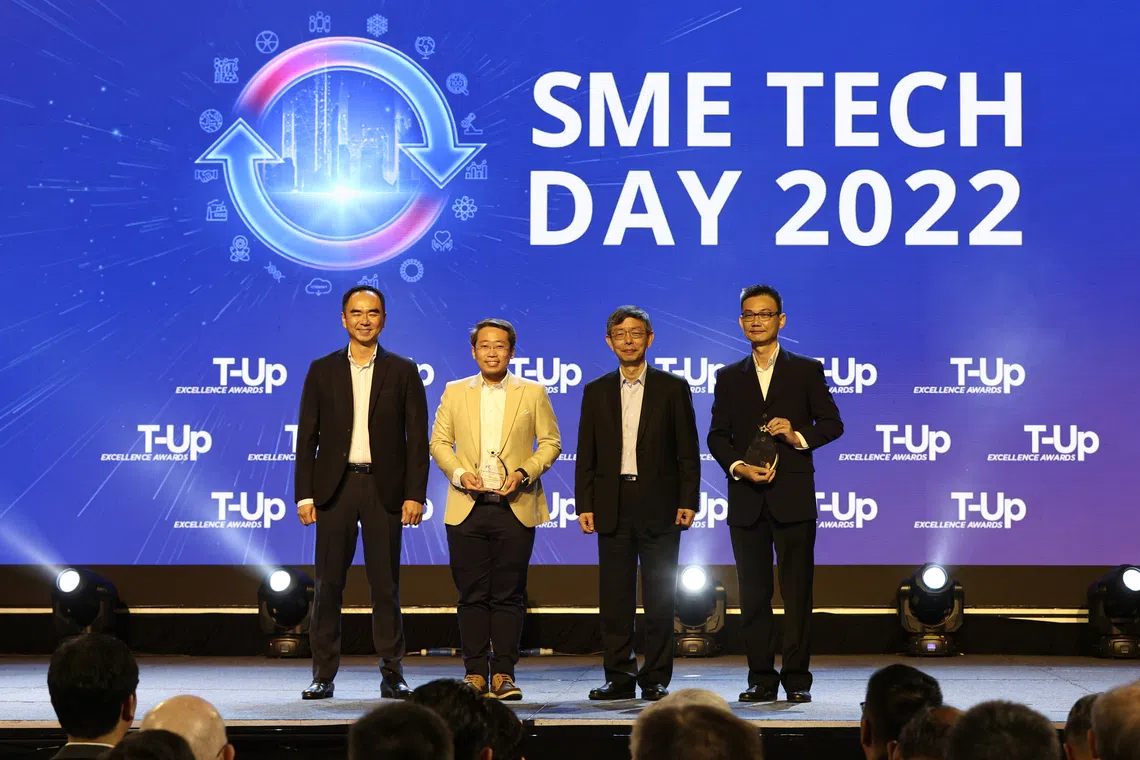
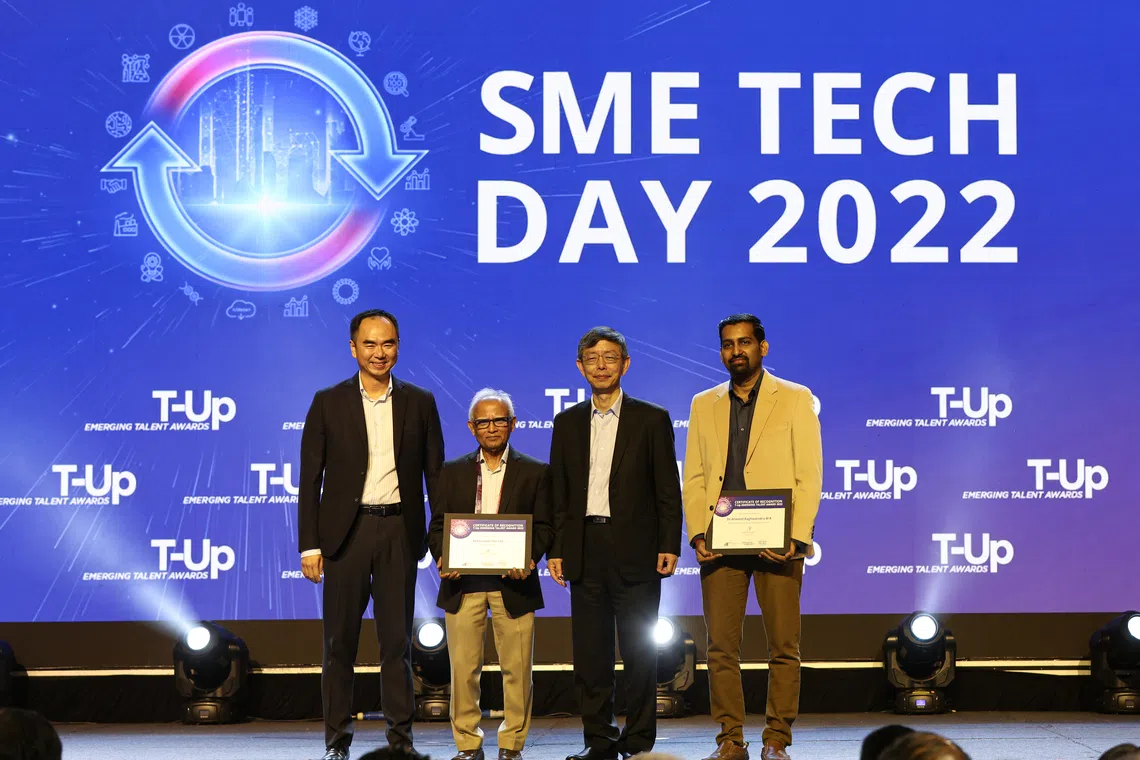
At the recent SME Tech Day event held in conjunction with the Singapore Week of Innovation and Technology last Friday (Oct 28), six researchers were recognised for their exceptional contributions under the T-Up Excellence Awards and Emerging Talent Awards.
The Business Times speaks to two of them – one from each of the categories – who are currently with the Advanced Remanufacturing and Technology Centre (ARTC).
Wireless charging solutions for cleantech company
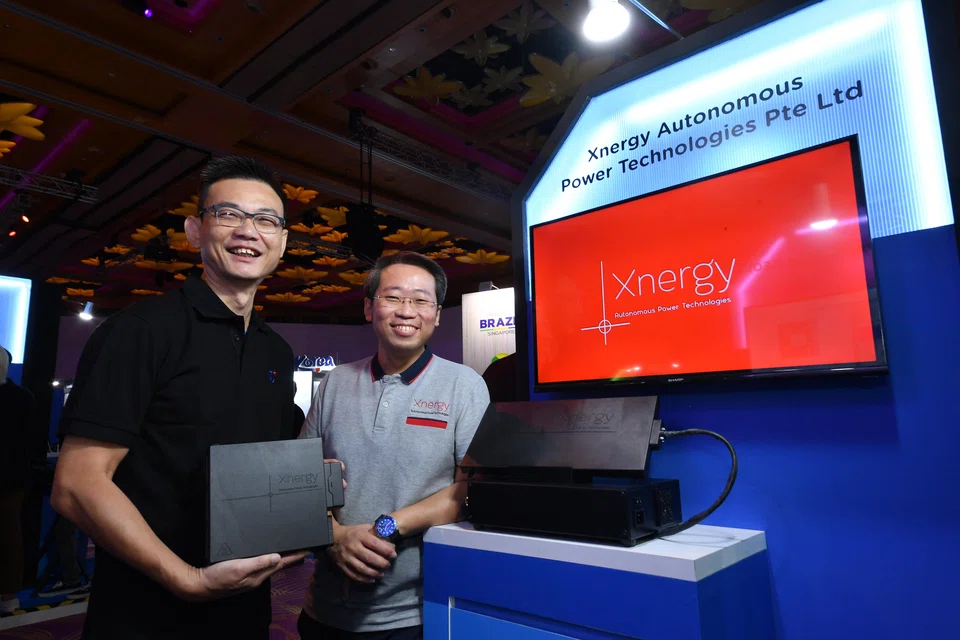
In an effort to help cleantech company Xnergy Autonomous Power Technologies develop wireless charging solutions for autonomous robots and vehicles used in Industry 4.0, Vincent Chuang – who joined ARTC in Dec 2018 – was seconded to the company for two years, from September 2019 to August 2021.
Xnergy makes wireless chargers and battery management systems for autonomous guided vehicles (AGV) and robotic applications. During his time there, Chuang led the redesign of Beyond Series – a universal wireless charger for industrial autonomous robots – helping to develop what was previously a lab prototype into a commercial product, and bring it to the market.
Chuang, who received the T-Up Excellence Award, was also instrumental in obtaining the CE certification – a marking that denotes conformity with the European health, safety, and environmental protection standards – for the charger.
The first unit of the waterproof and dustproof charger was sold to Infineon Technologies in 2020, said Chuang.
“It was a challenging and stressful experience for me, but I learnt a lot from Xnergy, and the team there was very helpful,” he said. “While I shared my mechanical engineering knowledge, they, in turn, taught me about electrical engineering.”
Other than Singapore itself, the charger has been sold overseas including to China, India, Malaysia, Thailand, Indonesia, Taiwan, South Korea, Spain, France, Germany, the UK and Malta. They are now also targeting sales in the Middle East, specifically in Israel and Saudi Arabia.
To date, about 1000 units of the charger have been sold, said the company’s solutions director Xavier Lim.
Lim noted that Xnergy, which now has about 35 staff – 80 per cent of them based in Singapore and the rest in Europe and China – has a mission to accelerate electrified mobility and the adoption of AGVs in a sustainable manner.
“Government agencies like A*Star and Enterprise Singapore always support local startups like us, and so we will continue developing innovative technologies. They also help us accelerate our capabilities, such as through T-Up, to scale rapidly and stay competitive in the global market,” he added.
After the successful launch of its first charger, Xnergy more than doubled the size of its technical team and created a new production department to scale the production. It is currently developing the second version of the Beyond Series charger.
Apart from the charger, Chuang also introduced innovative solutions to streamline Xnergy’s manufacturing processes for greater efficiency, including the use of 3D printing for prototype and fixtures testing.
Developing ultra-precision machines
With his research focus in the area of complex hardware-software integration and digitalisation of high-precision systems, Aravind Raghavendra, the technical lead at ARTC, was the perfect fit for Mikrotools, a micro precision machining company.
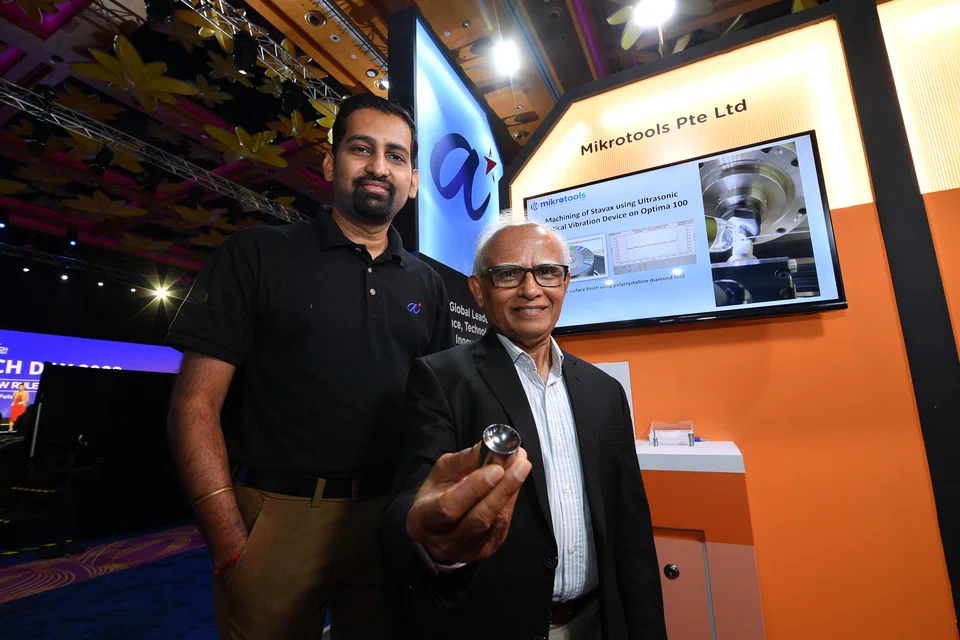
Seconded from December 2020 to September 2021, he led the development of a new machine with complex ultra-precision lathe machine tools (UPL) – which can be applied in the manufacturing of mirror-finish surfaces for areas such as optics, automobiles and space research.
The UPL machine, which took about nine months to develop, has an 8-picometer linear position resolution and a dual rotary measurement encoder system that guarantees an extremely high degree of accuracy, said Raghavendra, who was a recipient of the T-Up Emerging Talent Award.
“The kind of accuracy and precision you would see on this machine is in terms of picometers, which is a thousand times less than that of nanometres,” he said. “The more precise the machine is, the better the final product will be.”
Citing an example, Raghavendra pointed out that such high-precision machines are required in the making of contact lenses – which are made through specific moulding processes. To achieve perfect vision, the lenses need to have at least 10 nanometres’ accuracy in surface roughness and form, he said.
Coming to Singapore in 2008, Raghavendra completed his Doctor of Philosophy at the National University of Singapore (NUS), with his research focusing on improving the accuracy of computer numerical control machines.
He joined ARTC in 2015, where he initially developed manufacturing mechanical processes to repair aerospace components – working with British multinational aerospace, defence and power systems group Rolls-Royce as well as Singapore Aero Engine Services.
While at Mikrotools, Dr Raghavendra led the complete development cycle of UPL starting with mechanical, electro-mechanical as well as software aspects.
Prior to finishing the development of the machine, the team had already received their first order from the Indian Institute Of Technology in Palakkad, India.
“(UPL) is quite a challenging product. In Asia, there are not many players developing these kinds of machines. In Europe, there are a few (players), while the main players are from the US,” he noted. “Mikrotools is one of the pioneers and is prominent in bringing out this technology made in Singapore.”
Recently, there has also been demand for the UPL coming from South Korea and Russia, said Mustafizur Rahman, a director at Mikrotools.
The company, which started in 2003, is now looking to expand abroad with plans to establish offices in China, India and the US, he added.
The company has already recorded some S$1.4 million worth of sales for its products this year. It hopes to hit S$2 million by the end of the year, and S$8 million next year, said Dr Rahman, who has 36 years of mechanical engineering teaching experience at NUS.
“We have an optimistic projection for our products in the next two to three years,” he noted. “Development and R&D in the initial stages require heavy investments and we’re lucky we got a few government grants to help us. The T-Up scheme, in particular, was wonderful. It helped us a lot.”
TRENDING NOW

Nvidia reinstates Jensen Huang as CEO; Trump says move poses no national security risk

Beyond the greenback, Vietnam’s big borrowers turn to Asian-currency bonds

Indonesia’s coal tycoon Low Tuck Kwong replaced as Bayan Resources president-director

Six workers file employment claims against Crystal Jade Food Manufacturing

