


Tong Seng Produce ramps up capabilities to meet Singapore’s growing rice stockpiling needs
Its flagship rice brand SongHe contributes more than 20% to total revenue each year, says managing director Jerry Ng
Koh Kim Xuan
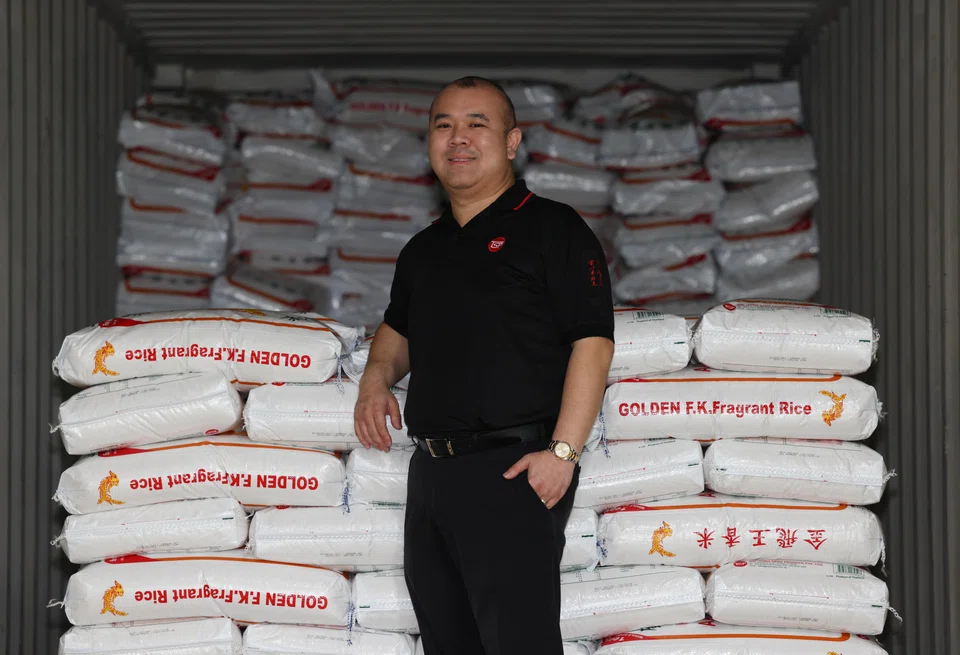
[SINGAPORE] Singapore’s heavy reliance on food imports has long informed the government’s food security initiatives to ensure adequate supply and stable prices in times of shortages.
One such strategy is the Rice Stockpile Scheme, which came into effect in 1968 and mandates that all private importers of rice hold an inventory buffer equivalent to twice their monthly imports.
Tong Seng Produce – known for SongHe, its flagship rice brand – has been contributing its rice imports to the national stockpile for the last 36 years.
There are challenges in doing so, said its managing director Jerry Ng. He noted that the mandated quantity to be stockpiled has risen to 3.5 kg for every kilogram of rice sold, from 2.5 kg per kilogram sold two years ago.
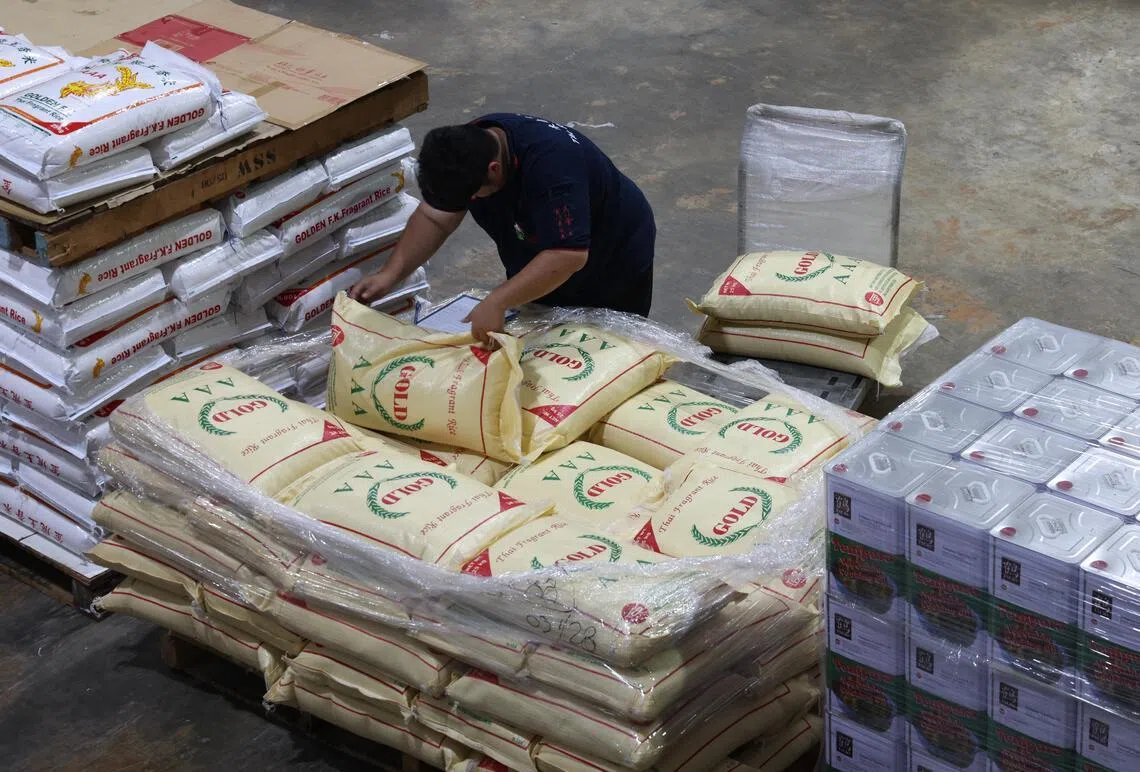
To cope with the greater demand and meet its stockpile obligations, the home-grown food wholesale company is upgrading its warehousing capabilities.
Tong Seng has invested in its warehousing infrastructure and technology, which includes expanding storage capacity and implementing management systems to “improve inventory visibility, efficiency and traceability”, Ng told The Business Times in an interview.
He added that these upgrades will also support its commercial operations.
While there are no direct revenue benefits, he said that stockpiling rice aligns with the company’s mission to be a “trusted supplier of rice for Singaporean families”.
“While maintaining a national rice stockpile comes with additional costs and operational commitments, we view it as an important responsibility,” he added.
A family business
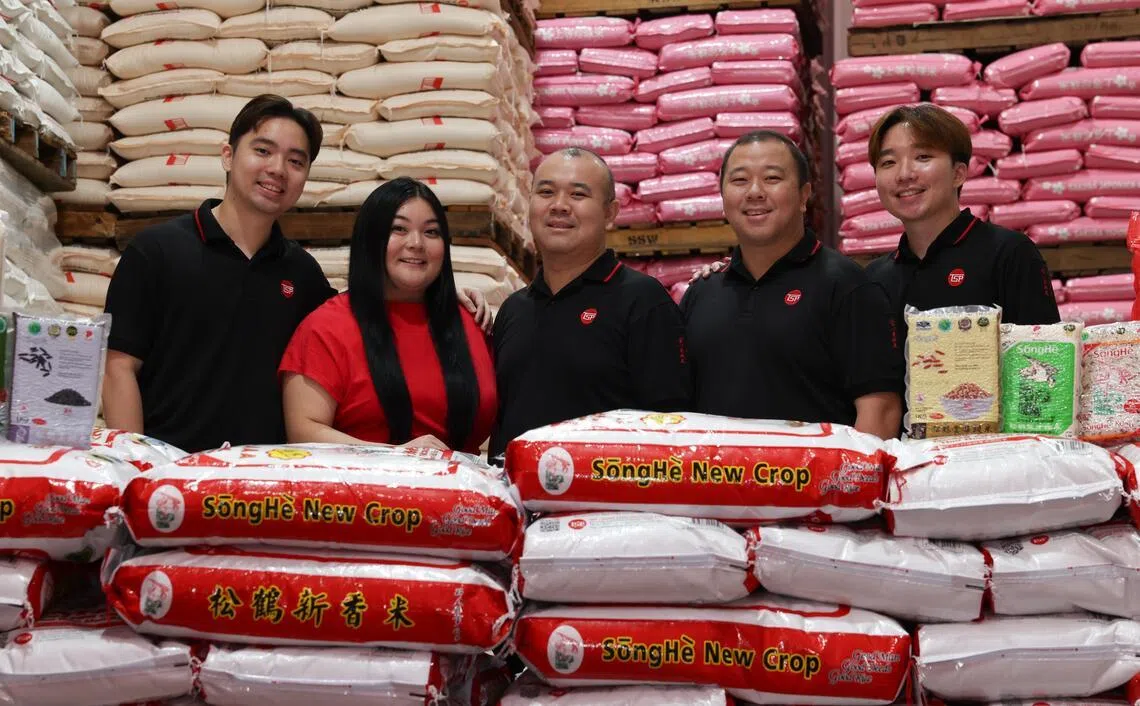
Tong Seng was founded by Ng Aik Cheng in 1990, and is now run by his six children – including Jerry Ng – who are in charge of different parts of the business.
Ally Ng is the business’ marketing director, Don Ng acts as the business development director, William Ng leads the warehousing segment, and Max Ng is in charge of operations at the company’s Cambodian rice mill.
The youngest, Wilson Ng, manages the export market segment.
Their father started off as a salesperson of a company that sold rice and distributed rice and dried goods to markets and minimarts.
Jerry Ng said that after his father had obtained a licence to import rice, he created SongHe and sold Thai Hom Mali rice – a premium type of Thai jasmine rice – door-to-door.
Unlike many rice importers at that time who used chemical fumigation to prevent rice quality from deteriorating, the elder Ng opted for a more expensive chiller facility to store the grains.
Today, Tong Seng has 10 chiller facilities at its Singapore warehouse, and one in Thailand.
The family business imports its products from 11 countries, including Vietnam, Japan, Myanmar, Thailand and the US.
Since 2024, Tong Seng has generated revenue growth of 5 per cent year on year, said Jerry Ng. About half of its top line comes from retail sales to supermarkets and online retailers, and the other half is from hotels, central kitchens and catering businesses.
SongHe is its best-selling product, said Jerry Ng, and it is among more than 70 brands ranging from cooking oil to sugar that are sold by the company. SongHe contributes more than 20 per cent to Tong Seng’s total revenue.
Other than SongHe, Tong Seng sells a variety of rice such as Komachi japonica rice (which is typically used for sushi) and Golden East Sun jasmine rice (which is imported from Vietnam).
Tong Seng started exporting rice to markets in Barbados and the Pacific Islands in 2024. The company has also begun re-exporting rice to Malaysia, Indonesia, Australia and Brunei, said Jerry Ng.
Producers, not just traders
With the second generation of leaders now at the helm, Jerry Ng said that Tong Seng aims to become a major rice producer – and not just an importer and exporter of the staple.
In 2024, Tong Seng entered a joint venture with its jasmine rice producer, a Cambodian rice mill, and vertically integrated its supply into the business.
The company now works with about a thousand farmers across roughly 2,000 hectares of land in Cambodia.
“That’s how we actually position ourselves, (so it’s) not only just about importing and selling. We are (also) doing the manufacturing ourselves,” Jerry Ng said.
Integrating the rice mill involves directly working and entering contracts with the farmers.
“Uplifting our farmers’ livelihoods is part of our plan. Ultimately, when farmers are willing to grow rice for us, we (will) have the raw materials to produce, manufacture and autonomously produce for importing and redistribution,” he added.
Expanding product offerings
In line with its new mission statement – “improving lives with every grain” – Tong Seng released SongHe Plus in May 2025.
The company claims it is Singapore’s first enriched fragrant rice that is aimed at improving consumers’ immunity. By blending regular rice with nutrients from various plant sources, the product offers zinc, folate, iron and fibre.
“We hope to produce more enriched rice products that (target) different health-conscious customers,” said Ng.
Decoding Asia newsletter: your guide to navigating Asia in a new global order. Sign up here to get Decoding Asia newsletter. Delivered to your inbox. Free.
Share with us your feedback on BT's products and services
TRENDING NOW

Once staunchly pro-China, Malaysian Chinese businesses are now distancing themselves from Beijing

Looking beyond looming CEO succession, should UOB potentially pursue a transformative merger?

Could stablecoins be the future of money?

Grab CEO’s wife Chloe Tong on life with Anthony Tan and finding her purpose

