

Tourist attractions can go digital, enhance efficiencies with step-by-step plan
 Add BT as a preferred source
Renald Yeo
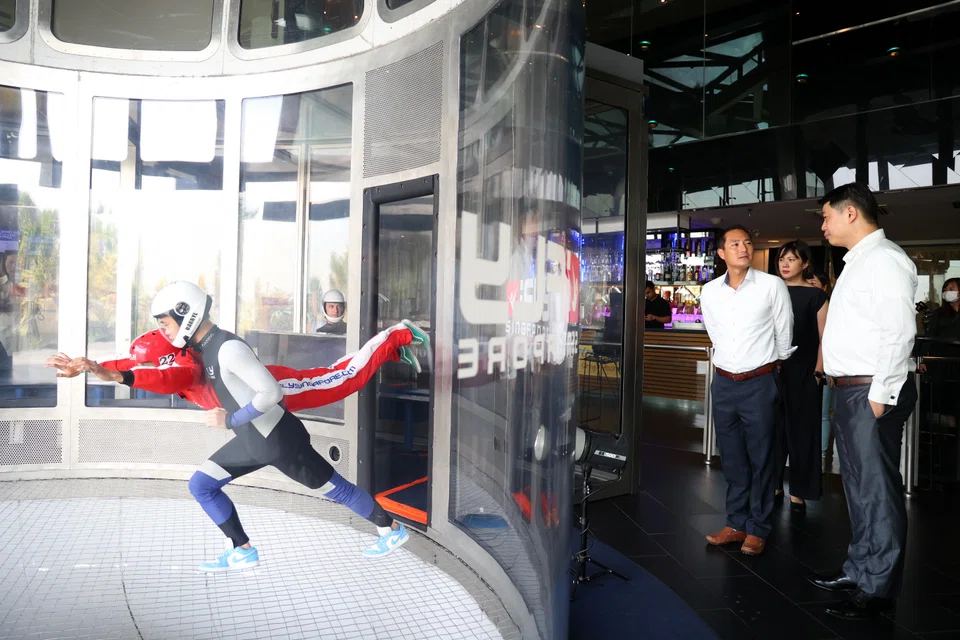
OPERATORS of Singapore’s 60-odd tourist attractions can get help to adopt digital solutions under a new government scheme aimed specifically at small and medium-sized enterprises (SMEs).
The Tourism (Attractions) Industry Digital Plan (IDP), jointly developed by the Singapore Tourism Board and Infocomm Media Development Authority (IMDA), was launched on Tuesday (Nov 7) at indoor skydiving operator iFly Singapore.
The IDP, which falls under the SMEs Go Digital programme, provides a step-by-step digital solutions road map that outlines key digitisation initiatives for attraction operators.
These include self-service ticketing kiosks, which enhance the customer experience by cutting wait times, while also reducing manpower requirements.
Attraction operators can also receive free digital consultancy and project management services from IMDA’s Chief Technology Officer-as-a-Service scheme.
The IDP focuses on three areas: customer service and engagement; sales and marketing; and sustainability.
Navigate Asia in
a new global order
Get the insights delivered to your inbox.
The IDP’s introduction is timely as Singapore’s tourism sector continues to recover from travel restrictions brought on by the Covid-19 pandemic, said Senior Minister of State for Communications and Information Tan Kiat How at Tuesday’s launch.
“The IDP is... customised so that it tries to meet the needs of different SMEs at different stages of digital maturity,” said Tan.
More than 20 sector-specific IDPs have been launched, and more than 90,000 businesses have been supported by the SMEs Go Digital initiative since 2017.
iFly’s chief executive officer Lawrence Koh told The Business Times that adopting digital solutions to improve sustainability would not only reduce carbon emissions, but could also bring about cost savings, too.
As most of its 32,000 square foot facility is air-conditioned, the company spends about S$40,000 to S$50,000 monthly on utilities for air-con usage.
With the aid of the IDP, iFly is trialling the use of software that dynamically adjusts a given area’s air-con temperature, based on the number of people present in the space.
It builds upon the operator’s existing data analytics tools that track and collate visitors’ data such as demographic profiles, footfall and visit time.
There are significant energy savings to be had by running the air-con at a warmer temperature in areas with lower footfall, Koh said.
iFly is aiming for a 20 per cent reduction in monthly electricity bills from air-con usage, which translates to more than S$100,000 in annual cost savings.
The operator has also implemented self-service ticketing kiosks with facial recognition features to automate visitor check-in processes.
When asked why SMEs should focus on sustainability efforts amid rising business costs and manpower shortages, Tan noted that they were not “mutually exclusive”.
“Many of the SMEs tell us that adopting digital solutions helps them to save cost,” he said.
For instance, by optimising their use of electricity, SMEs like iFly are able to reduce both business costs and their carbon footprint, he added.
Decoding Asia newsletter: your guide to navigating Asia in a new global order. Sign up here to get Decoding Asia newsletter. Delivered to your inbox. Free.
Copyright SPH Media. All rights reserved.

