
SGSME logo

Used gadgets find new lease of life

The CEO of IT asset disposition company CompAsia talks about its business model and the various obstacles the firm had to overcome.

Vivien Ang
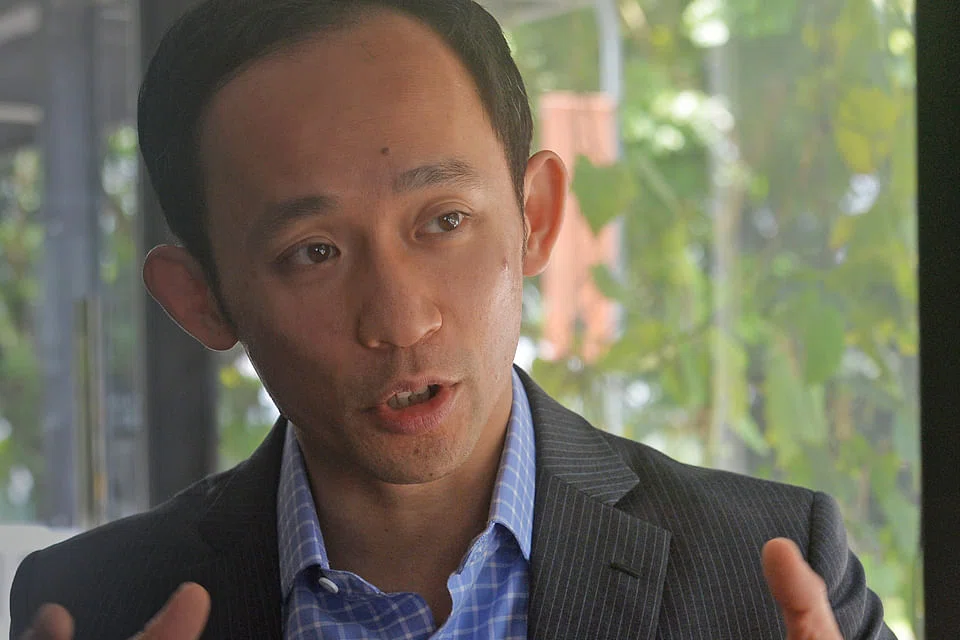
Vivien Ang

Published Mon, Jan 2, 2017 · 09:50 PM

    THROW a stone and chances are that you will hit someone who owns at least one electronic device. In fact, data from the Department of Statistics Singapore shows that subscription numbers for mobile phones in our densely populated city-state have steadily increased from about 6.9 million in 2009 to 8.2 million in 2015.

    The figure is higher than the Little Red Dot's population, which begs the question of the fate of these electronic devices after they are deemed obsolete - especially in this day and age where we change our handphones and computers like, well, we change our clothes.

    This is where CompAsia comes into the picture. Set up in 2012 with about five staff, the IT asset disposition (ITAD) company now has more than 30 employees and is on the expansion route. Sales numbers between 2015 and 2016 have also grown 10 times to be in the double-digit millions.


    CEO of CompAsia, Julius Lim, says: "Our company is headquartered in Singapore and we have subsidiaries in Malaysia and the Philippines. We see ourselves as a regional company."

    He adds that initially, the company would acquire used electronics gadgets and restore and repackage them to sell. However, the plan was not feasible in the long run as it was done on a small scale.

    Hence, after mulling over the situation, the CEO, who is in his mid-30s, decided to collaborate with corporations and mobile operators so that there will be a more constant stream of used gadgets received.

    Hence, besides partnering major telcos such as Celcom in Malaysia to obtain used phones, CompAsia launched a smartphone programme, ReNew+, in Singapore and Malaysia in November. It is an upgrade scheme which allows customers to trade in their used phones for a brand-new iPhone 7 with just a monthly fee of S$65 for a year, after which they can trade in that phone for any others after the older model is returned to CompAsia. When combined with the SIM-only plan, users can also save more money as compared to a two-year contract with telco firms.

    Mr Lim explains: "There has been a lot of interest in our programme, and we expect sales to pick up next year as we establish partnerships with more brick-and-mortar retailers, and increase our marketing efforts both online and offline."

    Besides the benefit of not being bonded to any telco firms, users can also choose to upgrade their phones to any brand every 12 months with just a one-off processing return fee.

    The programme ensures a constant stream of supply for the used gadgets from a customer base who will regularly upgrade their devices.

    However, Mr Lim says that as the volume collected increases, the demand side has to be developed as well.

    "So we have focused a lot of time and effort on building our brand, and we have a big group of followers on social media. We have a Facebook page to engage our consumers who are buying directly from us."

    SMEs in Singapore are some of CompAsia's customers and the firms can save 60-70 per cent off the devices as compared to buying it brand new.

    Moreover, CompAsia also offers a minimum one-year warranty for their products with an option to extend up to three years.

    However, the island-nation is still a stronger supplier of electronic products rather than a consumer.

    The firm obtains the used electronic items mostly from countries such as Singapore, Australia and Japan, refurbish and repackage them and sell it to other countries which include the Philippines and Malaysia.

    "Certain markets are stronger in the supply side, certain sides are stronger in the demand side . . . In Singapore, the consumer market is not as big, so most people are not looking to purchase used, refurbished items ... there is also a general perception that equates refurbished to second-hand or used," notes Mr Lim.

    He adds that consumers are much more receptive in emerging markets when it comes to refurbished products. "We were surprised at how a big market the Philippines is. We did our own analysis and we estimate that one in 12 phones sold there are used."

    Hence, CompAsia collaborated With Versatech International Phl to capture the secondary consumers electronic market.

    "The new ITAD refurbishing facility in the Philippines is custom-built like our Malaysian facility to undertake comprehensive ITAD services such as secure data removal in compliance with global standards for data cleansing and environmental regulations," says Mr Lim.

    The firm has its sights set on expanding into the rest of Asia - starting with Indonesia, Thailand and Vietnam - with an SGX listing to top it off.

    Looking at how the firm has grown, it is hard to believe it started out as a fledgling eBay store with just a vision to revolutionise the IT asset disposition and refurbishment industry in Asia.

    When asked about his decision to leave Boston Consulting to strike it out on his own, Mr Lim laughs and replies: "I realised I have more interest in managing my own business."

    He adds that he feels that there is a market for refurbished electronic products and that there is no real leader in this space. And he decided to take the plunge as he always felt a calling to set up his own business.

    However, the road was initially fraught with challenges.

    The first hurdle was to overcome consumers' perception of second-hand products.

    "Not many people appreciate refurbished smartphones and there is a negative connotation attached to it. For example, in emerging markets, like Malaysia or the Philippines, second-hand gadgets are usually sold in a mom-and-pop store with no proper support."

    Hence, the company embarked on the task to change that view. "We ended up spending a lot on social media as the company believes that social media presence and influence is key to penetrating the consumer market."

    As a safety measure, the company data wipes every device it gets with an industry leading software. Secondly, the device is tested to ensure that it is fully functional before it is resold.

    Mr Lim adds that the company also has a no-questions-asked return policy, so that customers can purchase with peace of mind.

    The other challenge was when Mr Lim had to raise funds for the startup. Many venture capitalists were approached but to no avail as not many could understand the value of a business in refurbished products. "We did not raise the funds in the end, but we have come a long way these past four years. I think that (the experience) instilled in me the discipline of making sure we did not just simply spend."

    CompAsia is also more than just a business; it is also on a green mission to reduce growing toxic electronic waste (e-waste). This is crucial as the National Environment Agency in a 2015 report stated that Singapore generates about 60,000 tonnes of electrical and e-waste a year.

    "We also educate our customers that when you buy something that is refurbished, you are actually giving the device a second life, thereby extending the life of the device, reducing e-waste in this world. It is a green message, which we strongly believe in. So, we try to recycle and reuse as much as we can," Mr Lim points out.


