


When family businesses get together

Renald Yeo

WHEN first-generation business owner Cheng Liang Chye started to think about a succession plan for his food manufacturing company, he did not seek out a lawyer or consultant.
Instead, he turned to his fellow business leaders, whom he had gotten to know via UOB’s The Business Circle initiative.
“I started to think about my succession, like whether my children would be interested in joining me in my business,” said Cheng, managing director of SMC Food 21.
Through The Business Circle, he met next-generation business leaders – some of whom were about the same age as his children.
“I could understand more about how they feel when they actually join their family (business), and that actually gives me some ideas as to how I can entice my children to want to come and join me in the future,” Cheng said.
He had met these young leaders during a networking and study trip to Thailand in September, led by The Business Circle.

The two-day event also saw the official launch of The Business Circle in Bangkok, attended by more than 230 business leaders from across the region.
For Jonathan Quek, part of the second-generation management of food and beverage company BreadTalk Group, September’s trip was a “good opportunity to network” with potential partners.
“I’m beginning to get my hands involved in Thailand, where we have close to 40 outlets,” said Quek, who joined the family business in 2020 and currently heads the group’s bakery division.
By invite only
Open only to UOB’s family business clients on a by-invitation basis, The Business Circle aims to bring together next-generation Asian business leaders, UOB’s head of group commercial banking Eric Lian told The Business Times.
“We are increasingly seeing a second generation of our customers taking over the business; they are now looking at taking over from their father or their grandfather, and they want to bring it to the next level,” said Lian.
Membership is free and programmes – such as classes and workshops – are sponsored by UOB. For overseas trips, travel and accommodation costs are self-borne.
Training programmes are provided in partnership with institutions such as Singapore Management University’s (SMU) UOB-SMU Asian Enterprise Institute, and Thailand’s Chulalongkorn University.
The initiative began in Singapore in 2019, but subsequent pandemic-era restrictions curtailed most of the planned activities. Yet even as activities took a pause during Covid-19, membership continued to grow organically.
As of October, more than 1,000 family business leaders across Asia have joined as members, including some 400 from Singapore. The initiative is also active in Malaysia, Indonesia, mainland China and Hong Kong, though it will only be officially launched in those markets next year.
The Business Circle differs from other initiatives by the trade associations and chambers in its exclusive nature, and the focus on family businesses, said Lian.
“What is really different is that our group is by-invitation-only,” he added. “I think that it’s a bit more focused, a little bit more curated for what they need.”
The exclusive nature of the group also provides reassurance to members. It helps to know that UOB would have screened other members before inviting them, said Cheng: “Those (members) are probably valuable customers of UOB, so immediately you could actually take away some of the mistrust that we usually have when we do business, especially overseas.”
For BreadTalk’s Quek, the initiative has helped in two key areas on which the company is focusing: digitalising its finance and human resource functions, and improving supply chain efficiencies.
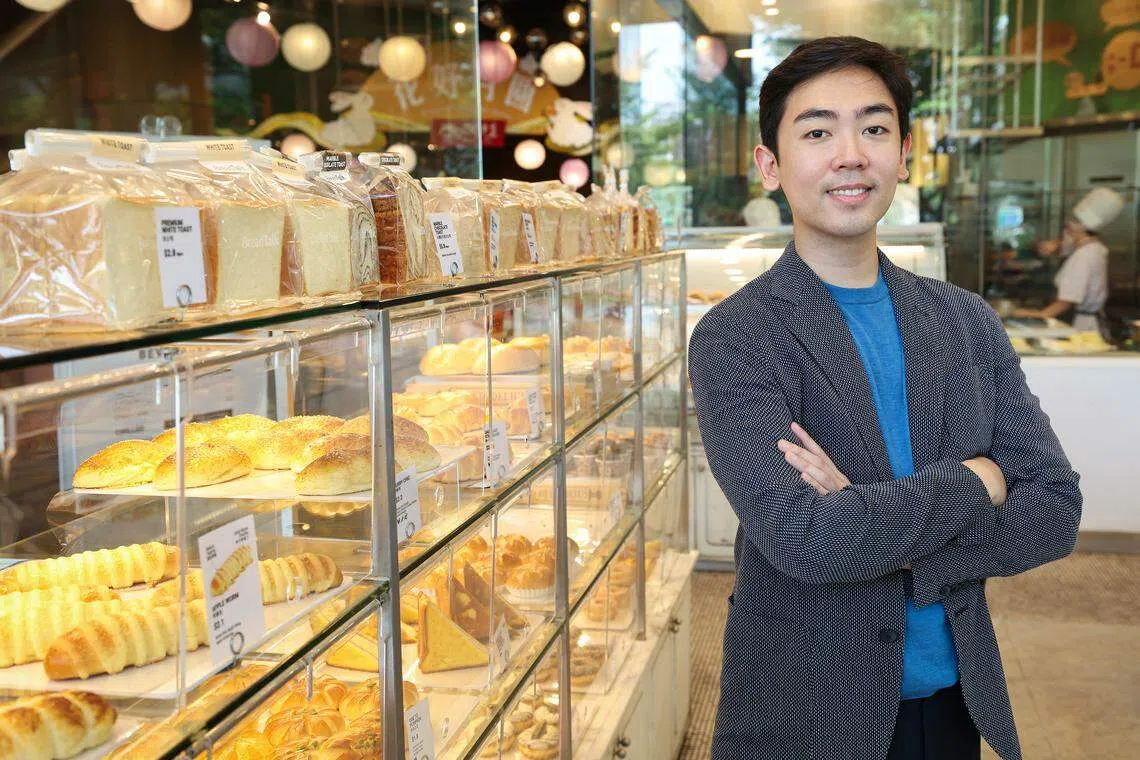
The seminars and panel discussions with industry leaders during the Thailand trip helped him get his head “wrapped around the whole digital transformation journey”, Quek said.
Though discussions are still in the exploratory stage, contacts made from networking opportunities during the trip might also lead to the eventual purchasing of sugar from Thai producers for use in Singapore, which would mean cost savings, he added.
UOB, meanwhile, benefits from the initiative in a few ways. As business leads get generated from the networking sessions between its existing clients, the bank has a good chance of being tapped to finance new projects that result.
The initiative is also a way for the bank to “institutionalise the relationship” with the next-generation leaders, who may not have the same sense of loyalty to a single bank, Lian said.
He added: “We have banked with the first generation, the founders – the second generation thinks very differently.
“I think it is important for us to continue engaging the next-gen of leaders as they bring their businesses to the next level; and then also to institutionalise the relationship, because we want to make sure that it goes beyond the founder and the succession is important for us.”
TRENDING NOW

Indonesia’s coal tycoon Low Tuck Kwong replaced as Bayan Resources president-director

Nvidia reinstates Jensen Huang as CEO; Trump says move poses no national security risk

Six workers file employment claims against Crystal Jade Food Manufacturing

AI agents and stablecoins a ‘perfect match’ for payments, says MetaComp’s Tin Pei Ling

