


Is your business ready to deal with ransomware?
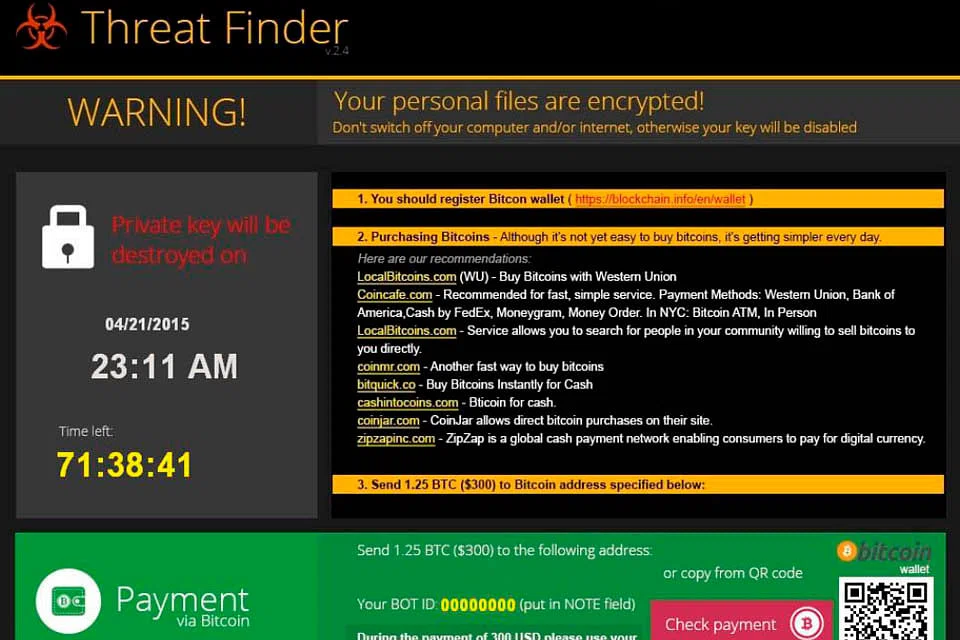
ANGLER, Cryptolocker and Locky - no, you'll not find them in Pokemon Go, but you may find them on your computer one day. They're types of ransomware which is emerging as a major threat to individuals and businesses alike.
Ransomware, a type of malware that encrypts data on infected systems, has become a lucrative option for cyber extortionists. When the malware is run, it locks victims' files and allows criminals to demand payment to release them. The standard rate is about US$500, often paid in bitcoins, though we've seen much higher.
Cybercriminals behind ransomware campaigns typically focus their attacks in wealthy countries and cities, hence Singapore is becoming a real target.
Despite ransomware being on the rise, many businesses, particularly SMEs and smaller businesses, are not prepared to tackle them when they happen. According to a recent survey conducted by Trend Micro, close to 50 per cent of Asia-Pacific businesses surveyed indicated that there was no security awareness programme in their organisations. And only 25 per cent of companies are confident that they are fully prepared for cyberattacks, despite close to 50 per cent anticipating a targeted cyberattack in 2016.
Ransomware can be distributed in a variety of ways and this makes it difficult to protect against because, just like the flu virus, it is constantly evolving. Today's ransom seekers play dirty, so you need to make sure your organisation is prepared.
SMEs and smaller businesses are often more likely to suffer an attack because small businesses' IT teams can be low on resources and can rely on outdated technology due to budgetary constraints. Thankfully, there are tried and tested ways to protect such businesses against ransomware attacks. Security software is essential, however, you can't rely on it alone. A proper ransomware protection strategy requires a three-pronged approach, comprising education, security and backup.
Education is essential to protect your business against ransomware. It is critical that your staff understands what ransomware is and the threats that it poses. Provide your team with specific examples of suspicious emails with clear instructions on what to do if they encounter a potential ransomware lure (that is, don't open attachments, if you see something, say something, etc). Consider conducting formal training on a regular basis to inform staff about the risk of ransomware, new strains of attack and other cyberthreats. When new employees join the team, make sure you send them an email to bring them up to date about cyber best practices. It is important to ensure that the message is communicated clearly to everyone in the organisation, not passed around on a word of mouth basis.
Antivirus software should be considered essential for any business to protect against ransomware and other risks. Ensure your security software is also up to date and keep all business applications patched and updated in order to minimise vulnerabilities. Some antivirus software products offer ransomware-specific functionality that monitors systems to detect malicious activities.
If ransomware is detected, the software has the ability to block it and alert users. However, because ransomware is constantly evolving, even the best security software can be breached. This is why a secondary layer of defence is critical for businesses to ensure recovery in case malware strikes: backup.
Modern backup technologies use snapshot images, preferably independent of each other, so as to be recoverable on their own without depending on the previous or next backup in the "incremental chain", which is a reference to the traditional and antiquated backup technologies of the last decade. This independence allows the deletion of the corrupted image from the set of differential images, thereby enabling the customer to recover from the latest recovery point; which could be as recent as five minutes in the past. Furthermore, as these images are stored natively in a virtual format, they can be booted up and configured within minutes, effectively nullifying the ransomware threat.
Cyber extortionists using ransomware are a definite threat to today's businesses, large and small. However, a little bit of education and the right solutions go a long way. Keep your business safe and give your nerves a break. To sum it up, knowledge spreading and security software can help you avoid cyberattacks. Patch management is essential. Be certain that your software is up-to-date and secure. In the end, it is that all-important backup that will help you pick up the pieces when all else fails.
TRENDING NOW

Nvidia reinstates Jensen Huang as CEO; Trump says move poses no national security risk

Beyond the greenback, Vietnam’s big borrowers turn to Asian-currency bonds

Indonesia’s coal tycoon Low Tuck Kwong replaced as Bayan Resources president-director

Six workers file employment claims against Crystal Jade Food Manufacturing

