

Some businesses may pass on costs from local qualifying salary hike, but impact likely ‘limited’


Elysia Tan &
Renald Yeo
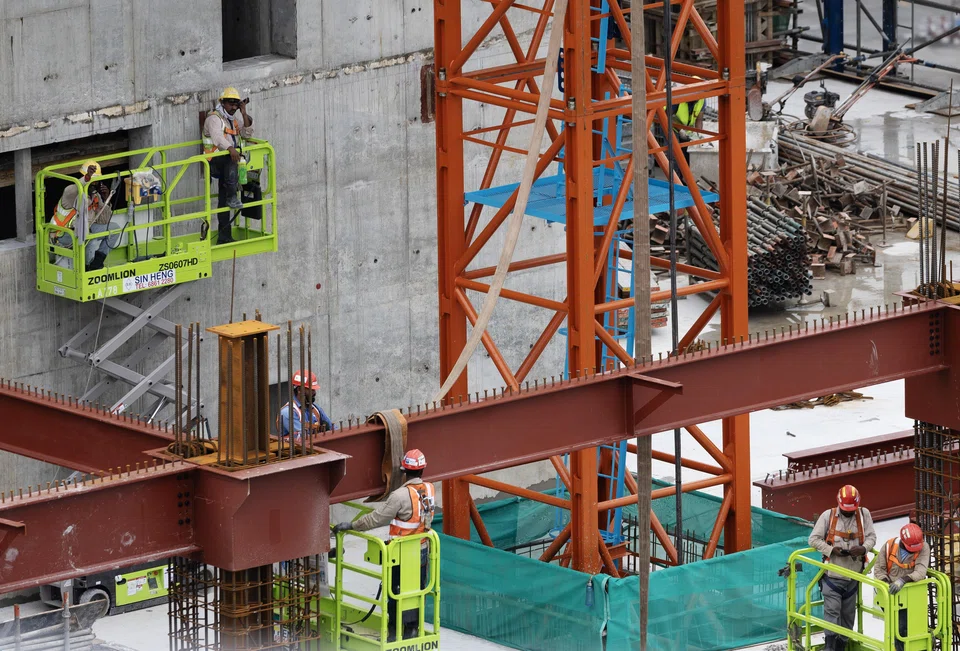
THE higher minimum salary that employers of foreign workers must pay local employees, which kicks in Jul 1, may cause some smaller businesses to pass on higher manpower costs to consumers, observers said.
But the overall impact of this higher local qualifying salary (LQS) may be limited, because few full-time workers’ salaries are below the new minimum, they added. Instead, businesses that rely more on part-time local hires could be hit harder.
“I may pay part-timers S$9 per hour, but with LQS, I either have to increase the part-time pay, or make the person work longer, which they may not wish to do,” said Ang Yuit, president of the Association of Small and Medium Enterprises (Asme).
In last Friday’s Budget speech, Finance Minister Lawrence Wong announced that the LQS will be raised to S$1,600 from S$1,400 now for full-time workers, and to S$10.50 per hour, up from S$9, for part-time workers.
The LQS also determines how local employees count when calculating a firm’s work permit and S Pass quota entitlement.
In many sectors dependent on foreign labour – cleaning, security, landscape, lift and escalator, retail, food services and waste management – local employees are already paid more than S$1,600, or they will be, before the LQS rise kicks in.
This is because these sectors are covered under progressive wage models (PWMs), all of which prescribe starting salaries above S$1,600 by Jul 1, observers noted.
Occupational progressive wages, also above S$1,600 when the new LQS takes effect, are also mandated for administrators and drivers across sectors.
“Workers in these sectors typically earn above the LQS threshold, hence the revision does not necessitate a wage increase for them,” said Justin Lim, partner, head of outsourcing (Singapore) and head of corporate secretarial (Apac) at Mazars in Singapore.
No PWM, potentially higher costs
Sectors which hire foreign workers but are not covered by PWMs are more likely to see manpower costs rise, observers said.
In a Singapore Business Federation survey, an above-average proportion of firms in construction and civil engineering – as well as retail, real estate, hotels, restaurants and accommodations – said that an LQS hike would contribute to foreign manpower challenges, noted DBS economist Chua Han Teng.
Yet even without PWMs, many businesses already pay local workers above the new LQS.
These include local tech manufacturers, even small and medium-sized enterprises (SMEs), said Singapore Computer Society president Sam Liew.
Singapore Logistics Association chairman Dave Ng said that logistics businesses, too, are unlikely to see cost increases as salaries are mostly on a par – or higher – than the new LQS.
Drivers and administrative staff are covered by occupational progressive wages. Warehouse assistants – a key part of the sector – are not, but are typically paid above LQS levels, both on a full-time and part-time basis.
Full-timers get monthly salaries of “at least S$2,000”, Ng said.
One factor keeping salaries above mandated minimums is competition for labour.
At Expand Construction, locals are usually engineers, or in supervisory, administrative or managerial roles, and are therefore paid more, said its chairman and managing director Von Lee.
“We are already paying more than S$2,000 at least,” he added, noting staff shortages require competitive salaries.
But even as the LQS increase may not directly affect wages for many companies, it may have an indirect signalling impact, Lee said.
“The minimum qualifying salary will always give people the impression that the salary has to be adjusted higher and higher. So, for example, even if I pay S$2,000, I think the staff would expect to get a bit more.”
Passing on costs
Whether businesses pass on costs to customers depends on the nature of their business.
Where there are fewer alternatives, such as in specialised manufacturing or essential services, it is easier for businesses to raise prices without significantly affecting demand, said Mazars’ Lim.
“Conversely, in highly competitive markets such as retail or non-essential services, price sensitivity could limit the ability to pass on costs,” he said, adding that this encourages companies to absorb the increases, or find alternative efficiency gains to maintain margins.
Asme’s Ang expects SMEs to pass on any cost increases, especially as other cost pressures continue to depress margins.
Similarly, OCBC chief economist Selena Ling said: “If their profit margins are increasingly eroded, then it’s a case of pass on the costs to end-consumers, or go out of business.”
She noted that businesses have already been raising prices, though the reasons are opaque and may include tax hikes, higher input costs and manpower costs.
Mazars’ Lim said Singapore’s high levels of competition and relatively informed consumer base act as “a natural check on indiscriminate price increases”.
“Thus, while some sectors might experience a slight uptick in prices, widespread inflationary pressures from the LQS revision are unlikely.”
But Ling noted that while “the cost of the LQS hike may not be that significant in absolute terms”, it adds to other inflationary pressures such as ongoing PWM adjustments, tax hikes and higher water prices.
All this “may mean that headline inflation may take longer to subside”, she said.
TRENDING NOW

Olivia Lum, ex-CFO not giving evidence in their Hyflux trial
Bank on AI-resilient Singapore property via deep-value listed property groups
Positive pivot or premature? Analysts split on Keppel Reit’s S$610.9 million buy

Once staunchly pro-China, Malaysian Chinese businesses are now distancing themselves from Beijing

