

Time to rethink Singapore’s ‘30 by 30’ target for locally produced nutritional needs
Better decisions can be made without the pressure of an arguably unrealistic deadline

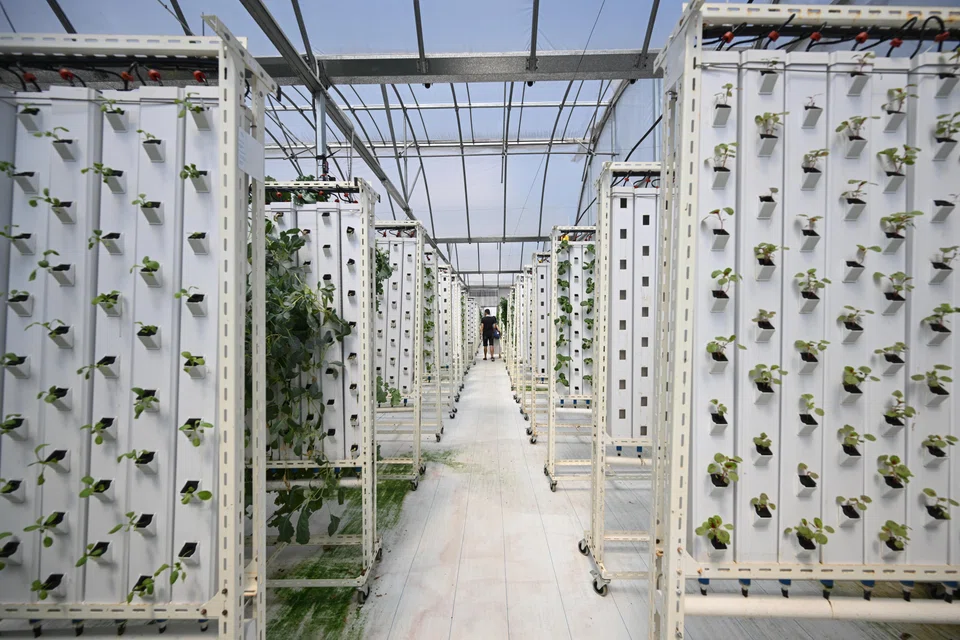
SINGAPORE’S agriculture industry has seen a spate of closures. Oh Chin Huat Hydroponics Farms closed in 2021. Lian Wah Hang Quail & Poultry Farm shut down in mid-2023. Barramundi Group ceased fish production in Singapore shortly after. And just last month, VertiVegies scrapped plans for an indoor vegetable farm.
Beyond these individual setbacks, national-level statistics suggest that Singapore’s “30 by 30” goal – locally producing 30 per cent of its nutritional needs by 2030 – looks increasingly improbable.
It might be time to drop that specific target and re-evaluate what the country should aim for.
Senior Minister of State for Sustainability and the Environment Koh Poh Koon implied as much in a recent interview with Chinese daily Lianhe Zaobao. Singapore may not be able to realise the “30 by 30” vision, he admitted. But he argued that we should not focus too much on the numbers, nor be too anxious, as quality farms still exist.
Limited progress
The numbers do paint a stark picture, based on statistics from the Singapore Food Agency (SFA).
Local vegetable production has been falling from an already low share, accounting for 3.2 per cent of vegetable consumption here in 2023, down from 3.9 per cent in 2022 and 4.3 per cent in 2021.
The local production share of seafood has also fallen to 7.3 per cent of consumption, down from 7.6 per cent in 2022 and 8 per cent in 2021.
Hen shell eggs were the sole bright spot, with farms in Singapore contributing 31.9 per cent in 2023, higher than 2022’s 28.9 per cent and 2021’s 30.5 per cent.
SFA attributed the overall weaker performance to delays in building up farms during the pandemic, as well as inflationary pressures and higher energy prices and manpower costs.
Beyond these near-term challenges, however, farmers have also noted a lack of demand, both from business partners during Covid-19 and a fundamental lack of interest from consumers in pricier local produce.
Not only is “30 by 30” hard to reach, it is unclear what exactly it entails. SFA’s statistics are for food production. Yet the “30 by 30” goal is for “nutritional needs” – and the definition of this has been blurry, noted William Chen, director of Nanyang Technological University’s Food Science and Technology Programme and the Singapore Agri-food Innovation Lab.
The lack of clear benchmarks creates an added layer of difficulty in determining whether Singapore is making good progress.
A broader view
It might be healthier for the industry to give up on that old goal, even as Singapore continues to build up local agriculture.
In his interview, Dr Koh noted that the target should be adjusted after proper evaluation, if required, and not pursued at all costs.
Indeed, removing the pressure of a strict “30 by 30” goal might provide more breathing room and enable better decision-making. Agencies could look more deeply into farms’ proposals for increasing capacity and better evaluate the technologies they wish to adopt.
In 2020, SFA launched a S$30 million “30x30 Express” grant to support the agri-food industry to accelerate increased production of eggs, leafy vegetables, and fish.
This co-funds up to 85 per cent of qualifying project costs, including infrastructure and building costs, purchase of equipment, and installation of productivity-enhancing technology and farming systems.
It is complemented by other financial support sources such as the Agriculture Productivity Fund, the Singapore Food Story R&D Programme, and the Agri-food Cluster Transformation (ACT) Fund.
The S$60 million ACT Fund has committed more than S$23 million of co-funding to 60 projects to date, Dr Koh said in Parliament this month.
Without casting any doubts on the approval process, it should be fair to say that the assessment of grant applications can only be improved by a lack of external pressure.
Without a “30 by 30” deadline, there will be no temptation to take non-optimal measures, such as over-subsidising untested solutions to prove progress.
Asked about what would happen if new growth areas such as vertical farming do not work out, Enterprise Singapore chairman Lee Chuan Teck acknowledged that such farms and some other agrifood areas have not panned out as expected. Producing vertical-farm vegetables in Singapore is a tall order as electricity costs are high, he noted. (See *Amendment note)
Instead, there is potential in selling the technology to countries with abundant green energy, he added. That may indeed be a promising path for agri-tech companies – though by definition, overseas production does not count towards “30 by 30”. Perhaps this is another area where agri-tech ambitions should not be curtailed by that goal. After all, the chronological half of “30 by 30” is clear enough, as it aligns with the country’s larger Singapore Green Plan 2030 – but why is 30 per cent the quantitative target?
Prof Chen suggested that the “30 by 30” slogan is “easy for people to rally towards” and “easy to remember”, adding: “I will say that it is a matter of taking it as an aspiration now, rather than an expectation.”
Still, it would be useful if this target – or any future one – came with a clear, data-backed explanation.
This could explicitly take into account factors such as the growth rate of farms, as well as land availability and leases. Comparable case studies in other countries or cities could also put Singapore’s efforts into perspective.
Without such rigorous backing, the goal is at risk of being seen as just an arbitrary figure.
*Amendment note: An earlier version of this story mistakenly referred to a comment by Enterprise Singapore chairman Lee Chuan Teck in the context of 30 by 30. EnterpriseSG has clarified that the comment referred to the agrifood industry but not “30 by 30” specifically.
TRENDING NOW

Once staunchly pro-China, Malaysian Chinese businesses are now distancing themselves from Beijing

Britain’s mansion tax shows the difficulty of targeting wealth

Three hats, one goal: How Ng Kian Swan runs sustainability at NUHS

COE review: The gap between luxury and mass-market cars isn’t the only one worth bridging

