‘Sufficient’ fuel and food reserves, but Singaporeans may face higher prices and fewer options: Shanmugam
There is a ‘low probability’ of disruptions to domestic energy and electricity supply due to the Iran war, but they cannot be ruled out, he says

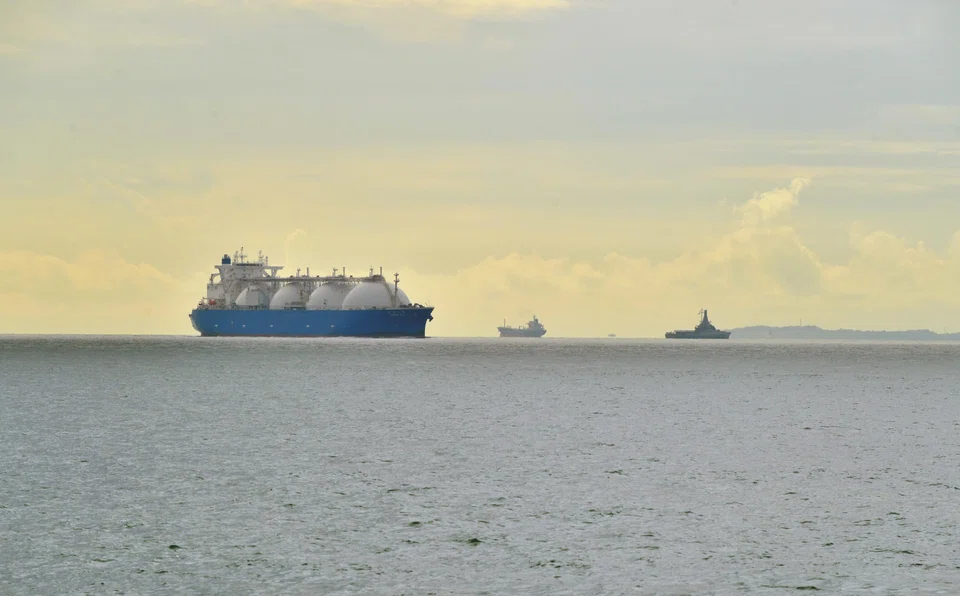
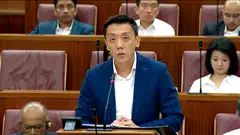
[SINGAPORE] The Republic has enough fuel reserves and food stockpiles to weather the Middle East conflict, but Singaporeans may need to contend with rising prices and more limited choices, Minister for Home Affairs K Shanmugam said in Parliament on Tuesday (Apr 7).
Unlike some other countries, Singapore has yet to announce export restrictions on fuel or implement fuel rationing measures, he said, adding that there is “no need to do so” for now.
Shanmugam, who is also coordinating minister for national security, chairs the 13-member Homefront Crisis Ministerial Committee. He was delivering the third and final ministerial statement in Parliament to discuss the impact of the Middle East situation on Singapore.
As the world’s third-largest oil trading hub and sixth-largest refinery export hub, it is deeply connected to global energy flows, and has access to diverse energy and fuel supplies, he said.
It continues to have access to crude oil, and has been meeting domestic needs and international obligations for fuels.
But he added: “No one can say what the situation will look like, or will be like, if there are more serious disruptions, and if they last longer.”
While Singapore has secured crude oil supplies from alternative sources, it has to pay “much higher” prevailing prices.
These will likely remain high even after hostilities cease, due to damage to infrastructure in the Middle East, such as oil facilities in Saudi Arabia and Bahrain.
“Even if the Strait of Hormuz fully reopens tomorrow, global oil and gas export capacity will not return to pre-conflict levels quickly,” Shanmugam warned.
SEE ALSO
He also noted concerns about longer-term, broader disruptions to global supply chains affecting critical goods and essential services.
Enough for electricity
As for electricity, Singapore has worked to reduce disruption risks and meet needs through four approaches.
First, it has diversified sources, importing liquefied natural gas (LNG) from Australia, the US and Mozambique, on top of the Middle East.
GasCo, set up last year to centralise the power sector’s gas procurement, has begun buying replacement natural gas, to replace the disrupted supply from Qatar, he said.
Second, while 95 per cent of Singapore’s electricity is generated from natural gas, its power plants can switch to diesel when needed.
Third, the city-state has fuel reserves, comprising a mixture of natural gas and diesel, owned by the government as well as power generation companies. It has not yet tapped on them.
Singapore is also planning to increase these reserves, a costly but necessary measure, Shanmugam said.
Responding to clarifications, Minister-in-charge of Energy and Science and Technology Tan See Leng noted that Singapore faces physical constraints when stockpiling.
While it has explored using floating storage and regasification units for LNG, the space and cost to maintain them are large, and are not currently economically feasible.
Diesel is easier to store, said Dr Tan, who is also minister for manpower, adding that a “significant portion” of stockpiles is diesel. It is a very versatile fuel mix, he said, noting its use in transport and shipping, as well as power generation.
Shanmugam said power generation companies are also required by the Energy Market Authority (EMA) to have pre-arranged contractual access to additional fuel – and the government is prepared to direct them to exercise this right, if needed.
Upon activation, suppliers must deliver the fuel to these power generation companies within a set number of days.
But this “may be subject to force majeure events”. Some of the additional fuel may be sourced from overseas and may be subject to supply disruption, he added.
Finally, EMA strengthened regulatory requirements on electricity retailers in 2023, which ensures they are sufficiently hedged to better handle extended gas price volatility.
These measures before and after the Middle East crisis have helped Singapore remain relatively stable.
But if supply is further restricted, “potential disruptions to our domestic energy and electricity supply cannot be ruled out”, Shanmugam said.
“However, this remains a low-probability scenario for now though we continue to monitor developments closely.”
Still, prices will go up.
Though the cost of gas accounts for almost half of the country’s regulated electricity tariff, this has only been partially transmitted to the tariff price so far. Much sharper increases are to be expected if the conflict is prolonged.
Next steps
As a major refinery centre, Singapore has a “mutual interdependence” with other countries – they supply the Republic with crude oil and other essential products, and Singapore provides refined products.
This keeps Singapore relevant in the energy trade and ensures its continued access to crude oil, he said.
While the city-state stays committed to decarbonisation, the priority worldwide now is energy security, he said. Fossil fuels remain part of the global energy mix – and so Singapore will continue to be a refining hub.
But Singapore is also continuing to diversify its energy sources. Shanmugam acknowledged “good progress” in solar energy deployment so far, and highlighted nuclear energy as another potential source in the medium to long term.
Nuclear fuel is energy dense and can be efficiently stockpiled, but requires serious consideration to ensure it can be safely deployed, he said.
Flexibility on food
As for food security, Singapore’s key concern is inflationary pressures. Disruptions to gas supply will push up fertiliser prices, as natural gas is a key feedstock. This will raise prices of food crops and animal feed, and consequently, of imported food products.
Rising fuel costs will also raise food transport and storage costs.
The country’s strategic food stockpiles will help mitigate any unforeseen supply disruptions, Shanmugam said, adding that it is relooking at supply chains to strengthen them.
But only stockpiles of essential food types can be maintained, he said, warning: “Singaporeans should be prepared for supplies of some foods from some countries to be unavailable, and will have to exercise flexibility in choosing alternatives.”
Disclosing details about the extent of Singapore’s fuel reserves and food stockpiles could make Singapore vulnerable, the home affairs minister reiterated. “What matters is that we have sufficient buffers and contingency plans in place.”
The government also regularly reviews and strengthens these arrangements for robustness, he added.
Decoding Asia newsletter: your guide to navigating Asia in a new global order. Sign up here to get Decoding Asia newsletter. Delivered to your inbox. Free.
Copyright SPH Media. All rights reserved.